
90 days of Interior turmoil as Bhumjaithai–Pheu Thai clash
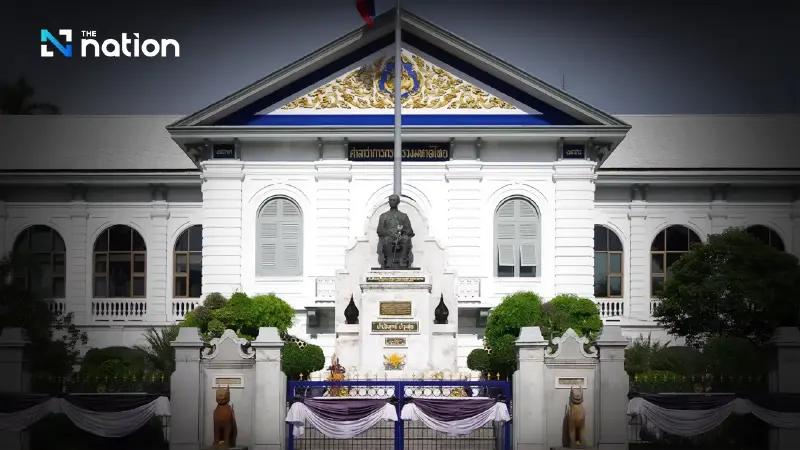


Over the past 90 days, the Interior Ministry has been shaken by a series of civil servant reshuffles driven by a fierce power struggle and political retaliation between the Bhumjaithai Party’s blue camp and Pheu Thai’s red camp.
- The turmoil at the Interior Ministry is the result of a political "revenge game" and power struggle between the Bhumjaithai (blue) and Pheu Thai (red) parties.
- The conflict was initiated by the previous Pheu Thai-led government, which conducted multiple reshuffles to remove senior officials aligned with the Bhumjaithai party from key ministry posts.
- In retaliation, the new Bhumjaithai-led government under Prime Minister Anutin Charnvirakul has launched its own "blue purge," reshuffling 45 senior officials to reclaim control.
- This cycle of purges reflects the parties' efforts to position their allies in strategic bureaucratic roles ahead of an anticipated election.
“We will restore fairness for everyone. A nation can stand only upon morality and justice. When justice disappears, so does morality, so we must bring it back.”
That was the remark by Prime Minister and Interior Minister Anutin Charnvirakul on September 10, 2025, just five days after the House of Representatives voted 313 to confirm him as Thailand’s 32nd prime minister.
A month later, during a period of administrative transition, amid signs of an early general election, the political “revenge game” between the blue and red camps reignited.
During the previous Pheu Thai-led government, several high-ranking officials aligned with the blue camp at the Interior Ministry were transferred in a series of major reshuffles.
On July 8, 2025, the Paetongtarn Shinawatra Cabinet approved the transfer of four senior officials, including Chaiwat Juntiraphong, director-general of the Department of Provincial Administration, and Narucha Kosacivilize, director-general of the Department of Local Administration, both close to the Bhumjaithai stronghold of Buri Ram. They were reassigned as inspectors. Chaiwat retired in September, ending his long career at the ministry.
A second reshuffle on August 5, 2025, saw other senior blue officials moved, including Pornpoj Penpas, director-general of the Department of Lands, who was demoted to deputy permanent secretary amid controversy over the Khao Kradong land case linked to the Chidchob family business. Phasakorn Boonyaluck, director-general of the Department of Disaster Prevention and Mitigation, was transferred to become governor of Rayong.
A third wave came on August 19, 2025, when the Paetongtarn Cabinet approved the transfer of 25 more Interior Ministry executives.
Among these, several transfers followed the normal rotation cycle, while others involved cross-provincial reshuffles designed to place the “right people in the right posts.” Each political party sought to position its trusted officials to oversee key constituencies. However, some provinces drew criticism for what appeared to be an unmistakable purge of areas seen as Bhumjaithai Party strongholds.
Within just 90 days, the ministry saw four major reshuffles, an unmistakable reflection of the fierce power struggle between the blue and red blocs.
Now, as the pendulum swings back, the blue camp under Anutin’s leadership appears to be settling scores. His return to power as both prime minister and interior minister has reignited political manoeuvring within the bureaucracy.
Even during the government’s policy statement to Parliament on September 29, 2025, Deputy Prime Minister for Legal Affairs Bovornsak Uwanno addressed the chamber, saying: "Once Prime Minister Anutin received the Royal Command of appointment, the relevant agencies submitted all necessary documents for royal endorsement. After the policy statement was delivered, the prime minister instructed the Cabinet Secretariat to confirm the appointments of senior officials made by the previous caretaker administration, nearly ten in total. This should make it clear that any appointments already approved by the Cabinet will continue as they are. The government has no intention of reversing them, cancelling past resolutions, or replacing officials with members of its own political faction. That assurance should give you some confidence."
But the latest reshuffle told another story. The Cabinet’s approval on October 14, 2025, of transfers involving 45 senior Interior Ministry officials marks what insiders see as a “blue purge”, a move to reclaim control from the red faction.
It underscores the continuing cycle of political revenge as both camps prepare for an approaching election, playing out the age-old rule of “Every dog has its day.”
