
The 20-year Shin Corp tax case: origins, transactions and the Thaksin family’s legal battle
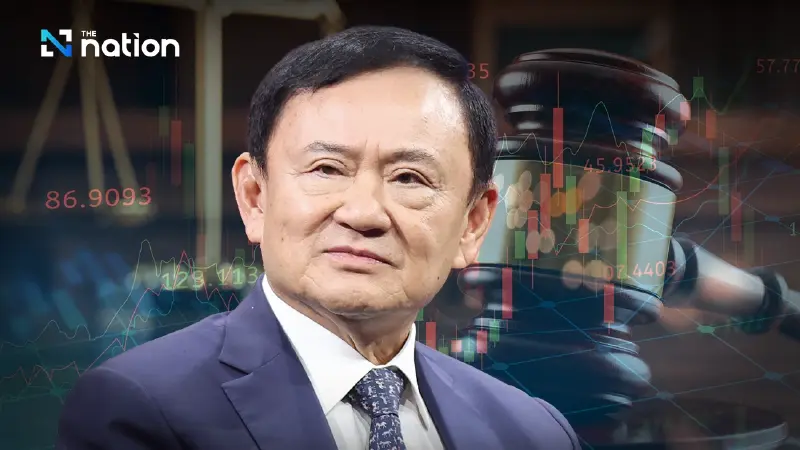


A look back at the decades-long Shin Corp share tax case, tracing its origins, the Ample Rich transactions and the multi-billion-baht tax assessments against Thaksin’s children.
The Shin Corporation Public Company Limited was the flagship business empire built by former prime minister Thaksin Shinawatra, beginning with Shinawatra Computer Co. Ltd., which supplied and installed computers for government agencies.
In 1989, Thaksin established International Broadcasting Corporation (IBC) to bid for a cable television concession with the Mass Communication Organisation of Thailand (MCOT). The following year, in 1990, he launched Advanced Info Service (AIS), which grew into Thailand’s leading mobile operator and earned Thaksin the moniker “the Third Wave Knight”, symbolising Thailand’s transition into the information era.
Ample Rich: the starting point of the Shin Corp tax case
The Shin Corp share tax dispute stems from Thaksin’s creation of Ample Rich Investment Ltd. in 1999, registered in the British Virgin Islands (BVI). The company had a capital of USD 50,000, divided into 50,000 shares at USD 1 each — but only one share was paid up.
On 11 June 1999, Ample Rich purchased 32,920,000 Shin Corp shares at the par value of 10 baht per share through the Stock Exchange of Thailand.
On 1 December 2000, Panthongtae Shinawatra, Thaksin's son, was appointed director of Ample Rich. Thaksin later transferred one Ample Rich share to Panthongtae on 29 August 2004. Panthongtae then acquired three more shares, while his sister Pintongta Shinawatra purchased one share.
The board was subsequently changed to Panthongtae, Pintongta, and Kanchana Honghern.
Transfer of Shin Corp shares
Ample Rich later sold all Shin Corp shares it held to Panthongtae and Pintongta — 164,600,000 shares each — at 1 baht per share, in an off-market transaction.
On 23 January 2006, both siblings sold the shares to Temasek Holdings’ affiliated companies through the Stock Exchange of Thailand, where the market price was 49.25 baht per share.
The Revenue Department deemed that the purchase of Shin Corp shares at 1 baht from Ample Rich constituted assessable income for the 2006 tax year, requiring tax filing by 31 March 2007. Neither sibling declared this income.
Tax assessment and appeals
On 30 August 2007, the Revenue Department assessed tax and surcharges at 5.90479 billion baht for Panthongtae, 5.67686 billion baht for Pintongta, totalling 11.58165 billion baht.
Both objected and petitioned the Revenue Department’s Appeals Committee, which upheld the assessment and ordered them to pay tax, surcharges and monthly interest — though the Committee later reduced the surcharge to 50%.
The siblings then filed suit with the Central Tax Court seeking to annul the assessment and the Appeals Committee’s ruling. Meanwhile, the Revenue Department seized and froze assets, including approximately 200 million baht in cash, and land and securities worth around 1 billion baht.
Summonses were issued twice for examination of their 2006 tax obligations, and although they appealed both times, the Appeals Committee upheld the assessments with reduced surcharges.
During the period when Panthongtae and Pintongta Shinawatra brought their case to the Central Tax Court, the Supreme Court’s Criminal Division for Holders of Political Positions ruled that Thaksin remained the true owner of 1,419,490,150 Shin Corp shares, and that his two children were merely nominee shareholders on his behalf.
On this basis, the siblings argued that the Revenue Department’s tax assessment against them was unlawful, because they were not the actual taxpayers under the law.
The Central Tax Court accepted this argument and on 29 December 2010 annulled the tax assessment.
Prayut government revives the Shin Corp tax case
Under the government of Gen Prayut Chan-o-cha, the issue was revisited to find a legal avenue to collect over 10 billion baht in unpaid taxes.
On 13 March 2017, a joint meeting was held between the government, the Ministry of Finance, the Office of the Auditor-General (OAG), and the Anti-Money Laundering Office (AMLO) to prevent the case from expiring on 31 March 2017.
Officials opted to invoke Sections 820 and 821 of the Civil and Commercial Code, which hold a principal responsible for the actions of an agent.
As a result, on 28 March 2017, the Revenue Department issued a personal income tax assessment for the 2006 tax year to Thaksin, totalling 17.629 billion baht, delivered to his registered home address just before the statute of limitations expired.
Thaksin sues to overturn the assessment
Thaksin challenged the assessment and filed a lawsuit against the Revenue Department and the Appeals Committee, asking the Central Tax Court to annul the 17.629-billion-baht order.
On 18 July 2022, the Central Tax Court ruled in Thaksin’s favour, annulling the assessment because the Revenue Department had failed to issue a summons to Thaksin under Section 19 of the Revenue Code — a necessary step before issuing an assessment notice.
The Revenue Department appealed, but the Specialised Appeals Court (Tax Division) on 2 June 2023 upheld the lower court’s ruling, again finding that the assessment was procedurally unlawful.
Supreme Court reverses and orders Thaksin to pay
The Revenue Department then appealed to the Supreme Court, which on 17 November 2025 overturned the earlier rulings and ordered enforcement of the tax collection relating to the sale of Shin Corp shares.
The Supreme Court found that:
- Thaksin concealed his ownership of Shin Corp by placing shares under Panthongtae and Pintongta,
- He did so because he sought political office, which legally barred him from holding Shin Corp shares,
- The arrangement lacked economic substance and was designed for improper purposes, including tax benefits,
- The transaction was a serious unlawful scheme, giving no grounds to waive or reduce surcharges.
This judgement provides the final Supreme Court conclusion to the Shin Corp share tax case, a dispute that has spanned two decades and shaped Thailand’s political and legal landscape.
