
Pheu Thai revives strategic team to unite senior figures and pursue three urgent missions
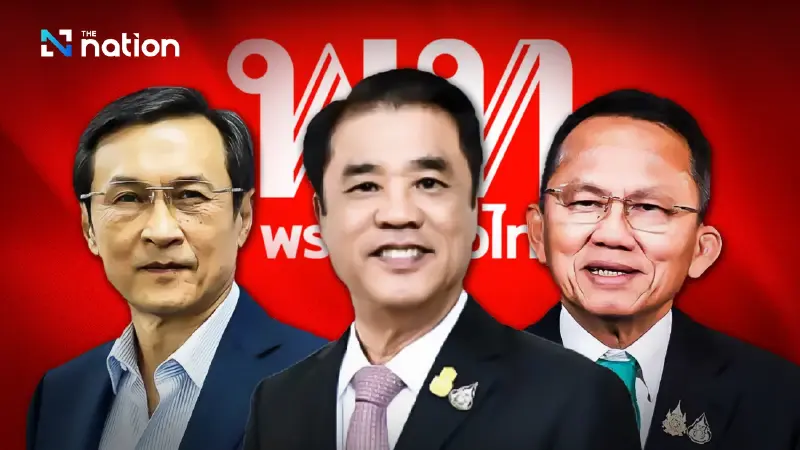


Pheu Thai revives its strategic team under Chaturon Chaisang to ease internal tensions and drive three urgent missions: censure strategy, charter reform and the 2026 election plan
The Pheu Thai Party has revived its “strategic team” model to drive political operations, aiming to reduce internal tensions and consolidate key party figures as its popularity declines ahead of the 2026 general election.
Party leader Julapun Amornvivat announced the appointment of Chaturon Chaisang, party-list MP, as chairman of the Strategic Committee.
Advisers include Julapun himself, Phumtham Wechayachai, Suriya Jungrungruangkit and Somsak Thepsuthin.
Deputy chairs are Chousak Sirinil, Cholnan Srikaew, Sutin Klungsang and Wisut Chainarun.
Committee members include Prommin Lertsuridej, Kriang Kantinan, Sorawong Thienthong, Monporn Charoensri and Jiraporn Sindhuprai.
Prasert Jantararuangtong serves as secretary-general of the committee, with Chanin Rungtanakiat as committee member and Linthiporn Warinwatcharoj as assistant secretary.
Internal dynamics behind the revival
During Pheu Thai’s leadership selection, many MPs favoured Chaturon as party leader, believing he could galvanise support from the Red Shirt base.
However, the Shinawatra family opted for Julapun, whose ties with the family span generations, leaving Chaturon sidelined and heightening internal discontent.
Similarly, senior figures such as Suriya and Somsak were reportedly dissatisfied with candidate placements in several constituencies.
Meanwhile, rumours persisted that Sutin was considering forming a new party.
The strategic team is therefore seen as a move by the Shinawatra faction to both suppress internal conflict and keep key power brokers within the “red camp”—preventing defections or attempts to create splinter parties.
Julapun: ‘Experience and new blood working together’
Julapun emphasised that the strategic team combines politically seasoned veterans with younger members to ensure Pheu Thai can respond to public needs across all regions and demographics.
Three urgent missions set for Chaturon’s team
The team has been tasked with three short-term priorities designed to stabilise the party’s position and counter rivals:
1. Censure debate strategy
The team will shape Pheu Thai’s approach to the upcoming no-confidence debate against the Anutin government.
Julapun has already consulted with Nattapong Ruangpanyawut, leader of the People’s Party, regarding constitutional amendment trends and joint sponsorship of the censure motion.
Two possible timelines are on the table:
• filing the motion immediately after the parliamentary session opens, or
• filing in mid-January 2026 to inflict maximum damage before a potential dissolution of Parliament.
2. Constitutional amendment battle
Pheu Thai opposes the proposed 20:1 formula for selecting the new Constitution Drafting Committee, arguing it hands an unfair advantage to the “blue camp,” which controls over 160 senators.
Under the formula, the blue faction would secure at least 8 seats on the charter-drafting committee — a number that could rise to 20 seats when combined with blue-party MPs and allied parties, enabling them to dominate the drafting process.
3. Strategic plan for the 2026 general election
This is the most critical mission.
Pheu Thai’s popularity is at its lowest point since the rise of the Shinawatra political dynasty.
Once a momentum-based party that could survive on its “wave” without heavy spending, Pheu Thai must now rely on both momentum and money to win as many seats as possible in 2026.
Hard questions ahead
Political observers are watching how the revived strategic team will reposition the party, manage internal factions, and execute its three urgent missions — all amid speculation about whether the Shinawatra camp can reclaim its former dominance.
