
Strengths and weaknesses of People’s Party PM candidates; Veerayooth emerges as only contender without legal risks
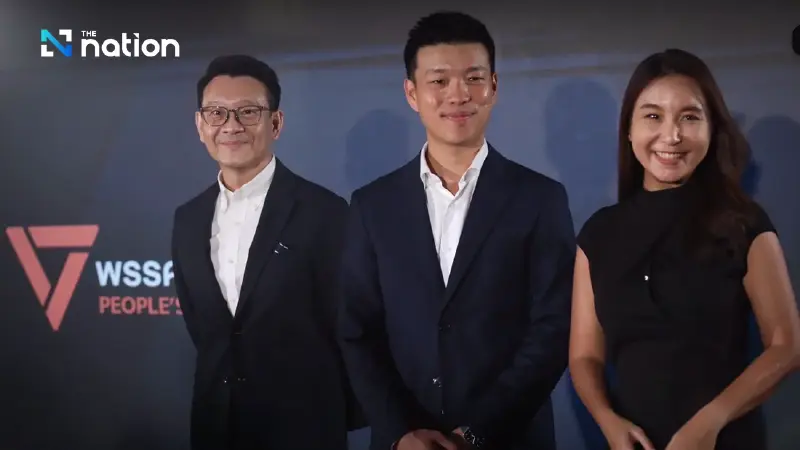


The People’s Party highlights three PM candidates, but with Natthaphong Ruengpanyawut and Sirikanya Tansakun facing the 44 MPs case, Veerayooth Kanchoochat stands out as the only contender without legal hurdles
• The People’s Party (PP) has unveiled its three prime ministerial candidates: Natthaphong Ruengpanyawut, Sirikanya Tansakun, and Veerayooth Kanchoochat, each bringing different strengths and areas of expertise.
• Natthaphong and Sirikanya carry a major liability — their involvement in the 44 MPs case over the proposal to amend Section 112, raising concerns over potential political disqualification and questions about their leadership image compared with former party figures.
• Veerayooth Kanchoochat is the only candidate without any legal cases (“unscathed”), giving him a strong chance of becoming the party’s main contender for prime minister if the other two face disqualification.
The three-way political landscape is intensifying in the final stretch before a possible House dissolution and new general election. Analysts believe only two blocs now stand a realistic chance of winning the largest share of seats:
• the ascendant “Blue Camp”, boosted by an influx of heavyweight MPs, and
• the revitalised “Orange Camp”, which recently launched its “Recharge Prachachon” campaign led by its spiritual leader Thanathorn Juangroongruangkit.
At the event, the People’s Party presented its three prime ministerial candidates:
- “Teng” Natthaphong Ruengpanyawut, current party leader;
- “Mai” Sirikanya Tansakun, deputy leader for policy and the main driver of the party’s economic platform; and
- “Ton” Veerayooth Kanchoochat, deputy leader for strategy and the original architect of the party’s long-term policy and strategic direction.
Profiles of the three candidates
1. Natthaphong (age 38)
Before politics, Natthaphong founded and managed a private cloud-solutions firm.
He was first elected in 2019 as Bangkok MP for Bang Khae (Constituency 28) under the Future Forward Party, and was later elected as a party-list MP under Move Forward in 2023.
Following Move Forward’s dissolution by the Constitutional Court in August 2024, Natthaphong was chosen at an extraordinary meeting as leader of the People’s Party, becoming Leader of the Opposition.
He has consistently pushed for budget reform, data-driven policymaking, and digital governance to improve transparency.
He co-founded the “Kao Geek” group, advocating Open Data, Open Government, and the shift to machine-readable national budgets, allowing easier scrutiny by both the public and state agencies.
2. Sirikanya Tansakun (age 44)
Deputy leader of the People’s Party, economist and policy expert focused on bureaucratic and budget-system reform.
Before politics, she served as:
• senior consultant at a financial and strategic advisory firm
• research manager at the Thailand Future Foundation
• researcher at TDRI
She later became policy director of Future Forward, was elected as a party-list MP in 2019, then became deputy leader of Move Forward and head of its economic team for the 2023 election. After Move Forward’s dissolution, she became deputy leader of the People’s Party.
Since 2019, she has been a leading figure in national budget scrutiny — serving on the Budget Committee, chairing the House Committee on Economic Development, and shaping public fiscal-policy debate.
She helped spark unprecedented citizen engagement in monitoring national budgets.
Her flagship initiative is zero-based budgeting, shifting from incremental adjustments to allocating funds based solely on urgency and scale of national problems.
3. Veerayooth Kanchoochat (age 46)
Deputy leader and long-term development strategist shaping the party’s global-facing economic vision.
He previously worked in Japan after completing a PhD funded by the Cambridge Trust.
For 11 years, he taught at GRIPS (National Graduate Institute for Policy Studies) in Tokyo, rising to associate professor.
His expertise includes industrial policy, the middle-income trap and cross-border production networks.
He has collaborated with global organisations including ODI (London), IMF, UNCTAD, and UN ESCAP, and wrote the Thai book “The Three-Colour Economy: The Economy of the Future.”
He has advised both Future Forward and Move Forward on economic policy, was one of Move Forward’s seven-member economic team for the 2023 election, and later served as adviser to the House Committee on Economic Development as well as other committees.
Strengths vs weaknesses
While all three candidates have strong credentials —
• Teng with his innovation and tech literacy,
• Mai with deep expertise in economics and fiscal policy, and
• Ton as the party’s strategic architect —
they also face clear weaknesses.
Natthaphong (“Teng”)
Despite strong technical skills and IT expertise backed by personal business resources, he lacks the charismatic leadership presence of Thanathorn or Pita, which weakens his broader public image.
Sirikanya (“Mai”)
Though widely respected for her competence, her visibility has declined since joining PP as its “third vehicle.”
Her leadership image remains weaker than Thanathorn–Pita, and she is not part of the influential “Phuean Ek” inner circle — a factor in her losing the leadership contest to Natthaphong.
Veerayooth (“Ton”)
He has historically kept a low profile and worked mostly behind the scenes, similar to Sarayut Jailak of the “Phuean Ek” group.
Although he is the party’s chief strategist — comparable to Dr Prommin Lertsuridej of Pheu Thai — the public is less aware of his contributions.
Positioning him as a front-stage leader will require time and careful grooming.
Legal cloud: the 44 MPs case
Two of the three PM candidates — Natthaphong and Sirikanya — are under NACC investigation over the Section 112 amendment submission, a high-profile case involving 44 former Move Forward MPs.
Both are among the 25 current PP MPs facing the inquiry.
Should disqualification occur, the party may be left with only one viable PM option: Veerayooth Kanchoochat.
This scenario was anticipated, which is why PP nominated three candidates rather than one, unlike Future Forward and Move Forward.
Will Veerayooth lead the People’s Party next?
Political observers are watching Veerayooth closely. He is seen as the most likely successor to lead the party after the 44 MPs case concludes.
The key question is whether he can rebuild the “Orange movement” together with remaining leaders free of legal cases — including “Ice” Parit Wacharasindhu and other MPs.
