
Sihasak highlights challenges for Thai diplomacy, urges new allies and markets
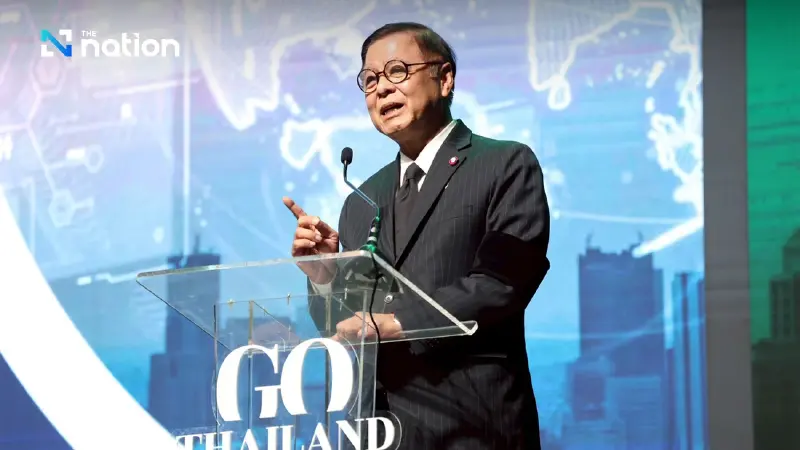


Foreign Minister Sihasak outlines six challenges for Thai diplomacy, stressing the importance of linking foreign policy with the economy and public interests.
- Thailand's Foreign Minister, Sihasak Phuangketkeow, has highlighted the country's diminishing diplomatic presence, noting it is often overlooked in key discussions concerning the Indo-Pacific region.
- He urged the nation to seek new allies and markets to counter global trade tensions, pointing to Thailand's applications to join the BRICS and OECD economic blocs.
- Significant challenges to Thai diplomacy include balancing strategic goals with short-term problems, such as the ongoing border dispute with Cambodia.
- Sihasak called for a more modern and proactive foreign policy that links diplomatic efforts directly to economic benefits for the Thai people, particularly in green and digital industries.
During the "Go Thailand 2026: Beyond Survival" event hosted by Thansettakij on Tuesday (December 2), Thailand's Foreign Minister, Sihasak Phuangketkeow, emphasised the importance of revitalising Thailand’s foreign diplomacy.
Sihasak delivered a powerful message about the nation’s diplomatic approach, highlighting several key areas where Thailand must evolve to remain relevant and proactive in an increasingly complex world.
Sihasak began by addressing Thailand’s diminishing presence on the global radar, particularly in the Indo-Pacific region. He pointed out that when discussing the region, countries like China, Indonesia, Singapore, Malaysia, and Vietnam dominate the conversation, with Thailand often absent from the discussion.
This, he noted, was largely due to political, economic, and diplomatic challenges that have hindered the country’s foreign policy ambitions.
The world, Sihasak noted, is changing rapidly, and he questioned whether the country could keep up with these shifts and adapt its foreign policy accordingly.
“Modern diplomacy must walk and talk, not just talk and talk. It must ensure that diplomacy and foreign policy genuinely benefit the people,” he said.
One of the most pressing challenges Thailand faces in its foreign policy is balancing short-term objectives with long-term strategic goals.
He also pointed out Thailand's strained relationship with Cambodia, particularly due to ongoing border disputes. He explained that Cambodia’s diplomatic stance on several occasions has not been friendly towards Thailand, with the involvement of major powers, such as the United States acting as a mediator in peace negotiations between Thailand and Cambodia.
Thailand decided that major powers could help mediate certain issues, which led to the Kuala Lumpur Peace Accord, he explained. However, he highlighted that Thailand had to halt the Peace Accord in response to the incident where a seventh Thai soldier lost his leg due to a landmine.
On Wednesday (December 3), Sihasak said, this issue will be presented at the Ottawa Convention meeting in Geneva. If Cambodia does not accept responsibility, he added, a proposal will be made to establish a committee to investigate the facts surrounding the landmine placement.

The shift in global politics, particularly in trade, has had profound implications for Thailand. The recent US trade measures, including the tariffs under the Trump administration, have caused disruption to global rules and norms.
Sihasak argued that Thailand must adopt a clear position on these issues and forge alliances to mitigate the impact of rising trade tensions, such as with ASEAN and the European Union.
He highlighted the need for Thailand to ensure that its foreign policy supports its economic objectives. The country’s foreign ministry has been in discussions with the private sector to explore how Thailand can drive economic growth through international partnerships, particularly in areas such as digital innovation and green economies.
Currently, Thailand is applying to join the rapidly growing BRICS economic bloc and the Organisation for Economic Co-operation and Development (OECD), which will provide new export markets and higher standards, he added.
Sihasak also made an important observation about the role of domestic cooperation in strengthening Thailand’s foreign diplomacy. Unified work and teamwork require support from both the economic and security sectors, which must mutually support each other.
Finally, Sihasak underscored the importance of clarifying the work of the Ministry of Foreign Affairs, including diplomatic efforts related to security and the economy. He noted that the Ministry's work has become increasingly challenging as it strives to achieve the country's goals.
