
Sudarat vows economic overhaul and anti-graft drive, alleges vote-buying of 50–100m baht in Northeast
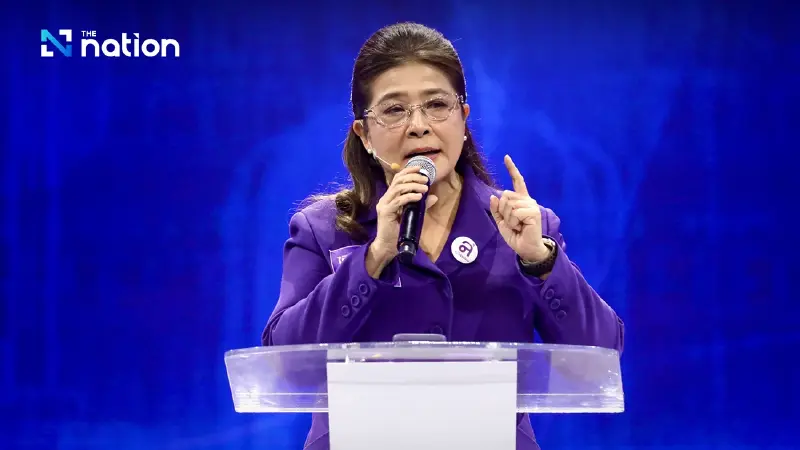


Thai Sang Thai PM candidate Sudarat Keyuraphan promises an economic reset and zero-graft government, alleges vote-buying of 50-100 million baht in the Northeast, and outlines debt, education and energy reforms.
At the Bangkok Youth Center (Thai-Japanese) on the evening of January 17, 2026, Nation Group hosted the “Nation Election 2026 DEBATE: The Crossroads”, bringing together representatives of political parties to present their visions ahead of the February 8 election.
Sudarat Keyuraphan, leader and prime ministerial candidate of the Thai Sang Thai Party, said that if elected she would dismantle structural barriers holding back Thailand’s economy. She likened the country to “an elderly person who is both poor and sick”, unable to compete, and said GDP growth would not recover without a decisive war on corruption, to be declared a national agenda. She pledged a public covenant that a Thai Sang Thai-led government would not engage in graft.

Sudarat said she would push for constitutional amendments to empower citizens to scrutinise corruption, proposing that 50,000 signatures be sufficient to trigger the removal of corrupt politicians, as well as independent agencies found to be acting dishonestly. She also pledged to remove licensing rules that obstruct livelihoods within the first year, launch an education overhaul to improve quality so graduates can find jobs, and provide free education without forcing students into debt under the student loan system. She added that demographic balance and elderly care must be addressed, and that people should have equal access to clean, affordable electricity, including support for SMEs.

On corruption, Sudarat stressed that the fight must start with personal integrity, with party leaders bearing the highest responsibility. She said corruption often begins with vote-buying, funded by “grey capital”. Drawing on her campaigning in the Northeast, she alleged talk of 50-100 million baht being used to buy votes. “It is the people’s right to accept or reject such money,” she said, “but they must not vote these people into office.”
Addressing household debt, Sudarat said people need capital to stand back up, tackling both household and individual debts—especially informal loans with extortionate interest. She proposed a start-up fund to give small borrowers access to low-interest finance, alongside an SME fund and special lending programmes.
She reiterated that Thai Sang Thai would not amend constitutional Chapters One and Two, but would amend three areas: people’s power to hold politicians accountable, the rights of citizens, and laws that obstruct livelihoods, alongside measures that can tackle corruption effectively.
Sudarat also addressed Thai-Cambodian border issues, saying Thailand must be able to defend itself. Referring to unruly neighbours, she said Thailand should neutralise threats through diplomacy, recognising that neighbours do not operate under Western systems and that Thailand has long-standing relationships with both Western and Eastern powers. She argued Thailand should avoid punitive outcomes—such as heavy tariffs or cancelled rice orders—by positioning itself as a lead coordinator in cracking down on global scam networks, seeking backing from major powers to bring “rogue states” back into rules-based systems and prevent harm to others.
