
Yodchanan pledges unity government and relentless anti-corruption drive
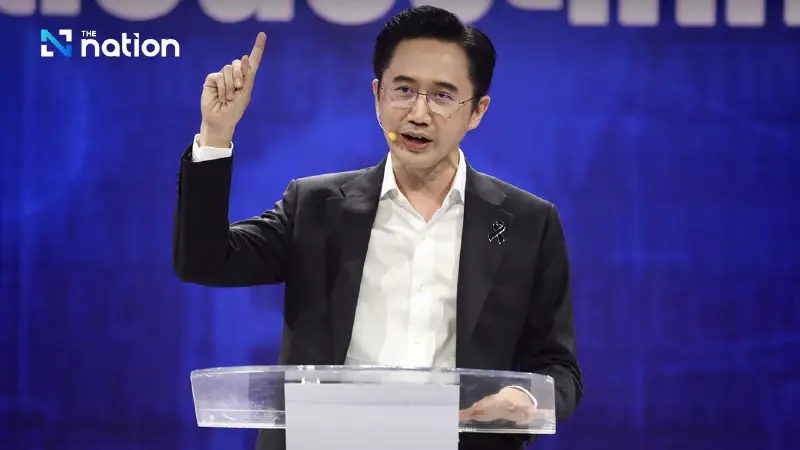


Pheu Thai PM candidate Yodchanan Wongsawat says a unity government, debt overhaul and new economic engines—especially wellness—will drive Thailand towards high-income growth, alongside tough crackdowns on corruption, drugs and scammers.
At the Bangkok Youth Center (Thai-Japanese) on the evening of January 17, 2026, Nation Group hosted the “Nation Election 2026 DEBATE: The Crossroads”, bringing together party representatives to present their visions ahead of the February 8 election.
Yodchanan Wongsawat, a party-list MP candidate and prime ministerial candidate for the Pheu Thai Party, said the most urgent task to deliver a tangible “turning point for Thailand” within the first year is to transform Thailand into a high-income, high-value economy.
He said that in the first 100 days, Pheu Thai would move quickly to consult organisations with differing ideas that are ready to act, to refine and align party policies so they can drive the country forward. Political parties, he said, must serve everyone, and he set a goal of forming a government that “joins hands in unity and harmony”, which he insisted Pheu Thai can deliver.
Yodchanan said Thailand is facing multiple challenges—from the economy and geopolitics to technology disruptions—making it essential to tackle the foundations, starting with system-wide debt resolution to give people room to breathe. He said the government must also restore hope among the public, which directly affects national GDP.

He outlined key pillars of that hope:
- Farmers: a policy to guarantee profits of 30%
- SMEs and industry: support through Made in Thailand and an “innovation army”
- Innovation and start-ups: stronger backing for entrepreneurs
- Tourism and services: continued expansion, with credit support for Thais overseas, saying “Thailand never abandons Thais abroad”
- New economic engines: launching the health economy—with wellness highlighted as a distinctive Thai strength that must begin immediately
He warned that if a government cannot build confidence and credibility internationally, it will not be able to push the economy forward. He said Pheu Thai therefore intends to pursue a relentless crackdown: corruption — no let-up; drugs — no let-up; scammers — no let-up.
Yodchanan also said a digital government is crucial to unlocking reforms across the board. He said Pheu Thai is working to consolidate welfare systems, including—he claimed for the first time by the party—integrating public health data, paving the way for “30-baht AI”.
He concluded that the most important goals—education, innovation and research—will transform Thailand, and urged voters to choose Pheu Thai to deliver that change.
In response to a question about what he would do if Thailand were attacked by a neighbouring country—where the military advises retaliating, but a major power threatens 37% tariffs and to cancel rice trade—Yodchanan said sovereignty is paramount. If Thailand is attacked, it must retaliate. Protecting Thai people and defending national sovereignty are necessary, and that is the first priority.
Second, he said the government must also take care of the public. While striking back, the key principle is to avoid soldiers being killed and to prevent hardship for civilians. That is his stance.
Third, he said diplomacy must be pursued in parallel with military operations.

Yodchanan added that, in any retaliation, the most important thing is to gather evidence and present it to the international community. Once the world knows the facts, and Thailand is facing threats and pressure from multiple directions, the global community should side with what is right. He stressed that Thailand must not be the first to invade anyone.
He also said it is necessary to identify the true cause and report it. If the root cause is linked to scam networks, then the scammers must be dealt with. Sometimes an attack may appear to be a minor issue, he said, but the underlying cause must be addressed at its source.
