
Anutin set to unveil ‘Thailand 10 Plus’ policy package to Parliament on April 7-9
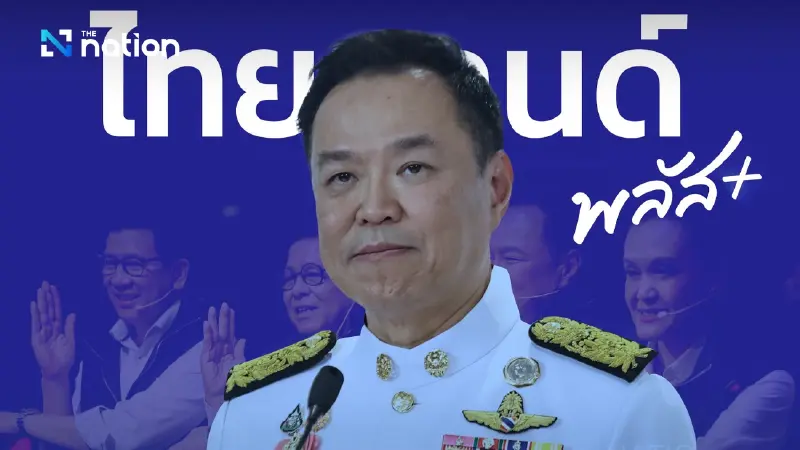


Prime Minister Anutin Charnvirakul is expected to deliver his government’s policy statement to Parliament on April 7-9, 2026, centred on a “Thailand 10 Plus” stimulus-and-opportunity plan and a target of at least 3% average annual GDP growth.
- Prime Minister Anutin Charnvirakul will present the "Thailand 10 Plus" policy package to Parliament from April 7-9, 2026, aiming for at least 3% average annual GDP growth.
- The policy is structured around four pillars: inclusive growth (cost-of-living relief, SME support), competitive growth (upskilling, green economy, investment), quick-win stimulus (consumption boosts, debt management), and attracting investment in six target industries.
- Key initiatives include the "Khon La Khrueng Plus" consumption stimulus, support for low-interest SME loans, a "Skill Bridge" free online learning platform, and a "Thailand Future Fund" to mobilize capital.
- The plan also features a proactive strategy to manage four major threats: natural disasters, economic volatility, national security issues, and social problems like drugs and public health.
Prime Minister Anutin Charnvirakul is expected to deliver his government’s policy statement to Parliament on April 7-9, 2026, centred on a “Thailand 10 Plus” stimulus-and-opportunity plan and a target of at least 3% average annual GDP growth.
Prime Minister Anutin Charnvirakul is expected to lead the new government in presenting its policy statement to Parliament from April 7-9, 2026, according to reports from Government House.
The policy statement is expected to run 20-30 pages and include an economic stimulus plan branded “Thailand 10 Plus”, combining campaign proposals from the Bhumjaithai Party with policies from coalition partners such as the Pheu Thai Party.
The government’s top goal is to lift growth, targeting average GDP expansion of no less than 3% per year. The policy direction is described as four strategic pillars, alongside four crisis-management dimensions. Key policy pillars outlined include:

1) Inclusive growth
The government says it will focus on reducing inequality and supporting people across income levels through “Khon Tua Lek Plus”, aimed at easing living costs. Measures include keeping electricity bills below 3 baht per unit for the first 200 units, and opening a new round of State Welfare Card registration to better identify those genuinely in need.
It also plans an “SME Plus” policy to support low-interest loans and develop new guarantee mechanisms to improve liquidity for small businesses.
To prepare for an ageing society, the government plans an “Ageing Economy Plus” policy, including tax deductions for employers who hire older workers and an accelerated rollout of eldercare centres nationwide.
2) Competitive growth
The government plans to combine stimulus with long-term structural reform, starting with human capital development via “Equal Education Plus (Skill Bridge)”—a free online learning platform in partnership with the private sector, under the concept of “learn for free, get a job”, to upskill and reskill workers for modern labour markets.
A “Green Economy Plus” policy would accelerate the net-zero target for 2050, promote community solar projects, and develop green product standards to add export value.
On investment, the government plans an “Investment Plus” agenda, including a Thailand Future Fund aimed at mobilising capital without adding to public debt, and a Thailand Fast Pass to unlock more than 840 billion baht worth of stalled projects. It also proposes a Regulatory Guillotine approach to remove redundant rules and ease investment.
A “Trade Plus” policy would focus on proactive trade negotiations and the use of barter-style trade arrangements in specific contexts—such as exchanging agricultural products as part of large-scale procurement deals.

3) Quick big wins: stimulus and debt management
The government says it will prioritise urgent “kitchen table” measures and rapid cash injection through a “Khon La Khrueng Plus Phase 2” programme to boost domestic consumption—focusing on groups missed in earlier phases and smaller merchants, alongside added online sales training.
For household debt, it plans a “Close debts fast, move forward Plus” policy to help small debtors with non-performing loans (NPLs) of no more than 100,000 baht, through debt restructuring and short-term interest pauses, aiming to restore credit records and improve access to finance.
The Finance Ministry is also preparing a long-term savings policy, TiSA, described as a personal savings account structure with dividend tax exemptions to help people build retirement security.
4) Industrial policy to generate income
The government has set out a strategy to attract investment in six target industries as new economic engines to generate income for the country. These include future industries such as future food and smart agriculture, which use technology to upgrade products to premium grade; advanced technology industries such as data centres, cloud services, smart electronic printed circuit boards (PCBs), and the quantum industry.
The government will also continue to support the electric vehicle (EV) industry across the entire supply chain, alongside promoting high-value services such as the wellness industry and premium tourism.
5) Policy to tackle four types of threats
The government is preparing a proactive plan to deal with current and future risks, including:
- Natural disasters: A disaster fund under which the government would pay an insurance premium of 1,000 baht per household. If a disaster occurs and damage is confirmed, compensation of 100,000 baht would be paid immediately. The government also plans to use an AI Plus system to forecast and issue more detailed disaster warnings down to the subdistrict level.
- Economic threats: Policies to manage energy crises, including measures to address oil shortages and price volatility caused by geopolitical problems, by partially floating diesel prices and using the Oil Fuel Fund to stabilise prices. The government also plans to crack down on “grey capital”, including by adjusting budget procedures to prevent grey businesses such as “zero-baht” operations, and improving the e-procurement system to increase transparency in public procurement.
- Security: A policy to build a protective barrier against military threats, transnational crime, scam networks and drugs. On cyber security, the government plans to raise security standards for state databases and prevent data espionage.
- Social issues: A policy to build society-level mechanisms to prevent drug problems by establishing drug rehabilitation centres in every district, and setting up community-level health support mechanisms through proactive public health measures, including the “One Village, One Volunteer Nurse” scheme to provide at-home care for older people and vulnerable groups in each household.
Policies from the Pheu Thai Party
For Pheu Thai’s core policies that have been submitted to the Bhumjaithai Party for consideration and categorisation in the government’s policy statement, the proposals are drawn from the five ministries allocated to Pheu Thai: the Ministry of Agriculture and Cooperatives, the Ministry of Higher Education, Science, Research and Innovation, the Ministry of Education, the Ministry of Social Development and Human Security, and the Ministry of Labour.
Pheu Thai plans to drive the “No Thai Left Poor” policy through a Minimum Income Guarantee, ensuring Thais have a monthly income of 3,000 baht, since the poverty line is 3,074 baht. Anyone earning below that level would receive a top-up from the government to reach the minimum monthly income.
The party also plans to propose a National Education Act aimed at developing people to keep pace with global change, alongside a Human Capital Fund Act. It would also establish a Productivity Superboard to work with all sectors to link future labour market needs and skill requirements with the education system. The party says it will also focus on improving the quality of teachers and students, preparing people to adapt to change, with the following priorities:
- Upgrading teacher recruitment and development: attracting talented people from all disciplines into teaching, reducing teachers’ workload, creating a supportive environment so teachers can teach well and have time for students, and putting in place a more rigorous and targeted teacher capability assessment system—without adding to teachers’ administrative burden.
- Student-centred learning and curriculum reform: improving and making curricula more flexible and competency-based; establishing a learner rights protection centre; ensuring schools are safe; ending rights violations; and promoting student welfare.
- Free education must be truly free: revising budget allocation to be fairer, reducing parents’ burden, and preventing children from dropping out of the system.
- Setting a clear direction for human capital development: linking education with labour market needs and creating a National Credit Bank to support workforce upskilling and reskilling.
Since Parliament opened, Pheu Thai has gradually submitted more than 10 draft bills for inclusion on the agenda, including draft laws on: promoting science, research and innovation; hotels and non-hotel accommodation; agricultural land reform; film; and the promotion of the creative culture sector.
The party also plans to submit six more bills this week, focusing on education and labour, including a draft National Education Act and a draft law on equal access to services, among others.
