
Thaksin unlikely to reshape Thai politics, political analyst says
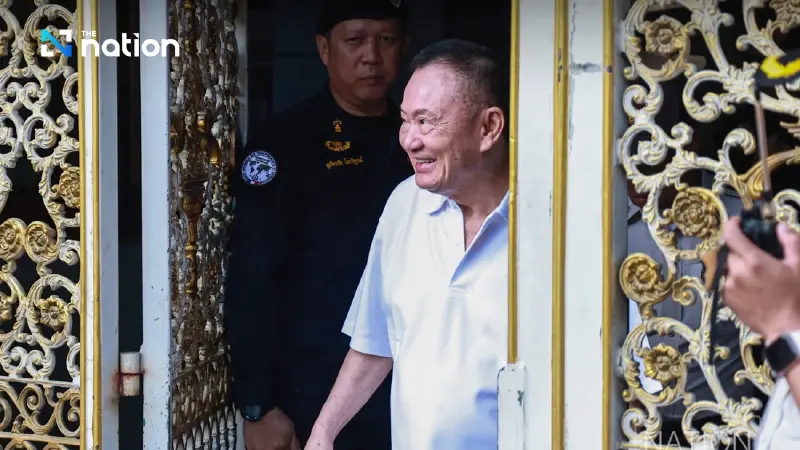


Former prime minister Thaksin Shinawatra has been released on parole after serving two-thirds of his jail sentence, but a political analyst says Thailand’s political landscape has already moved beyond the era once dominated by him and the Pheu Thai Party.
A political science expert said his comeback is unlikely to significantly reshape Thailand’s political landscape, arguing that the country has already moved beyond the political era once dominated by Thaksin Shinawatra.
Dr. Purawich Watanasukh, a political science lecturer at Thammasat University, said the political dominance once enjoyed by Pheu Thai has weakened over time, pointing toto the party’s declining performance in the 2023 general election, including setbacks in traditional strongholds in northern and northeastern Thailand.
“The good old days when Pheu Thai used to be the most popular party, I think those days have passed,” Dr. Purawich said.

Thaksin Shinawatra, a so-called spiritual leader of the Pheu Thai Party, has been released from Khlong Prem Central Prison after serving two-thirds of a jail sentence since September 2025.
He walked out of the maximum-security prison on parole on May 11 after serving roughly eight months of a one-year sentence linked to convictions involving abuse of power and conflicts of interest, while remaining on probation for four months under conditions requiring regular reports to officials and the use of an electronic monitoring device.
Dr. Purawich said Thaksin’s political identity remains closely tied to the Pheu Thai Party despite the party’s changing political position, addingthat, in the short term, Thaksin is more likely to continue playing a behind-the-scenes role while the party adapts itself into what he described as a medium-sized political party
Thaksin, once one of Thailand’s most influential political figures, returned to the country in 2023 after around 17 years in self-imposed exile and has long been viewed as a powerful figure behind the scenes within the Pheu Thai Party.
However,the Pheu Thai Party has shifted its focus toward rebuilding public trust and restoring its image after a loss of confidence linked to a controversy involving former prime minister Paetongtarn Shinawatra, Thaksin’s daughter, and Cambodian strongman Hun Sen.
The party’s main goal now is less about bringing back Thaksin-era politics and more about convincing voters that it can effectively govern and deliver policies, according to Dr. Purawich, saying that the party may focus on strengthening the ministries currently under its control and using government performance as a way to regain support ahead of future elections.
“If I were the strategist of Pheu Thai, I would devote a lot of energy and resources to the ministries under the party’s control and show the public that they can deliver results,” he said.
He noted that successful policy delivery could become an important political asset for the party in the next election campaign.
Thaksin's return is unlikely to immediately affect relations between the current government, Bhumjaithai Party. But, that is just for now in the short term, Dr. Purawich opined, noting that “the Pheu Thai Party remains a key player in coalition formation, which could determine whether the party could gain greater political leverage in the future”.
Meanwhile, Thaksin also continues to face legal attention. In 2025, he was acquitted in a royal defamation case connected to remarks made during a 2015 interview, although prosecutors later appealed the ruling.
His release has once again raised questions over whether he will return to active politics or gradually step away from public life. However, political critics believe that Thailand’s political environment has changed significantly since the height of Thaksin’s influence.
