
Vietnam raises rooftop solar grid sales ceiling to 50 per cent
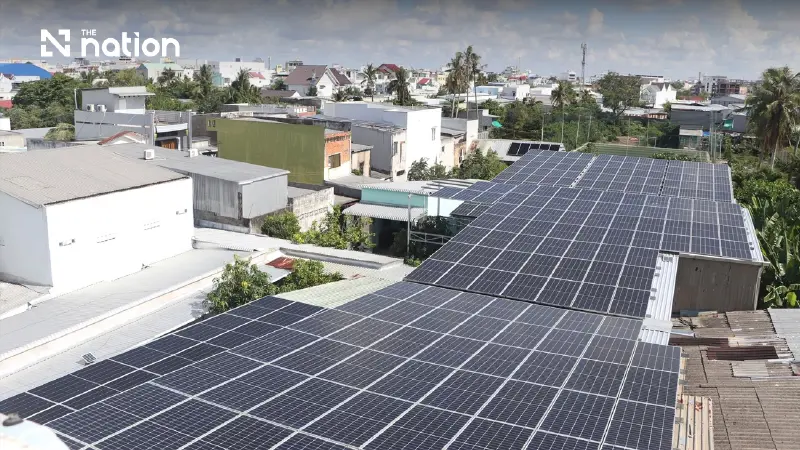


New decree lets eligible self-produced rooftop solar systems sell more surplus power, with higher caps where grids can absorb supply.
- Vietnam has raised the general limit for selling surplus rooftop solar power to the grid from 20% to 50% of the total electricity generated.
- The new regulation applies to self-consumed systems on residential homes, public assets, and in certain remote regions not connected to the national grid.
- The 50% sales cap can be exceeded until the end of 2030 in areas where the local grid has sufficient capacity to absorb the extra power.
- Rooftop solar systems in specified mountainous, border, and island areas that are not connected to the national grid will have no cap on the volume of surplus electricity they can sell.
Vietnam’s government has approved a sharp rise in the amount of surplus electricity that eligible rooftop solar systems may sell to the grid, increasing the general limit from 20 per cent to 50 per cent of total power generated.
The revision is set out in a newly issued decree amending regulations on renewable energy development and the direct power purchase mechanism.
It covers self-produced, self-consumed rooftop solar power systems that fall within the categories specified under the new rules.
Installations that may sell excess electricity include rooftop solar systems on detached residential homes, along with self-produced, self-consumed systems connected to the national grid at a low-voltage level.
The same eligibility also applies to systems in mountainous, border and island areas where local power grids exist but are not linked to the national power grid.
Self-produced, self-consumed rooftop solar power systems installed on public assets are also covered by the decree.
The decree allows the sales limit to rise above 50 per cent from its effective date of June 26 until December 31, 2030, but only where the local power grid has enough capacity to absorb the electricity and all grid safety and system operation requirements are met.
For rooftop solar systems in mountainous, border and island areas that are not connected to the national power grid, there will be no cap on the volume of surplus electricity that can be sold.
The purchase price for excess output will be calculated according to the previous year’s average electricity market price.
However, if that price is higher than the ceiling price for ground-mounted solar power without battery storage under the applicable regional pricing framework, the ceiling price will apply instead.
Vietnam News
