
New tourism strategies suggested to boost Thailand’s global appeal
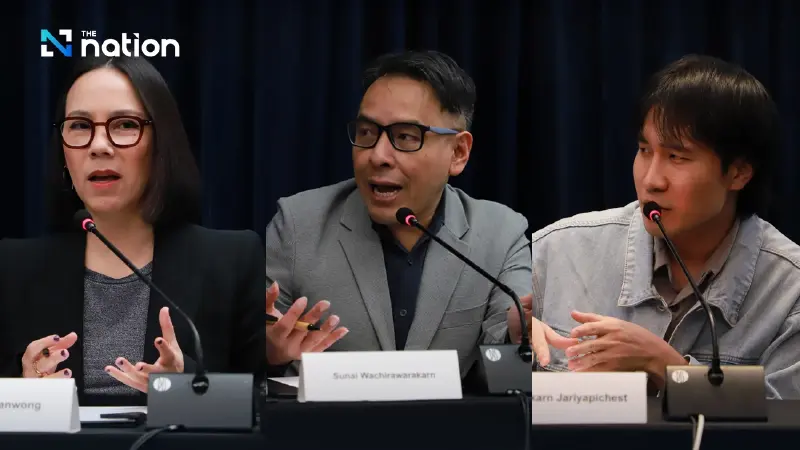


Experts at The Nation Visionary Club roundtable propose alternative tourism strategies to help Thailand stay a top global destination amid growing competition.
Experts invited to The Nation Visionary Club roundtable discussion, "Rebuilding Thai Tourism Trend: Travel for New Gen," presented various alternative tourism strategies that Thailand could adopt to maintain its position as a top travel destination.
These suggestions came as the majority of speakers highlighted a prevailing perception: many tourists believe Thailand is overly reliant on existing attractions, such as lush green landscapes, stunning beaches, and the cool weather of the mountains.
This perception, they argued, is one of the key factors challenging the competitiveness of Thai tourism.
Importance of wellness tourism for Thailand
Sunai Wachirawarakarn, President of the Thai Spa Association, highlighted the growing role of wellness tourism in stimulating Thailand’s tourism sector. He noted that wellness tourism accounts for 7.8% of all trips, with higher spending by wellness travellers compared to average tourists.
Sunai also discussed challenges facing the spa industry, including the impact of sex tourism on the perception of Thai massage. He proposed that businesses focus on expanding their offerings, such as wellness packages, to attract higher-spending tourists.
“If we have business opportunities for entrepreneurs to capitalise on, for example, rather than just offering those types of services, they could offer other services that would generate more revenue,” he said.

Sunai observed that wellness tourism has become a growing trend. He cited Singapore's investment in wellness facilities, which will allow both tourists and locals to access services in the next few years. He also mentioned that Dubai in the United Arab Emirates has permitted entrepreneurs to establish wellness facilities there.
He added that Italy features a large spa facility, which he described as a vast swimming pool with hydrotherapy, allowing people to enjoy the experience. Sunai suggested that Thailand could develop spa facilities in the style of Disneyland, where visitors not only enjoy entertainment and leisure but also benefit from wellbeing services.
“We don’t need a human-based revenue-generating business model anymore. We need something that generates revenue from the facility itself,” he said. “If we do this, we will rely more on the facility, and we can utilise the space and natural resource in Thailand.”
“I am confident that in every city, whenever we have this kind of space, we can make it more creative. It should not just focus on physical wellbeing, but also mental wellbeing.”
Sunai remarked that the Thai Spa Association has evolved the spa business from traditional massage shops, explaining that while Thailand has many spas, a redesign is needed.
“Wellness is not just about massage. It’s about anything that can improve wellbeing. For example, spaces where people can enjoy healthy Thai food and experience a Thai smile from the people,” he said.
Sunai highlighted two elements in which Thailand ranks highly. Thai food is ranked sixth globally, while Thai friendliness (the "Thai smile") ranks fourth.
“So why don’t we utilise this soft power to our advantage? We already have these assets, but we just need to redesign how we present them,” he concluded.

Evolving image of Thailand's tourism
Supakarn Jariyapichest, a Thai travel content creator, elaborated on foreign travellers’ perceptions of Thailand. “Whenever I travel and mention that I’m from Thailand, the first impression many people have is either Phuket or Pattaya. We cannot deny that these are the images that still persist, whether we like it or not.”
“But on the positive side, I think Thailand is somewhere in the middle, compared to countries like Japan, China, or Korea. However, I believe we can push to reach the level of greatness,” he added.
He explained that Vietnam is very competitive compared to Thailand, as online comparisons often favour Vietnam. Supakarn pointed out that while Thailand tries to hold on to its old image, it has not invented new things in tourism.
“Vietnam has been creating new attractions, even if they are not completely authentic, but they intrigue travellers. The key to tourism is offering new experiences,” he said. “Thailand has created new things, but it’s mostly more buildings, especially in Bangkok.”
He suggested that Thailand needs to develop authentic new attractions in secondary cities rather than focusing all efforts on the capital.
Supakarn also pointed out that travel prices matter. “When I travel to China, I spend less money than I do in Thailand. I don’t know why, but I believe it’s because China has better infrastructure and higher-quality hotels at lower prices.”
He added that travellers can be divided into two categories: backpackers, who don’t mind staying in cheap hotels and just want new experiences, and big spenders. “To attract more backpackers, Thailand needs to control prices where possible,” he advised.
Supakarn also noted that the Chinese government supports domestic tourism, making it almost as affordable to travel within China as it is to visit Thailand.
Acknowledging that tackling the price issue is challenging, Supakarn suggested that Thailand should try to reshape its image so that travellers feel it’s worth visiting again. He emphasised the importance of content creators in attracting visitors to Thailand.
“We are increasingly relying on social media. While it may not be the fastest or most effective way, when something goes viral, it stays there,” he said.
“Most tourist attractions people see today are from countries like Vietnam, Singapore, and Malaysia, and I see people showing those places in Thailand. We need to do more to create fresh and unique content,” he concluded.

Infrastructure and role of content creators
Suvita Charanwong, CEO and Co-founder of Tellscore, highlighted the need for Thailand to enhance its infrastructure and events to compete with tourism powerhouses like Japan and China.
While both of these countries have developed robust infrastructure and host a wide range of events to attract visitors, Suvita argued that Thailand must better leverage its own resources and unique destinations to boost tourism.
She acknowledged that Thailand does have solid hard infrastructure, including safety measures and connectivity, but stressed the urgent need to improve its soft infrastructure, particularly in communication.
Suvita emphasised the importance of effectively communicating positive messages about Thailand, such as its safety, inclusivity, and unique offerings for LGBT travellers, to counteract misinformation that spreads on social media.
Suvita also noted the influence of word of mouth in driving demand for travel. “The best influencers are the travellers themselves. When they talk about Thailand and return, that’s the key,” she explained.
Content creators, she believes, can play a pivotal role in this process by introducing new destinations and shifting the narrative around Thailand’s tourism. Platforms like iQIYI and Xiaohongshu, she added, are powerful tools that can help target specific audiences, especially Gen Z in China.
For Suvita, a long-term commitment to improving soft infrastructure is essential to ensure consistent messaging and to integrate new ideas and destinations. She believes this approach will foster sustainable growth in Thailand’s tourism sector.
She also suggested that content creators, particularly those in China, should be prioritised to help shape Thailand’s image in the Chinese market.
Suvita concluded by emphasising that content creators are not just PR tools—they are living entities who can establish genuine relationships and build communities on social media. This, she said, is key to fostering long-term engagement and success for Thailand's tourism industry.

