
China-India reset ties with direct flights, trade boost amid Trump tariffs
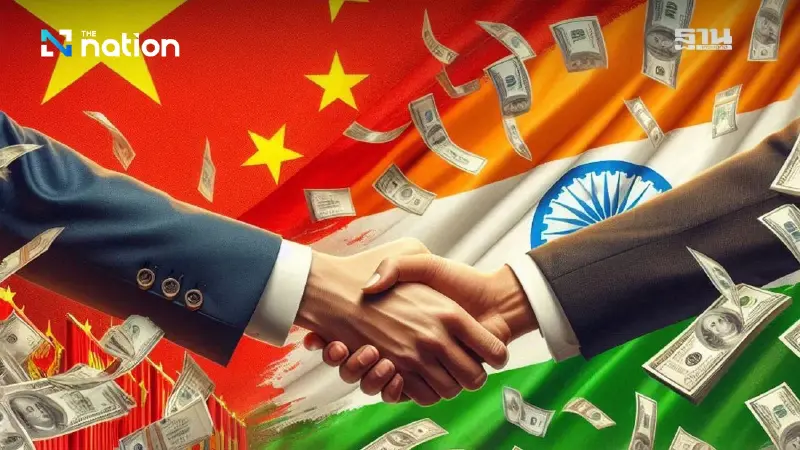


China and India have agreed to resume direct flights, open trade gateways, and boost investments while addressing border and Tibet dam issues, amid pressure from Trump’s tariffs and global politics.
China and India have signalled a thaw in their relationship after tensions escalated to their lowest point in years following the 2020 border clash, according to a Thansettakij.
The two nations have reached an agreement to reinstate direct flights, which were suspended due to the Covid-19 pandemic, and to promote trade, investment, and visa facilitation. They also plan to open three trade points along their shared border to strengthen economic ties.
This announcement follows the visit of Chinese Foreign Minister Wang Yi to New Delhi, where he held talks with Indian National Security Advisor Ajit Doval during the 24th round of discussions.
The two sides addressed long-standing issues such as the withdrawal of military forces from the Himalayan border, border demarcation, and border security cooperation.
They agreed to establish a permanent working group to coordinate and drive talks on all fronts, covering eastern, central, and western sectors, with the next round of talks set to take place in China in 2026.
Indian Prime Minister Narendra Modi posted on X, emphasising that a stable and constructive relationship between India and China would benefit both regions and global peace. He is also scheduled to visit China later this month to attend the Shanghai Cooperation Organisation (SCO) summit, marking his first visit in over seven years.
On another front, India raised concerns about China’s large-scale dam projects on the Yarlung Tsangpo River in Tibet, which flows into India and Bangladesh as the Brahmaputra.
India stressed the need for “maximum transparency,” as the projects affect downstream countries. In response, China agreed to provide emergency flood data and establish a framework for future expert-level discussions.
Another key development is China's pledge to supply India with urgently needed goods and resources, such as fertilisers, rare earths, and tunnel drilling machinery, signalling positive momentum for their economic cooperation.
China had already eased restrictions on urea exports, and India has resumed issuing tourist visas for Chinese nationals.
However, this thaw in relations comes amid mounting pressure from the United States, with President Donald Trump preparing to increase tariffs on imports from both India and China.
Additionally, he has threatened to impose a 50% tariff on Indian crude oil imports from Russia, effective August 27, leading both New Delhi and Beijing to view cooperation as a way to stabilise their economies and counter uncertainties in global trade.
Indian Foreign Minister Subrahmanyam Jaishankar made it clear that both countries seek a better relationship in the future, stressing that differences should not lead to conflicts.
Wang Yi echoed this sentiment, stating that China and India should build trust through dialogue and expand cooperation to strengthen regional and global confidence, especially as free trade faces mounting pressure.

China and India strike 10-point deal to strengthen bilateral ties
On Monday (August 18), Wang Yi visited New Delhi to meet with Subrahmanyam Jaishankar, according to Krungthep Turakij.
During the visit, the two sides held constructive and forward-looking discussions on various bilateral, regional, and international issues of mutual interest, and also met with Narendra Modi.
The foreign ministers of both countries reached an understanding and signed a 10-point agreement aimed at enhancing their relationship, which includes the following:
- Both China and India emphasised the crucial and irreplaceable role of their leaders’ strategic approach in developing bilateral relations. They agreed that a stable, collaborative, and forward-looking relationship is mutually beneficial for maximising development potential. The two sides reaffirmed their commitment to adhering to shared understandings on key issues and promoting sustainable, strong, and stable ties.
- China welcomed Narendra Modi’s participation in the upcoming SCO summit in Tianjin, China, while India pledged full support for China’s chairmanship of the SCO.
- Both sides agreed to support each other in successfully hosting diplomatic events, with China supporting India’s hosting of the 2026 BRICS summit, and India supporting China’s hosting of the 2027 BRICS summit.
- The two sides committed to revitalising bilateral exchange and negotiation mechanisms to enhance cooperation, address mutual concerns, and manage differences appropriately. This includes holding the third exchange meeting between Chinese and Indian citizens in 2026.
- Both sides agreed to continue supporting activities in 2025 to celebrate the 75th anniversary of diplomatic relations between China and India.
- They agreed to resume direct flights between China and India as soon as possible, finalising an updated air services agreement. Additionally, both sides pledged to facilitate visa issuance for tourists, businesspeople, media, and other travellers between the two countries.
- Both sides agreed to expand opportunities for Indian pilgrims to visit sacred mountains and lakes in the Tibet Autonomous Region (Xizang) of China in 2026.
- They agreed to adopt concrete measures to facilitate trade and investment between the two countries.
- Both sides committed to maintaining peace and stability along their shared border through friendly consultations.
- Both countries agreed to promote multilateralism, enhance communication on key regional and global issues, preserve the multilateral trading system based on rules with the World Trade Organisation (WTO) at its core, and support a multipolar world order to safeguard the interests of developing nations.
