
Over a million evacuated as Punjab reels from worst floods in decades
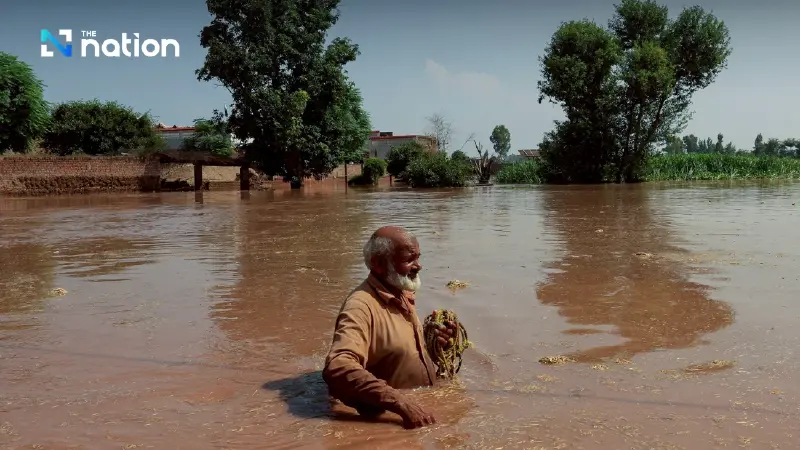


Authorities in Pakistan have moved more than a million people to safety in Punjab this week after the province was struck by its heaviest flooding in 40 years, officials confirmed on Thursday.
Days of relentless monsoon downpours, coupled with the release of excess water from dams in neighbouring India, have swollen the Ravi, Sutlej and Chenab rivers, forcing breaches of riverbanks and inundating more than 1,400 villages, according to Punjab’s disaster management authority.
In Qadirabad, the River Chenab overflowed suddenly, leaving residents wading through chest-deep water. “We spent the whole night terrified,” said Nadeem Iqbal, a 26-year-old labourer carrying his child through the floodwaters. “Children cried, women were distressed. We were helpless.”
Punjab, home to nearly half of Pakistan’s population and a key producer of wheat, rice and cotton, has seen at least 12 deaths this week, provincial minister Marriyum Aurangzeb said. Nationwide, the floods since late June have claimed 819 lives, while across the border in Indian Kashmir, at least 60 people have died this month.

The Chenab River threatened to overwhelm the 1,000-metre barrage at Qadirabad on Thursday morning. To protect the structure, authorities detonated sections of the riverbank to divert water into surrounding fields, averting a collapse that could have submerged two nearby towns. By afternoon, water levels had fallen to 754,966 cusecs, below the barrage’s 800,000-cusec capacity after peaking near one million overnight.
Officials said shifting weather patterns had intensified the flooding, part of a trend that has battered Pakistan in recent years. In 2022, catastrophic monsoon rains killed more than 1,000 people and destroyed crops, roads and bridges.
“This year, for the first time, weather systems from the east, south and west converged over Pakistan,” said Inam Haider Malik, head of the National Disaster Management Agency. Planning Minister Ahsan Iqbal added that climate change is now “the new normal” , but insisted the crisis remained manageable.
Across the border, forecasters in India reported that river levels in the Himalayas had begun to fall as rains eased on Thursday.
Reuters
