
Trump announces 100% tariffs on Chinese goods and export controls on critical software
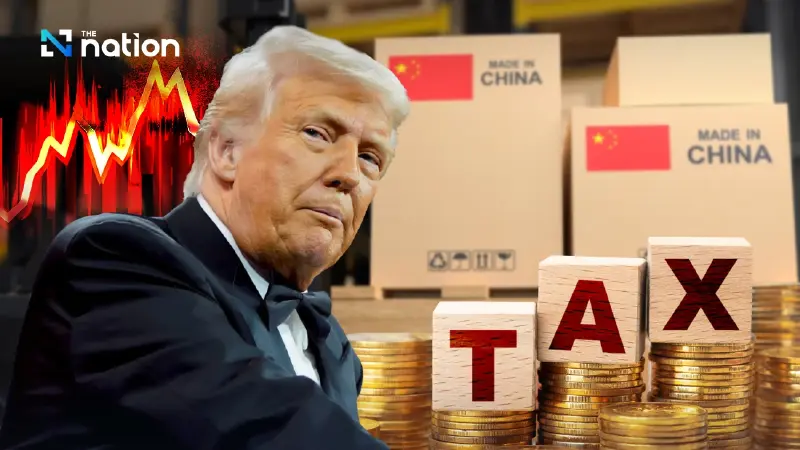


US President Donald Trump announces 100% tariffs on Chinese imports from November 1 and export restrictions on critical software, escalating the trade war.
Donald Trump, President of the United States, announced on Friday that the US will impose 100% tariffs on imports from China, in addition to any current tariffs China is paying. These measures will take effect from November 1, 2025.
Trump also stated that on the same day, the US will impose tariffs on any critical software imports.
The announcement comes just hours after Trump threatened a “major tariff increase” in response to China’s new restrictions on rare earth exports. Around 70% of the world’s rare earth minerals come from China, and they are essential for advanced technology, including automotive, defence, and semiconductor industries.
Trump also confirmed that he would cancel a planned meeting with Chinese President Xi Jinping at the Asia-Pacific Economic Cooperation summit in South Korea due to China’s new export controls.
Nearly all goods imported from China to the US already face high customs duties, ranging from 50% on steel and aluminium to 7.5% on consumer goods, with the effective average tariff currently around 40%, according to Wells Fargo Economics and analysts from the Federal Reserve Bank of New York.
On his social media platform Truth Social, Trump wrote: “China has taken an extremely aggressive stance on trade, sending highly antagonistic signals worldwide. They plan to implement broad export controls on nearly all manufactured goods — including some not produced in China — starting 1 November 2025. This affects every country, without exception, and is unprecedented in international trade, representing a moral failure in dealing with other nations.”
He added that from November 1, 2025 (or earlier, depending on Chinese actions), the United States will impose 100% tariffs on Chinese imports, exceeding any tariffs currently paid by China. On the same day, the US will implement export controls on all critical software.
Meanwhile, China’s Ministry of Commerce announced on Thursday that from December 1, foreign entities will require export licences for products containing more than 0.1% Chinese rare earths or using Chinese rare earth extraction, refining, magnet production, or recycling technologies.
Trump may suspend tariffs if China lifts rare earth export controls
Bloomberg reported that on Friday, Donald Trump acknowledged he might withdraw the planned major tariffs if China eases restrictions that threaten rare earth trade. He also noted that a meeting with Xi Jinping later this month remains possible.
“That’s why I decided on November 1,” Trump said. “We’ll see what happens.”
The tariff measures Trump announced would raise duties on several Chinese imports to 130% starting next month, slightly lower than the 145% level imposed earlier this year before both countries reduced tariffs to conclude trade negotiations.
The announcement caused sharp declines in stock markets on Friday. US equities experienced the heaviest sell-off in six months, with the S&P 500 dropping 2.7%, marking its worst day since April 10, and the Nasdaq 100 plunging 3.5%. Meanwhile, Chicago Board of Trade soybean futures fell by 1.9%.
