
Crypto turns Trump empire into billion-dollar fortune
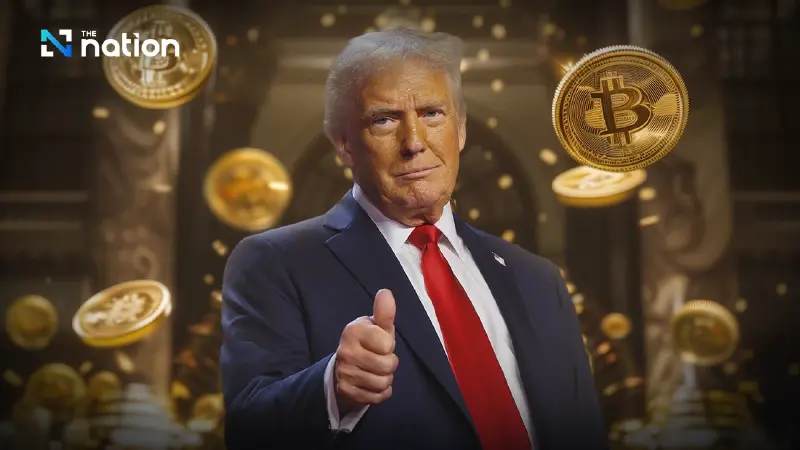


Trump’s crypto ventures — from NFTs and memecoins to DeFi and stablecoins — have earned over US$1 billion, sparking conflict-of-interest questions.
According to Krungthep Turakij, US President Donald Trump and his family have earned more than US$1 billion from cryptocurrency-related ventures over the past year, capitalising on the surging digital-asset market and on policies from Trump’s own administration that favoured the crypto industry.
Trump’s expanding crypto empire
Although Trump has repeatedly claimed to have “stepped back” from his business dealings since entering politics — transferring control to his sons — analysts say his actions stand out in modern US history for blurring the line between political power and private profit.
His family’s deep involvement in digital assets has reignited concerns about conflicts of interest and profiting from public office.
Just seven weeks before the presidential election, the Trump family formally entered the crypto industry by launching World Liberty Financial (WLFI) — a digital finance platform co-founded by Trump’s sons alongside long-time associate Steve Witkoff.
Under the platform’s model, tokens are sold to investors, with 75% of profits reportedly going to the Trump family.
A Financial Times (FT) report outlined the scope of the Trump crypto empire, identifying the following revenue streams:
- NFTs (digital collectibles): Images of Trump in various personas, including superhero parodies.
- Memecoins: Tokens such as $TRUMP and MELANIA, the latter generating around US$427 million in speculative profits.
- Stablecoins: The USD1, pegged to the US dollar and marketed as a “right-wing dollar”, recorded US$2.7 billion in sales in its first few months, earning US$42 million in profit.
- DeFi platforms: Through WLFI, co-founded by Eric and Donald Trump Jr., the family launched its own token in September 2025, netting US$550 million in gains despite a 57% price drop from its peak.
Combined, these assets are estimated to have generated over US$1.01 billion, though Eric Trump told the FT the true figure “could be even higher.”
The family’s flagship company, Trump Media & Technology Group (TMTG) — which owns Truth Social — has also rebounded dramatically.
After a US$401 million loss last year, the firm has now turned a profit through holdings in Bitcoin and other cryptocurrencies, as well as integration of WLFI and USD1 into its ecosystem, pushing total revenue to US$3 billion for the first time.
From “crypto is a scam” to “crypto-friendly policy”
Ironically, Trump was once a staunch crypto critic, calling Bitcoin a “scam” in 2021. His stance shifted dramatically during the 2024 presidential campaign, following meetings with powerful crypto lobbyists. In July that year, he pledged to make his administration “crypto-friendly” if re-elected.
Since then, Trump has rolled out several pro-crypto initiatives:
- Establishing a National Bitcoin Reserve.
- Appointing crypto-friendly regulators to key agencies, including the Securities and Exchange Commission (SEC), leading to the suspension of several major investigations.
- Directing the Justice Department to scale back probes into crypto firms.
- Allowing Americans to invest part of their retirement savings in digital assets.
- Lifting restrictions on mainstream banks participating in the crypto sector.
From influence to conflict of interest
Despite assurances by Eric Trump last year that a “very large wall” separated the Trump organisation from government, the family’s global crypto push has blurred that line more than ever.
The Trump sons have travelled extensively to Abu Dhabi, Hong Kong, Singapore and other financial hubs to court investors and promote their crypto ventures.
At a Bitcoin conference in Las Vegas in May, Donald Trump Jr. openly said that lawmakers overseeing crypto policy were “investing in it themselves,” calling this “a good thing for the community.”
Eric Trump, meanwhile, has made exaggerated predictions — claiming the government would stockpile “massive amounts of Bitcoin” and that a single Bitcoin, valued at around US$110,000 at the time, could one day reach US$1 billion.
While supporters insist Trump is complying with US law — which imposes no conflict-of-interest restrictions on the presidency — critics argue the family’s conduct represents a profound ethical breach.
However, analysts noted that no one has ever done this before, adding that using public office for personal gain rather than public service lies at the heart of the moral dilemma.
