
Cambodia elevates China and sidelines Thailand at IPU over scam resolution
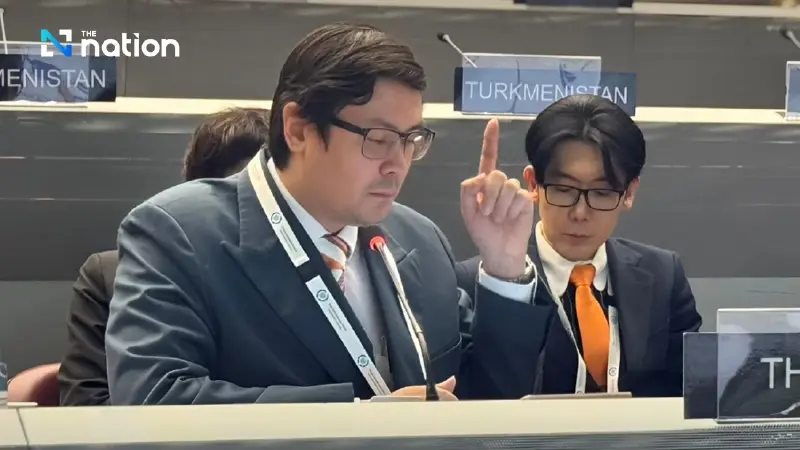


At the 151st Inter‑Parliamentary Union in Geneva, Cambodia aligned with China to sideline Thailand during approval of a Thai-led resolution on transnational scams
During the 151st session of the Inter‑Parliamentary Union (IPU) in Geneva, Switzerland, on October 23, 2025, Cambodia took strategic steps alongside China to marginalise Thailand’s role in the drafting committee for the emergency resolution on transnational crime, cyber-scams and hybrid threats—an initiative led by Thailand.
Thailand’s draft resolution had been overwhelmingly approved as an “emergency item” by the IPU membership, making it the only such item for 2025. Despite this, when the next stage came—forming an 11-member drafting committee from the six regional groups—a derailment occurred: Cambodia, which had neither voted in favour nor participated at the vote, nominated itself (together with China), seeking a key role in the committee. When the Asia-Pacific Group (APG) allocated two slots, Cambodia manoeuvred to install China as the chair and itself as deputy, relegating Thailand—originator of the resolution—to an “advisory” role with no vote.
Observers say Cambodia’s tactics echo those used by scam networks: adopting a friendly stance at first (joining ASEAN+3 and APG meetings without objecting), then withdrawing at key moments (absent at the vote), then leveraging influence to gain power behind the scenes—to “push Thailand aside”. The aim, according to critics, is to influence the final wording of the resolution in favour of Cambodian interests.
Thailand’s parliamentary delegation—chiefly Rangsiman Rome—refused to accept the sidelining. With support from other members (notably from Mexico, chair of the drafting group), Thailand retained a seat and insisted on full voice and vote. Ultimately the committee assignment was re-settled after intense negotiation, but the episode symbolises the intricate diplomatic manoeuvring on display at the IPU, and the lengths to which Cambodia is prepared to go—including aligning with China—to block being named a vulnerable centre of scam networks.
The incident illustrates the broader stakes: controlling the drafting process gives a country real influence over how global parliamentary bodies address transnational wrongdoing. As Thailand’s victory in placing its resolution on the emergency agenda shows, the next stage is influence over content—which is where Cambodia tried to intervene.
In summary: While Thailand won the headline vote, Cambodia attempted to hijack the behind-the-scenes mechanics to reduce Thailand’s influence—an example of “every angle” maneuvering in international parliamentary diplomacy.
