
China executes 5 tied to Kokang call-centre scam in Myanmar
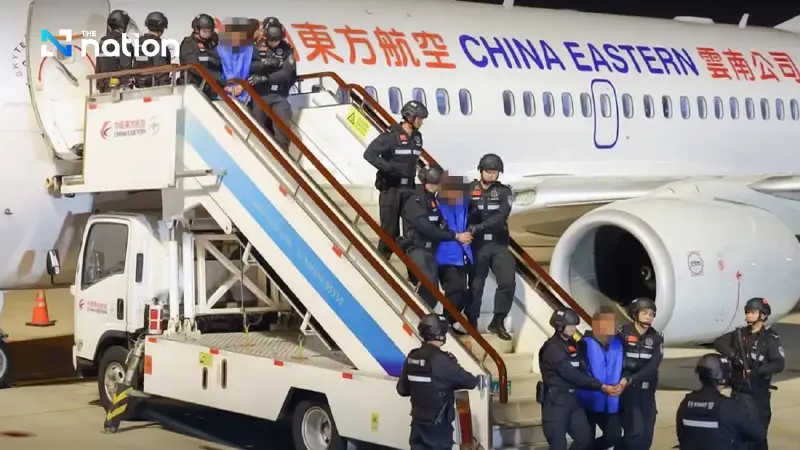


A Chinese court sentenced five criminals to death and others to prison for operating call-centre scams in Kokang, northern Myanmar, that caused multiple deaths.
Xinhua reported that on Tuesday (November 4), the Shenzhen Intermediate People’s Court in Guangdong province sentenced five defendants to death for their involvement in a criminal network operating in the Kokang region of northern Myanmar. The group was convicted of multiple offences, including fraud, intentional homicide, and assault.
The court ruled that their crimes led to the deaths of six Chinese citizens, the suicide of another, and several injuries.
In addition to the five executions, two defendants received suspended death sentences, five were given life imprisonment, and nine others were jailed for between three and 20 years. The sentences were accompanied by fines, asset seizures, and deportations.
The syndicate reportedly ran 41 operational bases in Kokang, engaging in crimes ranging from telecommunications fraud and illegal gambling to murder, human trafficking, and prostitution.
One of the executed defendants also conspired in the production and trafficking of about 11 tonnes of methamphetamine. The total funds involved in the scams and gambling operations exceeded 29 billion yuan (around 133 billion baht).

Previous executions of the ‘Ming family gang’
On September 30, a local court in Zhejiang province sentenced 11 members of the so-called “Ming family gang” — a major telecom-fraud syndicate based in Laukkai, northern Myanmar — to death for multiple crimes.
Among them, five received suspended death sentences, 11 were jailed for life, and 12 were sentenced to between five and 24 years, alongside additional penalties such as fines, asset confiscations, and deportations.
The court found that since 2015, the gang had established heavily armed criminal compounds in Laukkai for large-scale telecom fraud, gambling, drug trafficking, and prostitution, involving over 10 billion yuan (around 45.3 billion baht) and resulting in 14 deaths and six injuries.
According to BBC reports, the “Ming family” operated under one of the four powerful clans controlling Laukkai, turning the city into a hub of gambling, narcotics, and online scams until a major crackdown in 2023 led to multiple arrests and extraditions to China.
