
Thailand’s Foreign Minister outlines plan to restore global influence, focuses on proactive diplomacy
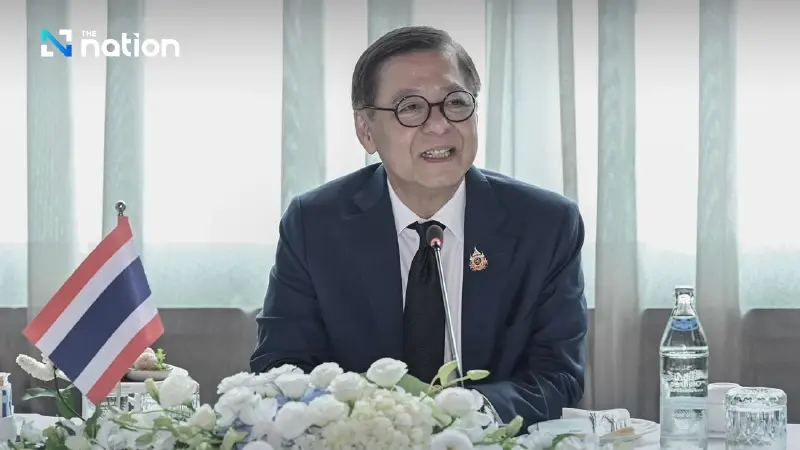


Thailand’s Foreign Minister discusses the nation’s waning global influence and unveils a 4-month recovery plan, with a focus on proactive diplomacy and economic leadership.
Sihasak Phuangketkeow, Minister of Foreign Affairs of Thailand, shared insights into the country’s diminishing global image and explained why Thailand is currently perceived by many as just a destination with good food, kind people, and beautiful tourism.

In an exclusive interview, Sihasak noted that Thailand's role on the world stage has declined significantly. "Currently, we are viewed simply as a country with good food, kind people, and attractive tourism, but there is much more to Thailand," he said. He pointed out that European countries often associate the Indo-Pacific region with nations like Indonesia, Singapore, Malaysia, and Vietnam, yet Thailand is often overlooked.
Drawing comparisons with South Korea, which has evolved into a global leader in economics, technology, and cultural influence, Sihasak highlighted that Thailand’s slow economic development and political instability have hindered its international standing. “Even our neighbouring countries like Indonesia, which is in the G20, and Singapore, with its strong global influence, have outpaced us. Malaysia leads the Muslim world, while Vietnam has embraced free trade policies and struck multiple trade agreements. Meanwhile, Thailand is perceived as lacking agility and decisiveness,” he said.

Three main factors for Thailand’s loss of global influence
Sihasak identified three key factors for Thailand’s decline on the global stage:
- Political instability: Repeated coups have led to reduced diplomatic relations with Western countries and diminished trust, causing Thailand’s international role to fade.
- Slow economic growth: Thailand's growth has lagged behind neighbouring countries, and there is no clear unique selling point that stands out to the world.
- Passive diplomacy: Thailand has often taken a reactive approach rather than proactively seeking opportunities or forming new alliances.
4-month recovery plan: Six game-changing measures
To address these issues, the Ministry of Foreign Affairs has developed a 4-month recovery plan, with six key strategies:
- At Home First: Strengthening internal unity within Thailand.
- Proactive diplomacy: Thailand must stop waiting and actively seek opportunities, especially during times of global competition between major powers, which offers a chance to enhance Thailand's negotiating power.
- Economic diplomacy: This is considered the most crucial strategy. The goal is to transform the Ministry of Foreign Affairs from a ceremonial body into an active force driving economic development, opening business opportunities, and fostering understanding of new technologies like AI, digital economies, and the green economy.
- Regional engagement: Thailand must take a stronger role in regional issues, particularly Myanmar and Cambodia, as they directly affect Thailand’s interests in refugee management and border trade.
- Maintaining balance with dignity: Thailand will maintain a neutral stance between the US and China, prioritising regional stability and national interests.
- Transparent communication: Ensuring the public understands the role and benefits of foreign policy, making diplomacy more relatable and inclusive of Thai society.
Sihasak concluded, "We must make diplomacy more accessible and involve the Thai public in the process." The plan aims to restore Thailand’s global influence and enhance its role in international diplomacy.

