
Thai Foreign Minister Vows to Steer Thailand to Neutral Geopolitical Balance Amid Superpower Rivalry
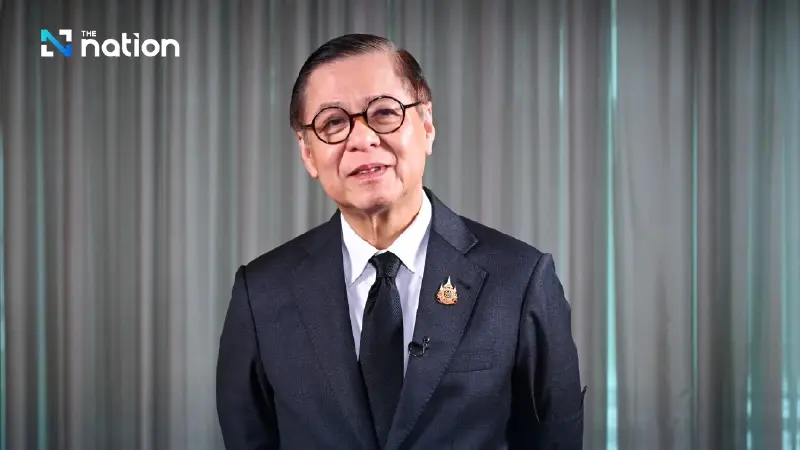


Thai Foreign Minister insists Bangkok is forging a "better balance" between Washington and Beijing, using resource diplomacy to boost high-tech production at home
- Thailand's Foreign Minister is pursuing a strategy of "better balance" between the United States and China to increase the nation's bargaining power by clearly defining its own national interests.
- Recent diplomatic engagement with the US is described as a "necessary correction" to a previous imbalance, not a pivot away from China, with whom relations remain strong.
- The country is using "resource diplomacy," such as a non-binding agreement with the US on critical minerals, to advance its own high-tech production goals rather than simply aligning with a superpower.
- While seeing the US as necessary for regional balance, Thailand explicitly states it will not participate in any American-led strategy to "encircle or oppose China," underscoring its neutral stance.
Thai Foreign Minister insists Bangkok is forging a "better balance" between Washington and Beijing, using resource diplomacy to boost high-tech production at home.
Thailand’s Foreign Minister Sihasak Phuangketkeow has provided a candid insight into the kingdom’s diplomatic strategy, stating he is aiming to establish a position of "better balance" between the world's two major powers, the United States and China.
In an exclusive interview with NationTV, Sihasak challenged the notion that Thailand should be overly cautious in the current bipolar geopolitical landscape.

Instead, he argued that a well-defined position, rooted in clear national interests, presents an opportunity to "increase Thailand's bargaining power."
“Thailand must prioritise knowing its own interests rather than letting a superpower dictate what our interests are, and the country must be bold in its decision-making,” he stressed.

Restoring the US Relationship
Addressing speculation that Thailand was leaning back towards the US, Sihasak maintained that the shift was not a diplomatic tilt but a necessary correction.
He suggested that previous Thai governments had limited options, leading to an imbalance.
“In the past, [Thailand] may have been heavy towards the other side,” he commented. “The US had distanced itself from Thailand since the coup, didn’t view Thailand as strategically important, and neglected Thailand’s strategic role, as Thai politics were unstable.”
He pointed to recent events, such as the Thai-Cambodian Declaration of Relations witnessed by the US, as a move towards greater balance, not an indication of aligning with the US.
He also suggested that US involvement in the resolution of the Thai-Cambodian peace issue helped put Thailand back on the geopolitical “radar screen.”

The China Relationship and Critical Minerals
On the crucial relationship with China, the minister was quick to dismiss any suggestion of a shift in attitude, confirming that ties remain strong.
He highlighted that President Xi Jinping's recent bilateral meeting with Prime Minister Anutin Charnvirakul at the APEC Summit in South Korea indicated that China still values the partnership and has many areas of mutual benefit to discuss.
Sihasak clarified the recently signed Memorandum of Understanding (MOU) with the US on critical minerals, emphasising its strategic importance for Thailand’s high-tech industry.

He explained that these minerals are vital for developing advanced technology, and the MOU focuses on the supply chain to support the production of high-tech goods in Thailand.
Crucially, he affirmed that the agreement is about technology cooperation, not resource extraction, and must strictly comply with all Thai laws and regulations.
He also noted that the agreement is non-binding and can be terminated at any time, stating, "If the terms are not in line with Thai policy and law, Thailand will not accept them."

ASEAN's Future
Looking ahead, Sihasak stressed that both China and the US are critical to ASEAN. While China is a regional superpower, the relationship with the US is necessary to maintain the regional balance of power.
He cautioned, however, that Thailand would not participate in any strategy by the US to "encircle or oppose China."
He concluded that the two global superpowers must eventually find a new equilibrium as they cannot fully decouple.
“Thailand hopes both countries will find a new equilibrium, as the two cannot completely cut ties and must be interdependent,” he said, adding that competition in the region is expected to continue.
