
Poland marks Independence Day, celebrating 1918 restoration of sovereignty
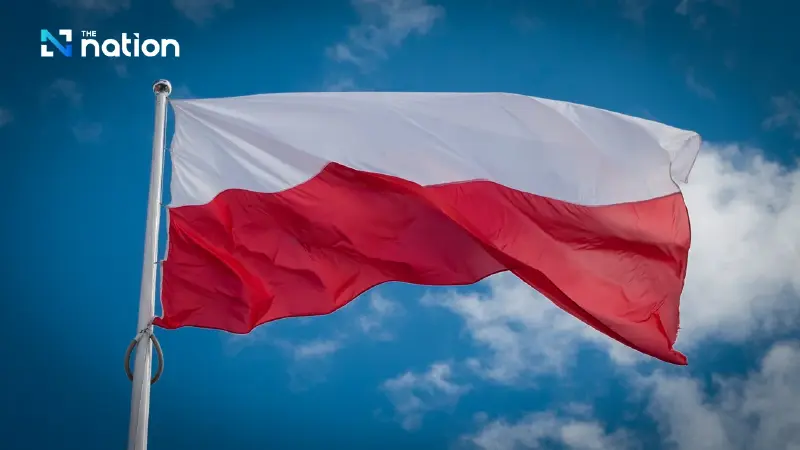


Poland celebrates its Independence Day on November 11, marking the anniversary of the restoration of the country’s sovereignty as the Second Polish Republic in 1918, following 123 years of partition under the German, Austro-Hungarian and Russian Empires.
Poland’s path to independence was a gradual process that unfolded between 1916 and 1918. The Act of 5th November 1916 marked the first step towards self-rule with the creation of the Regency Kingdom of Poland.
As the occupying powers weakened during the final months of World War I, Polish institutions began reclaiming authority. The Regency Council declared independence on October 7, 1918, while local Polish organisations and militias took control from retreating German and Austrian forces.
Meanwhile, Ignacy Daszyński formed a provisional government in Lublin, signalling the emergence of a unified national movement.
Józef Piłsudski’s return from imprisonment on November 10, 1918, became a defining moment. The following day, he was appointed Commander-in-Chief and entrusted with forming a national government. His leadership marked the official restoration of Polish sovereignty, which he proclaimed to the world on November 16.
Independence Day became a formal holiday in 1937, though its celebration was interrupted by World War II and later suppressed under communist rule, when November 11 commemorations were replaced with the National Day of Poland’s Revival.
Despite decades of censorship, Poles continued to mark November 11 as a symbol of resistance, especially during the 1980s Solidarity movement. Following the fall of communism in 1989, Independence Day was restored to its original date.
While other nations observe Armistice Day as a time of mourning, Poland’s celebration reflects both remembrance and triumph — honouring those who fought and celebrating the rebirth of a free nation after 123 years of partition.

Celebrations during Independence Day
Poland’s Independence Day is celebrated nationwide, with the main events taking place in Warsaw’s Piłsudski Square by the Tomb of the Unknown Soldier.
The capital hosts an official military parade attended by the President, the Prime Minister, and senior government officials, with televised ceremonies that honour Poland’s history and those who fought for its freedom. Across the country, cities are decorated with Polish flags, and citizens take part in parades, concerts, and public speeches.
Although it is a national celebration, the tone of the day is generally solemn, reflecting remembrance as much as pride.
Among the most distinctive events is the Warsaw Independence Run, in which thousands of participants wear white and red — the national colours — forming a living Polish flag.

About Poland
Poland, officially the Republic of Poland, is a country in Central Europe stretching from the Baltic Sea in the north to the Sudetes and Carpathian Mountains in the south.
It shares borders with Lithuania and Russia to the northeast, Belarus and Ukraine to the east, Slovakia and the Czech Republic to the south, and Germany to the west.
The country features a diverse landscape, rich ecosystems, and a temperate climate. Divided into sixteen administrative provinces known as voivodeships, Poland is the fifth most populous member of the European Union, with a population of over 38 million, and the fifth largest by land area, covering 312,696 square kilometres.
Its capital and largest city is Warsaw, while other major cities include Kraków, Wrocław, Łódź, Poznań, and Gdańsk.

Where to travel in Poland?
Poland, often called the land of history and hidden beauty, invites travellers with its rich heritage, vibrant culture, and breathtaking natural scenery. From lively cities to tranquil landscapes, every corner of the country offers something to inspire the imagination.
Begin your journey in Warsaw, the dynamic capital filled with charm and resilience. Explore the magnificent Royal Castle, visit the Warsaw Uprising Museum to uncover the city’s heroic past, and stroll through the beautifully restored Old Town, brimming with cobbled streets and colourful facades.
Next, head to Kraków, one of Europe’s most picturesque cities. Home to the historic Jagiellonian University and the majestic Wawel Castle, Kraków’s vast Market Square — the largest in Europe — is surrounded by Gothic and Renaissance architecture, offering a perfect blend of history and beauty.
For nature lovers, the Masurian Lake District in northeastern Poland offers a peaceful escape. Glide across crystal-clear lakes by kayak or sailboat, hike through lush forests, and unwind in a quiet lakeside cabin.
To the south, the Tatra Mountains provide a haven for outdoor enthusiasts — ideal for hiking in summer and skiing in winter, with sweeping views of snow-capped peaks and pristine alpine lakes.

Relationship with Thailand
Thailand and Poland established formal diplomatic relations on November 14, 1972, at the United Nations Headquarters in New York. In 2025, the two nations mark 53 years of diplomatic ties, underscoring a long-standing friendship built on mutual respect, trade, and cultural exchange.
In 2022, bilateral trade between the two countries totalled US$976.77 million, with Thailand exporting US$541.93 million worth of goods and importing US$437.84 million from Poland.
Thailand’s key exports included rubber products, computers and electronic components, air conditioners and parts, natural rubber, and automobiles and parts. Meanwhile, imports from Poland consisted mainly of metal ores and products, automotive parts, machinery, electrical equipment, and chemical products.
In terms of tourism, 18,056 Polish visitors travelled to Thailand in 2022, while 21,308 Thais visited Poland in 2019. Around 800 Thai nationals currently reside in Poland, most working in the service sector as chefs, masseuses, and spa therapists.
Thailand maintains an embassy and an office of international trade promotion in Warsaw, which serve as key channels for strengthening bilateral cooperation and promoting economic and cultural relations between the two nations.
