
K-Beauty and Thai Content Industries Eye Collaborative Future at Bangkok Forum
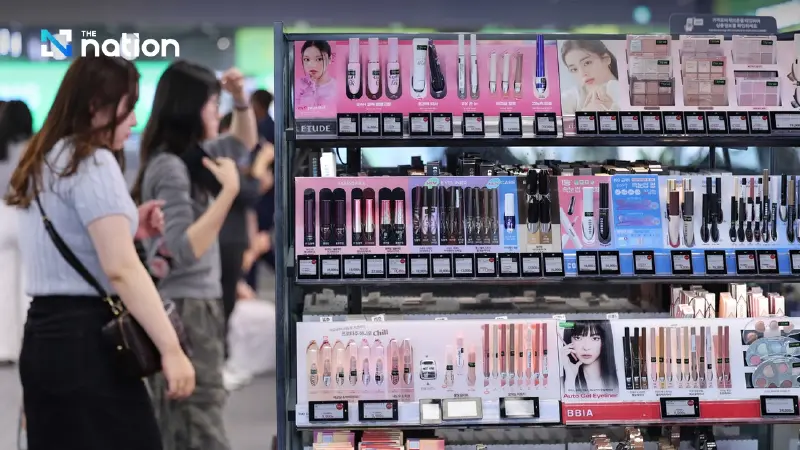


Industry leaders outline strategies to merge Korean innovation with Thai creativity, positioning Southeast Asia as next frontier for cultural commerce
- At a business forum in Bangkok, leaders from South Korea and Thailand outlined a strategy to merge Korean innovation with Thai creativity for mutual economic growth and enhanced soft power.
- The collaboration positions Thailand as a strategic base for K-Beauty's expansion into Southeast Asia, with opportunities in joint product development using Thai natural ingredients.
- In the content industry, Thailand is seeking co-production ventures with Korean partners, offering financial incentives and highlighting its globally popular "Boy Love" genre as a key area for investment.
- The partnership aims to replicate Korea's successful model where cultural content drives growth in interconnected sectors like beauty, tourism, and lifestyle products for both nations.
Industry leaders outline strategies to merge Korean innovation with Thai creativity, positioning Southeast Asia as next frontier for cultural commerce.
Korean and Thai cultural industry leaders have mapped out an ambitious blueprint for collaboration that could reshape the Asian creative economy, leveraging the global success of K-Beauty and Korean content alongside Thailand's emerging creative sector.
Speaking at the second session of the IGNITE Thailand-Korea Business Forum in Bangkok on Monday, executives and influencers outlined how the synergy between Korean innovation and Thai cultural assets could drive mutual economic growth whilst strengthening both nations' soft power globally.
Cho In-je, Chief Executive of Purito Seoul, positioned K-Beauty as more than mere cosmetics, describing it as "a story blended with innovation, creativity, and cultural connection".
The industry has achieved remarkable global standing, now ranking as the world's third-largest beauty market after France and the United States, with substantial user bases spanning China (26 million), Japan (8 million), the United States (13 million), and the Asia Pacific region (15 million).

The Korean beauty sector's success stems from a unique structural ecosystem featuring over 4,000 top-tier ODM/OEM companies, such as Cosmax and Kolmar, enabling rapid product development and commercialisation.
This "open R&D" model allows even small and medium-sized brands to quickly launch products based on the latest trends captured through digital platforms like TikTok and Instagram.
Cho identified Thailand as a "very important forward base" for K-Beauty's Southeast Asian expansion, noting that companies including Cosmax have already established production facilities in the kingdom.
He proposed collaboration opportunities centring on Thailand's rising T-Beauty sector, the kingdom's potential as a supplier of natural cosmetic ingredients, and joint cultural content creation.

Anna Sueangam-iam, former Miss Universe Thailand 2022 and a prominent beauty influencer, confirmed K-Beauty's "massive influence" on Thai consumer behaviour.
She observed a fundamental shift amongst Thai women, who now prioritise internal health and facial skincare over makeup alone—a trend directly influenced by Korean beauty philosophy.
Thai brands are responding by importing Korean raw materials, particularly ginseng, and adopting Korean makeup styles that emphasise skin base quality.
The content industry emerged as another crucial collaboration frontier.
Chakrit Pichyangkul, Executive Director of Thailand's Creative Economy Agency, revealed that the kingdom's creative economy is valued at $45 billion (approximately 8% of GDP) and employs one million creators.
The World Bank has identified creative industries amongst the top five most important sectors for Thailand's future economic development.
Thailand's content industry alone, including advertising, generates over $3 billion in revenue and creates significant spillover effects into digital services, OTT platforms, and media, contributing to the broader $21 billion entertainment and media sector.
The country offers foreign productions a cash rebate of up to 30% for investments whilst actively pursuing co-production opportunities with Korean partners.

Wirat Hengkongdee, producer and director at Workpoint Entertainment, advocated for a "Think Global, Act Local" approach to content collaboration.
He highlighted Thailand's competitive advantages in Southeast Asian markets, where Thai culture enjoys high popularity and cultural proximity.
Notably, he identified Boy Love series as a segment where Thailand dominates global production, suggesting this genre could serve as a successful entry point for Korean investment.
The cultural exchange has already demonstrated tangible economic impacts. Hengkongdee referenced the Thai film "Hello Stranger", shot in Korea, which subsequently sparked a major boom in Thai tourism to Korean locations.
Conversely, Korean content exposure has transformed Thai consumer behaviour across multiple sectors, from food to beauty routines.

Aiyaphat Wankawisant, CEO and founder of Go Online and a Korean culture influencer known as "Jang Ji Hoon" on social media, emphasised the deep penetration of K-Culture across Thai demographics.
She praised Korea's cultural ecosystem for providing "emotional cultural learning" that influences everything from dietary habits to beauty routines, noting that Thai consumers now follow multi-step skincare regimens and actively seek innovative ingredients like PDRN.
Aiyaphat, who received the Best K-Influencer Award from Korea's Ministry of Culture, Sports and Tourism, urged continued support for global influencers who promote Korean cultural concepts.
She argued these influencers serve as crucial bridges between the two markets.
Industry leaders concluded the session by reinforcing that Korea's success in using content to drive simultaneous growth across multiple sectors—including food, beverages, and beauty—provides a model for Thailand-Korea collaboration.
Proposed joint ventures span content production, beauty products leveraging innovative Thai concepts, and collaboration in architecture and design.
The forum highlighted how cultural commerce has evolved beyond entertainment into a sophisticated ecosystem where content, beauty, lifestyle, and tourism intersect, creating opportunities for both nations to amplify their global soft power whilst generating substantial economic returns.
