
Global Landmine Casualties Reach Four-Year High Amid Conflict Surge
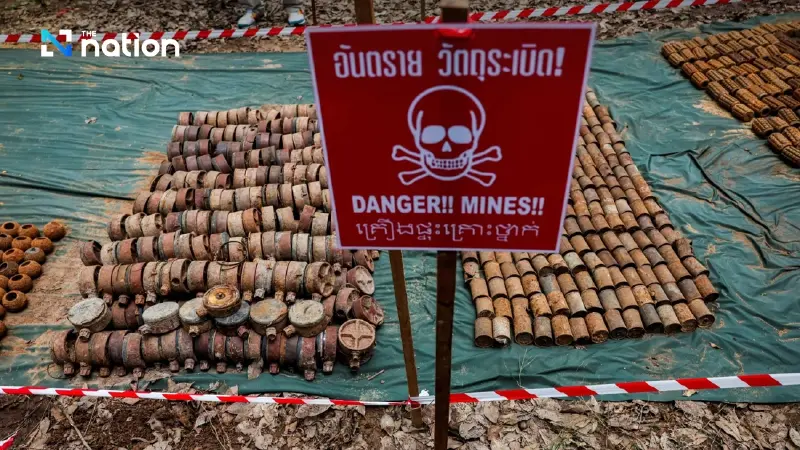


Deaths and injuries from explosive remnants climbed to over 6,000 in 2024, driven by fighting in Syria and Myanmar, as European states abandon ban treaty
- Global casualties from landmines and unexploded ordnance surpassed 6,000 in 2024, reaching the highest level in four years, with civilians accounting for nearly 90% of victims.
- The surge in casualties is primarily driven by intensified conflicts in Syria and Myanmar, with Myanmar alone recording over 2,000 incidents.
- Several European nations, including Ukraine, Poland, and the Baltic states, are withdrawing from the international treaty banning landmines, citing military threats from Russia.
- The crisis is compounded by significant cuts in international funding for humanitarian mine clearance programs, which has forced projects to terminate in multiple countries.
Deaths and injuries from explosive remnants climbed to over 6,000 in 2024, driven by fighting in Syria and Myanmar, as European states abandon ban treaty.
Deaths and injuries caused by landmines and unexploded ordnance (UXO) reached their highest level in four years in 2024, driven primarily by intensifying conflicts in Syria and Myanmar, according to a new report published on Monday.
According to Reuters, the data emerges against a backdrop of increasing political tension, with several European nations moving to withdraw from the treaty that bans the use of landmines, citing the military threat posed by Russia.
The Landmine Monitor 2025 report documented more than 6,000 incidents last year, including 1,945 fatalities and 4,325 injuries.
This represents the highest annual total since 2020. Alarmingly, nearly 90% of all victims were civilians, with women and children accounting for almost half of those casualties.
The surge was concentrated in active conflict zones. In Myanmar, the report recorded over 2,000 incidents—the highest national toll—attributed to the increased use of mines by both the army and non-state armed groups.
In Syria, returning residents face heightened risks from UXO following the collapse of the regime of former President Bashar al-Assad.
European Nations Seek Exit from Ban
The report highlighted a significant threat to the Ottawa Convention, the treaty banning anti-personnel landmines, which came into effect in 1999.
The Convention prohibits its 166 signatories from using, stockpiling, producing, and transferring anti-personnel mines, and mandates the clearance of contaminated areas and victim assistance.
A number of European signatories are now seeking to legally withdraw. Ukraine announced its withdrawal on 29 June, a move military analysts suggested could help slow Russian advances in the country.
Russia and Myanmar, both non-signatories, were confirmed by the report to be extensive users of landmines.
Estonia, Finland, Latvia, Lithuania, and Poland are all in the process of formally exiting the convention, citing escalating military threats from Russia.
"A few states have taken actions that concretely threaten the continued health of the convention," Yeshua Moser-Puangsuwan, Landmine Monitor 2025 ban policy editor, told reporters in Geneva on Monday.

Funding Cuts Hit Clearance Programmes
Compounding the rise in casualties, the report noted that numerous humanitarian mine action programmes—vital for clearing dangerous zones and supporting victims—have been either curtailed or terminated due to donor funding cuts, particularly from the United States.
Looking ahead to 2026, Ruth Bottomley, Landmine Monitor 2025 mine action funding research lead, warned that it is "likely that all states could see a decline in funding."
Programmes have already ceased in countries including Afghanistan, Iraq, Yemen, Colombia, Tajikistan, and Zimbabwe following the cuts in US funding, which previously represented about a third of the total international contribution to mine action.
States party to the Mine Ban Treaty are scheduled to meet in Geneva later this week to discuss these critical issues.
