
Analysts say US strike on Venezuela may boost Beijing’s rhetoric, but won’t speed up any Taiwan invasion
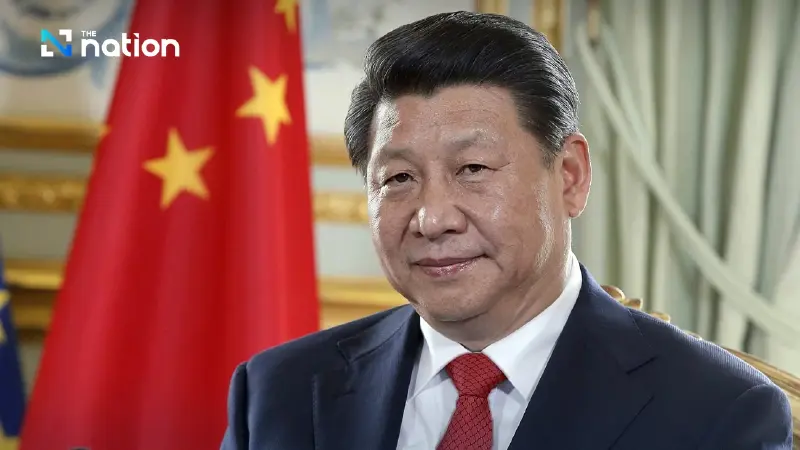


Analysts say Washington’s action in Venezuela could give China “ammunition” to attack US credibility and press territorial claims, but is unlikely to accelerate any move on Taiwan.
Analysts say the United States’ strike on Venezuela and the capture of President Nicolás Maduro is likely to give Beijing fresh material to criticise Washington and reinforce its territorial narratives, but is unlikely to hasten any potential Chinese invasion of Taiwan, Reuters reported.
Several analysts told Reuters that President Xi Jinping’s calculations on Taiwan are driven far more by China’s domestic situation and military capability than by US actions in Latin America. While the Venezuela operation could embolden China to assert its claims more forcefully on the international stage, they said it does not fundamentally change the cross-strait military equation.
One immediate impact, analysts said, is political: Beijing is expected to use the episode to challenge US credibility on international law and “rules-based order” arguments, and to bolster its own standing in debates over sovereignty-related issues including Taiwan, Tibet, and disputed areas in the East and South China seas.
William Yang, an analyst with the Brussels-based International Crisis Group, told Reuters the US action could undermine Washington’s long-held messaging about international law, creating openings for China to push back.
China claims democratically governed Taiwan as its own, a position rejected by Taiwan’s government, and claims most of the South China Sea, placing it at odds with several Southeast Asian nations.
Beijing condemned the US strike on Venezuela as a violation of international law and said it threatened peace and security in Latin America, calling for the release of Maduro and his wife, who US officials said were being held in New York pending trial. China’s state news agency Xinhua also denounced the operation as hegemonic behaviour, according to Reuters.
Taiwan has faced rising pressure from Beijing, including major Chinese military drills around the island last week that highlighted China’s ability to restrict access in a conflict. However, analysts said they do not expect Beijing to translate rhetoric into immediate military escalation.
Shi Yinhong, a professor at Renmin University in Beijing, told Reuters that any move against Taiwan depends on China’s still-developing capabilities, not on what happened in Venezuela. Asia Society fellow Neil Thomas said China views Taiwan as an internal matter and was unlikely to cite Venezuela as a precedent for cross-strait strikes, adding Beijing would likely prefer to contrast itself with Washington by presenting a narrative of peace and moral leadership.
In Taiwan, ruling-party lawmaker Wang Ting-yu, who sits on parliament’s foreign affairs and defence committee, dismissed suggestions China might follow the US example, arguing Beijing lacks a workable means to seize the island, Reuters reported.
Some observers said the episode could still raise risks for Taiwan by strengthening arguments Beijing may use in future, and could increase pressure on Taipei to seek stronger support from the Trump administration.
A Beijing-based military analyst, Song Zhongping, said the US operation appeared aimed at removing Venezuela’s leadership and securing control over its strategic oil resources, rather than serving as an anti-narcotics crackdown as Washington has claimed. He said the mission was militarily effective—seizing Maduro within hours—despite what he described as clear violations of international law, and warned it could alter global oil pricing power. Song added that a US-backed shift towards a right-leaning government in Caracas could reduce cooperation with China and threaten Beijing’s existing economic interests and projects in Venezuela.
