
Global Housing Emergency: 300 Million Homeless as Slum Populations Surpass One Billion
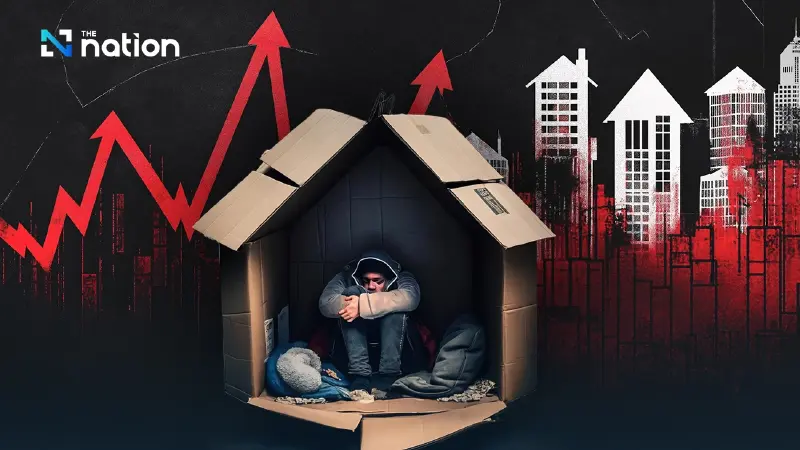


A UN-backed report warns of a global 'structural crisis' as skyrocketing rents and property speculation push over a billion people into substandard living
- A global housing crisis has left over 300 million people homeless, while the population living in slums and informal settlements has surpassed 1.1 billion.
- The primary cause is the "financialisation" of property, where housing is treated as a speculative asset, causing prices and rents to rise much faster than incomes.
- This structural crisis is widespread, impacting advanced economies with severe unaffordability and emerging markets where a majority of urban populations may live in slums.
- According to UN-Habitat, the problem is a "global housing catastrophe," with a broader estimate of three billion people living in substandard housing.
A UN-backed report warns of a global 'structural crisis' as skyrocketing rents and property speculation push over a billion people into substandard living.
A deepening global housing crisis has left more than 300 million people without a roof over their heads, while a staggering 1.1 billion individuals are now confined to informal settlements and slums.
According to a detailed analysis by Krungthep Turakij's reporter Krittapol Sutheepattarakool, the crisis has transitioned from a local grievance to a top-tier economic threat that undermines the very stability of urban communities.
As essential workers—including teachers and nurses—find themselves unable to afford to live in the cities where they work, the social fabric of the world’s major metropolises is beginning to unravel.
The Speculation Trap
The root of the problem lies in the "financialisation" of property.
Rather than being viewed as a fundamental human necessity, housing is increasingly treated as a speculative financial asset.
This shift, combined with a chronic lack of supply, has seen house prices and rents outpace income growth at an alarming rate.
In the United Kingdom and Europe, the data is particularly sobering. Between 2010 and 2024, house prices surged by over 50%, while rents climbed by 25%.
Currently, one in ten urban families is forced to spend more than 40% of their total income on rent, leaving them highly vulnerable to eviction should they face a sudden financial shock.
A Tale of Two Markets
The crisis manifests differently across the globe but with equally devastating results:
Advanced Economies: In the United States, high mortgage rates and land scarcity have seen prices in hubs like Miami reach seven times the median household income.
Emerging Markets: In Africa, roughly 62% of the population lives in slums. In the Asia-Pacific region, over one billion people lack basic sanitation and access to clean water.
"We are facing a global housing catastrophe," warns Anacláudia Rossbach, Executive Director of UN-Habitat. "This is a structural crisis appearing everywhere. We have three billion people living in substandard housing, and the demand for basic necessities like clean water is currently being unmet for nearly two billion people."
The Roadmap to Recovery
Experts argue that public funding alone cannot bridge the gap. Instead, a radical "unlocking" of housing supply is required. Sustainable solutions include:
Structural Reform: Streamlining land-use approvals and adopting cost-saving construction innovations.
Repurposing Urban Space: Converting abandoned commercial buildings into affordable "social housing" units.
Market Regulation: Implementing land-price controls to prevent market mechanisms from driving the most vulnerable out of the city.
Success stories offer a glimmer of hope. Vienna and Singapore have successfully maintained affordability through long-term state land ownership.
Meanwhile, Finland’s "Housing First" model—which provides permanent housing to the homeless without preconditions—has proven that establishing physical stability is the essential first step in solving chronic homelessness.
A Fundamental Right
Ultimately, addressing the housing shortage is not an act of charity but an investment in economic foundations.
Access to quality shelter drives employment, boosts national productivity, and facilitates social mobility.
As the UN-Habitat leadership concludes, the right to a home requires more than just a market correction; it requires the collective political will to treat shelter as a basic human right.
