
Thailand and Cambodia’s diplomatic rivalry intensifies as online scams add complexity to border tensions
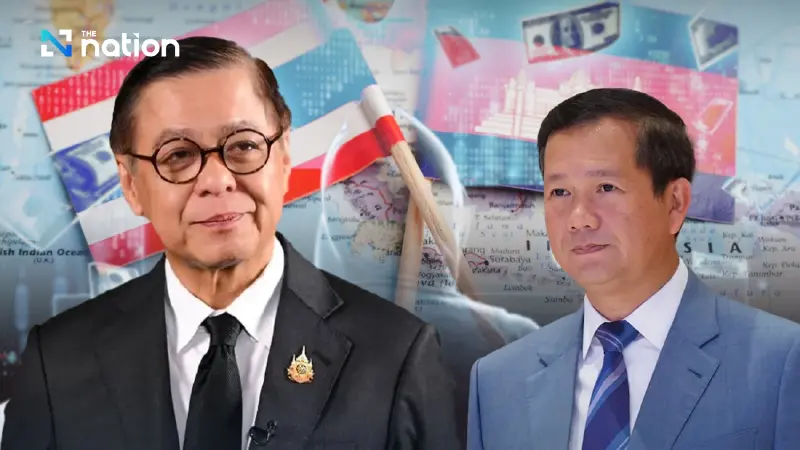


As border tensions escalate, Thailand’s foreign minister pushes back against Cambodia’s accusations, highlighting the global impact of online scams while also defending Thailand’s actions at the UN Human Rights Council.
Tensions between Thailand and Cambodia continue to rise, as both countries engage in diplomatic manoeuvres related to border disputes and online scams. The conflict intensified on February 16, 2026, when Thai authorities reported increased military activity from Cambodia near the border in Ubon Ratchathani, prompting Thai forces to bolster defences and monitor the situation closely.
The issue has now expanded beyond territorial claims to include allegations related to illegal online scams reportedly originating from Cambodia, with Thailand’s Foreign Minister Sihasak Phuangketkeow actively addressing the international community to defend Thailand’s stance.
Border conflict and military presence
On the ground, the Second Army Region has reported significant movements from Cambodian forces, especially in the 745 Hill area of Ubon Ratchathani, where nearly 10,000 soldiers have been deployed. In addition, the ongoing wildfires on the Cambodian side of the border pose a further risk, with the smoke threatening to spread into Thailand’s military bases in areas such as Ubon Ratchathani, Surin, and Si Sa Ket.
In response, Thai military units have constructed firebreaks around affected areas and are working to investigate whether the fires were intentionally set for agricultural or military purposes.
Diplomatic engagement and international response
At the international level, Sihasak is scheduled to travel to France to meet with the Director-General of UNESCO. His trip will centre on discussions about historical documentation and technical data related to the Thailand-Cambodia border. In addition, he will attend a high-level session of the United Nations Human Rights Council (HRC) in Geneva from February 23-25, 2026, where he will address the broader issues of online scams and their impact on human rights.
Online scam accusations
One of the key elements of the ongoing diplomatic conflict revolves around Cambodia’s accusation that Thailand’s actions along the border amount to territorial violations. Cambodia claims that Thailand’s use of containers and barbed wire has led to restricted movement for Cambodians near the border. In an effort to support these claims, Cambodian Prime Minister Hun Manet is also raising the issue on international platforms, accusing Thailand of encroaching on Cambodian land.
However, Sihasak has turned the conversation back to the issue of online scams, which have caused widespread harm to global victims. Highlighting the growing presence of online scam operations based in Cambodia, Sihasak pointed out that these activities have caused significant physical, emotional, and financial damage to individuals worldwide. He stressed that Thailand’s actions are grounded in international law and human rights principles.
Shifting the narrative
Thailand’s emphasis on the global problem of online scams has garnered support from several countries affected by similar issues. As Sihasak’s statements take centre stage at the UN Human Rights Council, it becomes evident that Thailand is successfully using the online scam crisis to strengthen its position and deflect criticism of its border actions. His diplomatic push is aimed at shifting attention away from the Cambodia-Thailand territorial dispute and towards the widespread harm caused by online fraud, which has become an international concern.
At the same time, Sihasak is expected to meet with UN officials to discuss ongoing cooperation and Thailand’s role in human rights protection during the upcoming UN HRC sessions. He will also highlight Thailand’s leadership in hosting the International Conference on the Global Partnership against Online Scams, which took place in December 2025 in partnership with the UNODC.
Sihasak’s message is clear: Thailand will continue to defend its territorial integrity, but will also lead international efforts to address the online scam crisis, showcasing the country’s commitment to human rights and global security.
The wider implications
As the situation develops, Hun Manet’s diplomatic efforts and accusations are likely to continue to escalate. Meanwhile, Sihasak’s strategy of focusing on global online scam issues could weaken Cambodia’s position, as it draws more international attention to the damaging impact of fraud.
The Thailand-Cambodia border dispute may soon fade into the background as the broader conversation shifts toward the enforcement of digital regulations and the fight against cybercrime, which is becoming a far more urgent issue globally.
As both sides continue to navigate this complex diplomatic situation, the online scam debate could prove to be the key factor in reshaping the dialogue between the two nations, with Thailand’s stance gaining more traction on the international stage.
