
Asean exporters get temporary breathing space as U.S. tariffs reset to 10%
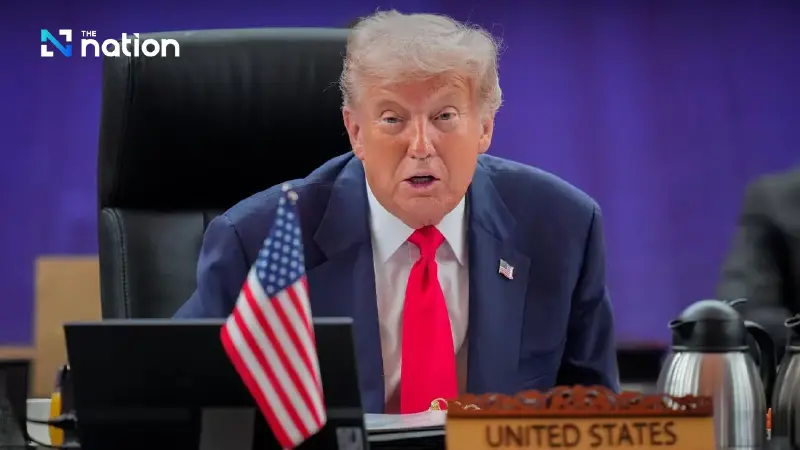


U.S. Supreme Court ruling cuts tariffs to 10%, giving Asean exporters brief breathing space before new U.S. tariff tools emerge
Nikkei Asia reported that the Supreme Court ruling that cancelled Trump’s tariffs may be “good” for Southeast Asian exporters, at least in the short term.
After the court cancelled his emergency tariffs on Friday, Trump immediately announced a new global tariff at 10%, citing Section 122 of the Trade Act of 1974, and insisted the move would raise U.S. tariff revenue.
However, analysts see the change as “good news” and an “opportunity” for exporters in some countries, especially in Southeast Asia.
Jon Lang, senior director for economic security policy at geopolitical risk consultancy APCO and a former White House official in Trump’s first term, said countries where the U.S. runs large goods trade deficits—such as those in Southeast Asia—would be “temporary beneficiaries”.
Before the court ruling, reciprocal tariffs on countries in the region ranged from 40% for Myanmar and Laos, and 19% for the Philippines, Malaysia, Cambodia, Indonesia and Thailand—but will now “fall to 10%”.
This is a significant positive shift because it places those countries at the same tariff rate as some U.S. trade partners that were already at 10%, such as the UK, Australia and Argentina.
Lang said the situation would likely persist until Section 301 tariff processes are completed, or until tariffs are adjusted under Section 232—another tariff tool Trump uses to address unfair trade practices and national-security risks.
He expected the U.S. to import more goods from these countries during the temporary window.
Former U.S. ambassador to Malaysia Brian McFeeters said that although the court ruling increases uncertainty and confusion in an already complex trade system, it is not something that breaks U.S.-Asean economic relations.
He said Southeast Asian leaders are pragmatic. They understand the size of the U.S. market and the quality and staying power of U.S. investment. There may be disruptions or delays on some details, but overall cooperation will continue moving forward.
At the same time, all eyes are on Japan, South Korea and Taiwan—large economies that have pledged to invest hundreds of billions of dollars in the U.S. in exchange for lower import tariffs.
Winston Ma, an adjunct professor at NYU School of Law, said: “There is a reason Trump rushed to close trade deals over the past few weeks.”
Paul Ashworth, chief North America economist at Capital Economics, said in a note: “Trump may not be able to maintain many of the agreements he negotiated, and it is possible that some agreements could collapse.”
Connor Pfeiffer, senior director of government relations at FDD Action, which backs a more assertive U.S. foreign policy, said U.S. trade partners are likely to continue complying with reciprocal-tariff agreements that have already been reached.
The reason, he said, is that sector-specific tariffs under “Section 232”—such as a 25% car import tariff announced last spring—can exert heavier pressure than general reciprocal tariffs.
