
Mojtaba Khamenei named as Iran’s new Supreme Leader following death of father
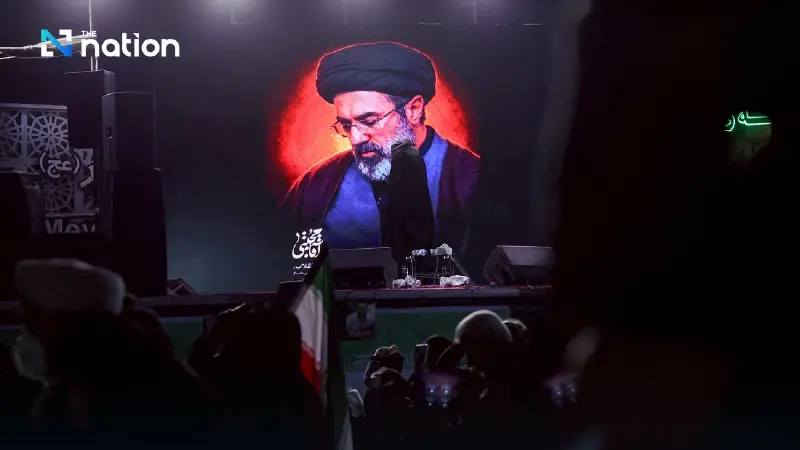


Iran’s Assembly of Experts appoints Mojtaba Khamenei as Supreme Leader, sparking warnings from Israel and threats of intervention from Donald Trump
- Mojtaba Khamenei has been formally appointed as Iran's new Supreme Leader by the Assembly of Experts, succeeding his late father, Ali Khamenei.
- The new leader is a mid-ranking cleric with deep ties to the Islamic Revolutionary Guard Corps (IRGC) and has been previously sanctioned by the United States.
- His appointment is seen as a move by hardline factions to maintain control and has received pledges of loyalty from the Iranian military and the IRGC.
- The succession has drawn immediate hostile reactions and warnings from both Israel and the United States.
Iran’s Assembly of Experts appoints Mojtaba Khamenei as Supreme Leader, sparking warnings from Israel and threats of intervention from Donald Trump.
Iran has formally nominated Mojtaba Khamenei to succeed his father, Ali Khamenei, as the nation’s Supreme Leader. The move signals that the regime’s hardline factions intend to maintain an iron grip on power despite a week of devastating conflict with Israel and the United States.
The Assembly of Experts, an 88-member body of clerics tasked with appointing the head of state, released a statement shortly after midnight.
"By a decisive resolution, the Assembly of Experts has appointed Ayatollah Seyyed Mojtaba Hosseini Khamenei as the third leader of the sacred system of the Islamic Republic of Iran," the council confirmed.
A mid-ranking cleric with formidable influence over Iran’s security apparatus and vast business interests, Mojtaba has long been considered the frontrunner to succeed his father.
As Supreme Leader, he will hold the ultimate authority over all matters of state, a prospect likely to further inflame tensions with Washington.
A life in the shadows of power
Born on 8 September 1969 in the holy city of Mashhad, Mojtaba is one of six siblings. He is the only son of the former Supreme Leader to have maintained a significant—if unofficial—public profile.
His credentials are deeply rooted in the Islamic Revolutionary Guard Corps (IRGC), the ideological wing of the Iranian military, dating back to his service in a combat unit during the final years of the Iran-Iraq War (1980–1988).
In 2019, the US Treasury Department sanctioned Mojtaba during the first term of President Donald Trump.
Officials argued at the time that he represented the Supreme Leader "despite never being elected or appointed to a government position."
The Treasury further alleged that Ali Khamenei had delegated significant leadership responsibilities to his son to advance "regional destabilisation" and "domestic oppression."
Domestically, Mojtaba remains a divisive figure. Opposition groups have long accused him of orchestrating the violent suppression of protesters following the disputed 2009 re-election of Mahmoud Ahmadinejad.
Allegations of vast wealth
A Bloomberg investigation, citing Western intelligence and anonymous sources, suggests Mojtaba’s personal wealth exceeds $100 million.
The report claims that revenues from oil sales were laundered through front companies to invest in luxury London real estate, European hotels, and assets in Dubai.
While he teaches theology in the holy city of Qom, his religious standing remains a point of contention. He currently holds the title of Hujjat al-Islam—a mid-level clerical rank below the status of Ayatollah held by his father and the revolutionary founder, Ruhollah Khomeini.
The appointment comes at a time of personal and national mourning; his wife, Zahra Haddad-Adel, was recently killed in the same US-Israeli strikes that claimed his father’s life.

International defiance
The appointment has met with immediate hostility from abroad. Israel issued a chilling warning to the new leader: "The hand of the State of Israel will continue to pursue all successors and those who attempt to appoint them."
In Washington, President Donald Trump suggested the US would not remain a passive observer.
"If he doesn’t have US approval, he won’t last long," Trump told ABC News on Sunday.
Israeli Prime Minister Benjamin Netanyahu doubled down on this rhetoric in a video statement, vowing to target Iranian rulers "mercilessly." He added: "We have a systematic plan in place, along with many surprises, to undermine the regime and bring about change."
As tensions peak, US Special Envoy Steve Witkoff and Jared Kushner are expected to arrive in Israel on Tuesday for high-level talks.
Military backing
Despite the external threats, the Iranian establishment has closed ranks. The Iranian military released a statement praising the new leader as "just, learned, and resourceful," while the IRGC declared its "sincere and lifelong loyalty" to Mojtaba Khamenei, cementing his transition to power.
