
How Pakistan helped sway Trump into a two-week pause on Iran
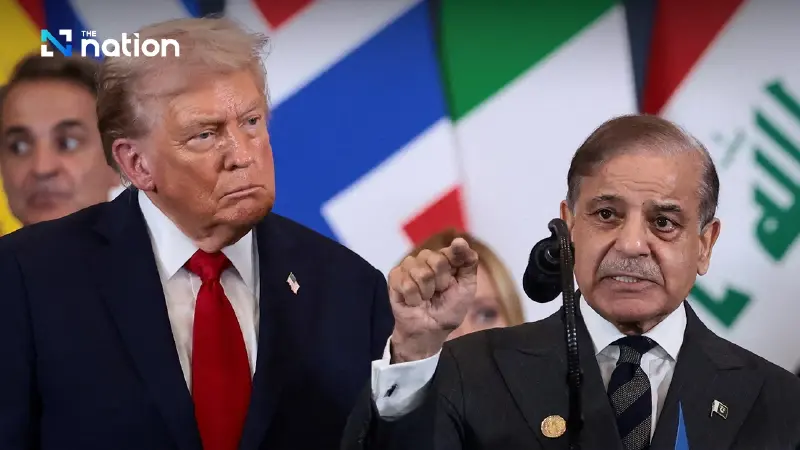


Pakistan emerged as a key go-between as Trump agreed to pause attacks on Iran for two weeks after receiving Tehran’s 10-point proposal
Pakistan emerged as a crucial behind-the-scenes player just as Donald Trump’s dramatic deadline on Iran was pushing the crisis towards a far more dangerous turn. With Trump warning that “a whole civilization” could die that night, Islamabad stepped in to buy time for diplomacy, helping to shift the confrontation away from immediate escalation and into a fragile pause.
Pakistan’s mediation also cast a spotlight on Prime Minister Shehbaz Sharif, a veteran politician who is currently serving as Pakistan’s prime minister and leads the Pakistan Muslim League-Nawaz. Official Pakistani government pages identify him as Mian Muhammad Shehbaz Sharif, while Pakistan’s government portal lists him as the country’s current prime minister. His role in the latest crisis underlined how Islamabad was trying to position itself not only as a regional stakeholder, but as an active diplomatic channel at a moment of extreme volatility.

According to reports, Pakistani Prime Minister Shehbaz Sharif and Field Marshal Asim Munir held direct talks with Trump, urging him to extend his deadline by two weeks. Their message was straightforward: give diplomacy a final opening. Trump then announced that he would suspend bombing and attacks on Iran for two weeks, saying the pause would depend on Tehran immediately allowing safe passage through the Strait of Hormuz.
At the centre of the diplomatic push was a 10-point Iranian proposal passed to Washington through Pakistan. Trump said he viewed the package as a workable starting point for longer-term negotiations, suggesting that enough progress had been made to justify stepping back from the brink, at least for now.
Iran’s Supreme National Security Council submitted a 10-point proposal to the United States through Pakistan, with sources saying the package contained key demands that Tehran viewed as both political and military victories. They were as follows:
- Control of shipping: Passage through the Strait of Hormuz would be allowed for two weeks under the management and coordination of the Iranian military.
- Military withdrawal: The United States would have to withdraw all forces from its bases in the region.
- Lifting of sanctions: All primary and secondary sanctions on Iran would have to be removed.
- Compensation: The United States would have to pay full compensation for damage caused by the war.
- Release of assets: All Iranian assets that had been frozen would have to be returned.
- Right to enrich uranium: Iran insisted it would continue uranium enrichment.
- Two-sided ceasefire: A comprehensive two-week ceasefire covering all areas would be established.
- Protection of civilians: Attacks on civilian targets and infrastructure would have to stop.
- Formal negotiations: Detailed talks would be scheduled in Islamabad, Pakistan, on April 10.
- Recognition of success: Other conditions would focus on affirming Iran’s status as the “winner on the battlefield”.
Although the United States has not confirmed that it accepted all of the terms, Trump’s decision to suspend the deadline under which he had threatened devastating strikes on Iran marked a major turning point, one brought about by Pakistan’s intensive efforts as mediator.
