
UAE quits OPEC from May 1 in major shake-up for global oil market
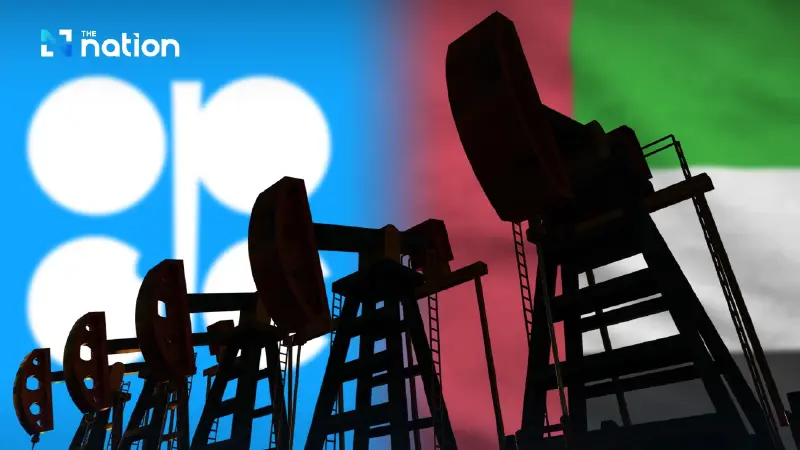


Abu Dhabi says it will leave OPEC and OPEC+ on May 1 after a strategic review, as the Iran war keeps Hormuz flows tight and markets volatile.
The United Arab Emirates has confirmed it will withdraw from the Organization of the Petroleum Exporting Countries (OPEC) and the wider OPEC+ alliance from May 1, ending more than five decades of membership and dealing a fresh blow to the producers’ group as the Iran war continues to disrupt global energy flows.
UAE Energy Minister Suhail Mohamed al-Mazrouei told Reuters the decision followed a review of the country’s energy strategy, adding that it was taken independently. “This is a policy decision,” he said, after “a careful look at current and future policies related to level of production.”
Reuters reported that Mazrouei said the UAE had not raised the issue with any other country, and he played down any immediate market impact, pointing to the ongoing constraints on shipping through the Strait of Hormuz.
A statement carried by UAE state media said the move aligned with the country’s national interest and long-term strategic vision, including the development of its energy sector and investment plans, while reiterating the UAE’s aim to remain a responsible and reliable producer for global markets.
The decision comes as Gulf producers have struggled to ship exports through the Strait of Hormuz — a critical chokepoint between Iran and Oman that normally carries about a fifth of the world’s crude oil and liquefied natural gas — amid threats and attacks linked to the conflict. Reuters cited the International Energy Agency as saying OPEC+’s share of global output fell to 44% in March, down from about 48% in February.
Analysts told Reuters the exit could eventually allow the UAE more flexibility to increase production once Gulf exports normalise, raising wider questions about the cohesion and influence of OPEC under heightened geopolitical pressure.
Anwar Gargash, the UAE president’s diplomatic adviser, criticised the response of Arab and Gulf states to Iran’s attacks during a panel discussion at the Gulf Influencers Forum on Monday.
“Gulf Cooperation Council (GCC) countries support each other logistically, but politically and militarily I think their stance is the weakest in history.”
“I expected the Arab League to take such a weak position and I’m not surprised, but I did not expect the (Gulf) Cooperation Council to be like this—and I’m surprised,” he said.
OPEC, founded in 1960, has long been seen as the most influential player in the global oil market, producing more than one-third of the world’s supply. The UAE is one of OPEC’s founding members, having joined in 1967. Together with Saudi Arabia and Kuwait, the UAE plays a key role in Middle Eastern oil supply, which accounts for around 30% of global oil production.
OPEC’s mission statement says member countries share the goal of “stabilising the oil market to ensure an efficient, economic and regular supply of petroleum to consumers, while ensuring producers a steady income and a fair return on capital for those investing in the petroleum industry”.
Following the UAE’s withdrawal, the organisation would have 11 members: Algeria, the Republic of the Congo, Equatorial Guinea, Gabon, Libya, Nigeria, Iran, Iraq, Kuwait, Saudi Arabia and Venezuela.
Member states meet regularly to set oil production targets and coordinate output to manage and influence global oil prices. OPEC’s combined crude output accounts for about 35% of worldwide production, and it represents up to 50% of total global oil trading volume.
In 2016, amid low oil prices, OPEC signed a cooperation agreement with 10 non-OPEC producers—Russia, Azerbaijan, Bahrain, Brunei, Kazakhstan, Malaysia, Mexico, Oman, Sudan and South Sudan—forming the alliance known as “OPEC+” to strengthen bargaining power and support international price stability.
The development comes as Gulf states face growing difficulty shipping through the Strait of Hormuz. Earlier, the UAE had criticised fellow Arab countries for not doing enough to help protect the UAE from repeated Iranian attacks during the war.
