
UAE’s OPEC exit seen as ‘seismic shift’ as Abu Dhabi moves to sell oil before demand fades
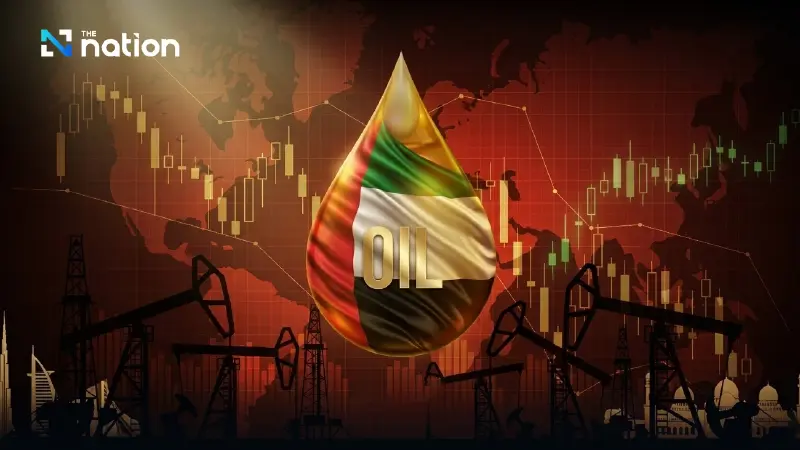


Analyst Krissada Boonruang says the UAE’s OPEC withdrawal is a geopolitical turning point, driven by a “sell before the world changes” strategy.
An independent analyst has described the United Arab Emirates’ decision to withdraw from the Organization of the Petroleum Exporting Countries (OPEC) on April 28, 2026 as more than a market-moving economic move, calling it a “seismic shift” that could upend a global order that has held for more than half a century.
In an article titled “World shaken! UAE turns its back on OPEC: withdrawing to ‘sell before the world changes’,” Krissada Boonruang argues that leaving a group the UAE has been part of since 1967 is effectively a declaration of independence — and a signal that the era of the oil cartel is weakening, replaced by a more fragmented, every-country-for-itself approach as the world accelerates towards clean energy.
The fault line beneath the break
Krissada says that over recent years the UAE, under the leadership of Sheikh Mohammed bin Zayed Al Nahyan (MBZ), has poured hundreds of billions of dollars into expanding crude production capacity towards five million barrels per day. But within the OPEC+ framework, those additional barrels have, in his view, been effectively “frozen” to support global prices in line with the preferences of Saudi Arabia and Russia.
For Abu Dhabi, he argues, that means a significant lost commercial opportunity. The UAE no longer treats oil as “black gold” to be conserved, but as a depreciating asset — one whose value diminishes the faster the world moves towards EVs and renewables. That, he says, is the logic behind a strategy he calls “selling before the world changes.”
The “last barrel” logic
Krissada frames the decision as rooted in a belief that the true winners will be those who can pump and sell the most oil — and do so at the lowest cost — while demand still exists. Remaining in OPEC, he says, forces the UAE to shoulder burdens for member states with weaker management or higher production costs. Exiting the group, in this reading, is a way to maximise returns and channel them into building a less oil-dependent future under the country’s Vision 2031 agenda.
A strategic split with Riyadh
Looking beyond economics, Krissada argues the move reflects a strategic “divorce” between Abu Dhabi and Riyadh.
- Challenging the regional heavyweight: He writes that the UAE no longer wants to follow the policy direction of Crown Prince Mohammed bin Salman (MBS). He points to initiatives such as the UAE’s own Murban crude pricing and a broader partnership network that extends beyond the Arab sphere.
- Sovereign ambition: He says the UAE is positioning itself as a global hub for technology, finance and logistics — and that tying its trajectory to states with less diversified economic structures has increasingly looked like a constraint.
Reactions from major powers
Krissada suggests the UAE’s departure could reshape the wider geopolitical chessboard.
United States: relief mixed with unease
He argues Washington may welcome the prospect of more UAE oil flowing into open markets, easing inflation pressures. But he also suggests that weakening OPEC reduces one of the longstanding tools the US has relied on — indirectly, through Saudi Arabia — to help stabilise energy markets and, by extension, the global economy.
China: poised to benefit
Krissada describes Beijing as a major potential beneficiary, as the world’s largest oil importer and a country with the capacity to negotiate directly with Abu Dhabi on bilateral terms. He argues that the UAE leaving an arrangement shaped heavily by Western influence could open more space for China’s Belt and Road Initiative and deeper cooperation in areas such as 5G and infrastructure.
He also claims that UAE-China ties reached a new high after a mid-April 2026 visit to Beijing by Abu Dhabi’s crown prince, during which 24 agreements were signed, spanning technology and infrastructure. He cites non-oil trade surpassing US$100 billion as evidence of the UAE laying a strong eastern partnership foundation before leaving OPEC, to secure a new economic and energy-market anchor beyond the West.
Europe: a new outlet amid an energy crunch
Krissada argues that EU states seeking alternatives to Russian energy supplies may view the UAE as a new cornerstone partner — not only for crude, but also for future deals involving green hydrogen and clean energy, where the UAE aims to become a major exporter.
Thailand should adopt 3 strategies
Krissada said Thailand should take a proactive approach on three fronts. For Thailand, the UAE’s move is a “wake-up call” that the government and the private sector can no longer afford to stand still.
Thailand must shift its role from “a buyer who waits for global market prices” to “a player who chooses partners and manages risk” professionally, in a world where bloc loyalty matters less than national interest.
1) Direct energy diplomacy (bilateral deals)
Thailand should seize the opening created by signs that cartel discipline is weakening, and move quickly to negotiate direct, government-to-government oil supply contracts with the UAE. The aim would be to lock in volumes and preferential pricing as a strategic partner. If the UAE wants to “sell before the world changes”, Thailand’s bargaining power rises — creating room for more flexible long-term contracts than in the past.
2) Reform the Oil Fuel Fund: from subsidising to hedging
As oil prices are increasingly driven by producer “price wars”, volatility is likely to be sharper and faster. Thailand should shift the Oil Fuel Fund’s role from primarily subsidising retail prices to building a more systematic hedging function, reducing long-term fiscal pressure and the risk of rising public debt.
3) Accelerate the low-carbon transition
The lesson from the UAE is that even an oil-rich producer is rushing to monetise reserves because it sees the future in clean energy. Thailand should use any short-term dip in oil prices from a market-share battle as a window to fast-track investment in EV infrastructure and renewables ahead of schedule — so the country does not become the “last buyer” in a sunset industry.
