
US-Iran shipping tensions grow over Hormuz plan for stranded ships
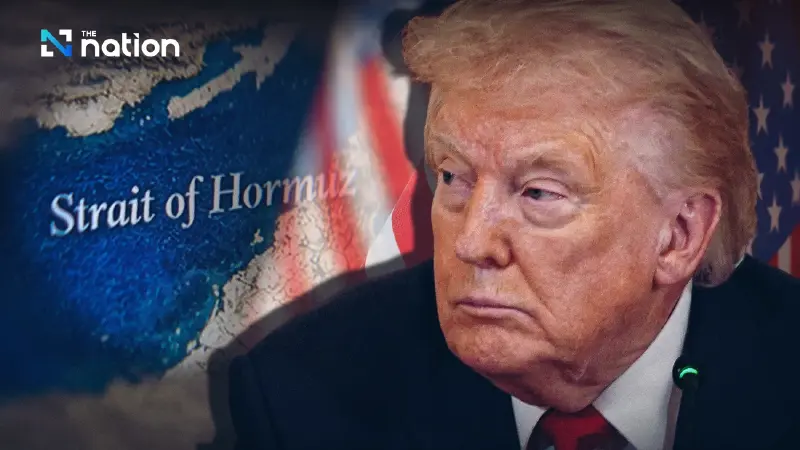


Tehran says any foreign force approaching the strait will be attacked as Trump plans help for stranded Gulf ships and crews.
- The US announced a plan to use its military to guide and assist hundreds of commercial ships that have been trapped in the Strait of Hormuz for over two months.
- In response, Iran's armed forces warned the US military to stay away from the strait, threatening to "respond harshly" and attack any foreign forces that approach.
- Iran insists it controls the security of the waterway and that safe passage must be coordinated with its military, while the U.S. is committing 15,000 personnel and warships to what it calls a "defensive mission."
Iran’s armed forces on Monday (May 4) warned the US military not to move into the Strait of Hormuz, after President Donald Trump said Washington would begin helping ships trapped in the Gulf during the US-Israeli war on Iran.
Trump said on Sunday that the United States would assist vessels and crews that had been “locked up” in the key shipping route for more than two months and were running short of food and other supplies. He gave few details on how the plan would operate.
“We have told these Countries that we will guide their Ships safely out of these restricted Waterways, so that they can freely and ably get on with their business,” Trump wrote on Truth Social.
Iran’s armed forces unified command responded by telling US forces to stay away from the strait. It said Iranian forces would “respond harshly” to any threat, and instructed commercial ships and oil tankers not to move without coordination with Iran’s military.
“We have repeatedly said the security of the Strait of Hormuz is in our hands and that the safe passage of vessels needs to be coordinated with the armed forces,” Ali Abdollahi, head of the unified command, said in a statement.
“We warn that any foreign armed forces, especially the aggressive US army, will be attacked if they intend to approach and enter the Strait of Hormuz.”
US Central Command said it would back the effort with 15,000 military personnel, more than 100 aircraft based on land and at sea, as well as warships and drones.
“Our support for this defensive mission is essential to regional security and the global economy as we also maintain the naval blockade,” Admiral Brad Cooper, the CENTCOM commander, said in a statement.
The International Maritime Organisation says hundreds of ships and as many as 20,000 seafarers have been unable to pass through the Strait of Hormuz since the conflict began.
Shortly after Trump’s remarks, the United Kingdom Maritime Trade Operations agency said a tanker reported being struck by unknown projectiles in the strait. The agency said all crew were safe after the incident, which took place 78 nautical miles north of Fujairah in the United Arab Emirates, though few details were immediately available.
Iran has blocked nearly all Gulf shipping except its own for more than two months, pushing energy prices sharply higher. Some vessels trying to cross the Strait have reported coming under fire, while Iran has seized several other ships. Last month, the United States imposed its own blockade on ships from Iranian ports.
The Trump administration has sought support from other countries for an international coalition to protect shipping in the strait. CENTCOM said the latest effort would combine “diplomatic action with military coordination.”
It was not immediately clear which countries would receive US assistance or exactly how the operation would be carried out. Axios reporter Barak Ravid said in a post on X that the plan would not necessarily involve US Navy ships escorting commercial vessels.
The White House did not immediately respond to a request for comment.
Trump warned that any attempt to obstruct the US operation would “have to be dealt with forcefully.”
Equity markets edged higher on Monday, while crude oil prices were little changed after rising above $100 a barrel last week amid uncertainty over how and when the conflict might end.
On Sunday, Iran said it had received a US response to its latest offer for peace talks, one day after Trump said he would probably reject Tehran’s proposal because “they have not paid a big enough price.”
Asked by reporters on Sunday evening about the talks, Trump said they were going “very well,” but did not elaborate.
Iranian state media said Washington sent its response to Tehran’s 14-point proposal through Pakistan and that Iran was reviewing it. There was no immediate confirmation from Washington or Islamabad.
“At this stage, we do not have nuclear negotiations,” Iranian state media quoted foreign ministry spokesperson Esmaeil Baghaei as saying.
The remark appeared to refer to Iran’s proposal to postpone nuclear talks until after the war ends, and both sides agree to lift rival blockades on Gulf shipping.
The United States and Israel halted their bombing campaign against Iran four weeks ago, and US and Iranian officials held one round of talks. Efforts to arrange further meetings have so far been unsuccessful.
Iran’s proposal to delay nuclear negotiations appears to clash with Washington’s demand that Tehran accept strict limits on its nuclear programme before the war can end.
Washington wants Iran to surrender its stockpile of more than 400 kg, or 900 pounds, of highly enriched uranium, which the United States says could be used to make a bomb.
Iran says its nuclear programme is peaceful, though it is prepared to discuss some curbs in return for sanctions relief. Tehran had accepted such limits under a 2015 agreement that Trump later abandoned.
Trump has said he is in no rush, but he faces domestic pressure to break Iran’s control over the Strait of Hormuz, which has cut off 20% of the world’s oil and gas supplies and pushed up US gasoline prices.
His Republican Party also faces the risk of a voter backlash over higher prices in midterm congressional elections due in November.
Iranian media said Tehran’s 14-point proposal includes the withdrawal of US forces from nearby areas, an end to the blockade, the release of frozen assets, compensation payments, sanctions relief, an end to the war on all fronts, including Lebanon, and the creation of a new control mechanism for the strait.
Reuters
