
Plastic waste is choking the planet — recycling won’t be enough; cutting virgin plastic is key
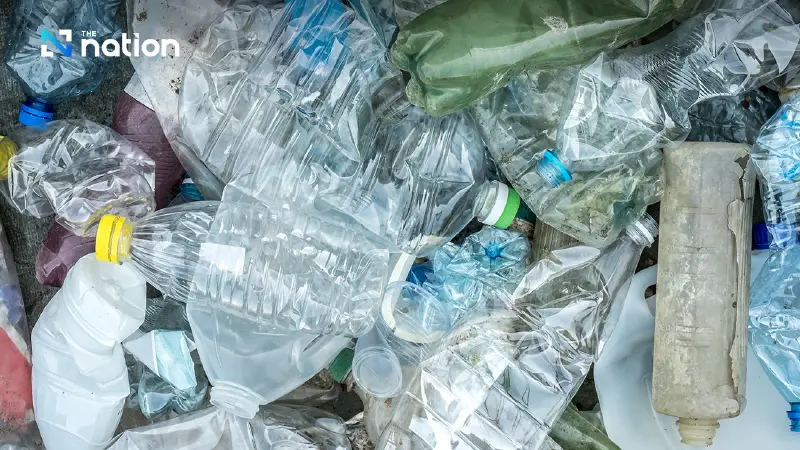


Plastic waste is set to more than double by 2040, harming health, climate and economies. Recycling alone won’t fix it—cuts to virgin plastic are urged.
- The plastic waste crisis is inflicting heavy global damage on health (hazardous chemicals), the environment (greenhouse-gas emissions), and the economy (soaring public costs).
- Recycling alone cannot solve the problem, with plastic pollution projected to more than double by 2040 without urgent systemic change.
- The sustainable solution is system transformation: prioritise reducing unnecessary virgin plastic production, while building a circular economy centred on reuse.
“Plastic” was once praised as the material of the modern age—cheap, lightweight, durable and highly versatile. Today, it has become a serious threat, driving alarming problems for the environment, public health and the global economy.
A latest report by The Pew Charitable Trusts titled “Breaking the Plastic Wave 2025” sends an even stronger warning about the plastic pollution crisis that is sweeping across every part of the planet.
If the world continues with business as usual and fails to make urgent systemic changes, plastic pollution leaking into the environment—on land, in water and in the air—will more than double by 2040, reaching an estimated 280 million metric tonnes a year. The scale is likened to dumping a truckload of plastic waste into the environment every single second, nonstop.
The economic damage caused by the plastics system is also rising to shocking levels—especially when “hidden costs” that are not reflected in material prices are included. The report estimates that health impacts from chemicals in plastics alone cost the world as much as US$1.5 trillion a year.
At the same time, governments’ spending on collecting and disposing of plastic waste worldwide is expected to rise by 30% to reach US$140 billion by 2040. These losses do not yet include the damage to marine ecosystems, which the report estimates at between US$500 billion and US$2.5 trillion a year.
The report also warns that if the world delays action to control plastics by just five years, public costs would rise by US$27 billion a year, while increasing the risk of losing huge investments to outdated technologies such as incineration, which can obstruct a shift towards a circular economy.
Plastic pollution does not cause harm only when it becomes waste. It inflicts damage throughout its entire life cycle—from fossil-fuel extraction and production to use and disposal. The report found that plastics contain more than 16,000 chemicals intentionally added, and more than 25% of these have already been identified as potentially harmful to human health.
Particularly worrying are endocrine-disrupting chemicals, commonly found in food packaging, toys and cosmetics. They are linked to infertility, cancer, diabetes and cognitive disorders in children.
If controls are not introduced, the report projects that by 2040 humanity could lose 9.8 million healthy life years due to plastic pollution and open burning of waste, which releases fine particles and highly toxic substances into the atmosphere.
Plastic also drives the climate crisis. Plastic production releases large amounts of greenhouse gases. If virgin plastic production continues to grow at the current pace, greenhouse-gas emissions are projected to rise by 58% by 2040—equivalent to the emissions from one billion petrol-powered cars.
The report argues that if the global plastics system were a country, it would rank as the world’s third-largest greenhouse-gas emitter—behind only China and the United States. These cumulative emissions would consume almost half of the remaining carbon budget to keep global warming below 1.5°C under the Paris Agreement. This means plastic is not just a waste problem—it is central to preventing climate breakdown.
Despite the bleak outlook, the report says there is still hope if the world adopts full “system transformation” measures. By prioritising cuts to virgin plastic production, redesigning systems for reuse and circular material flows, and strengthening collection, sorting and recycling, the world could reduce plastic packaging—currently the largest source of waste—by as much as 97% by 2040.
Winnie Lau, Pew’s director for plastic pollution prevention, said plastic pollution from packaging could almost disappear if governments and businesses take serious action at policy and industry levels.
Another challenge remains difficult: removing microplastics from ecosystems. Major sources are not only plastic bags, but also tyre wear, peeling paint from buildings and ships, and agricultural plastics such as mulch film and plastic-coated fertilisers.
The report notes that even with the best waste-management measures, microplastics will persist and require new innovations in product design to reduce shedding at the source. In high-income countries, microplastics could account for as much as 92% of all plastic pollution by 2040 if large plastic use is reduced but microplastic sources are not addressed sustainably.
The transition, the report says, must be based on a “just transition” that does not leave vulnerable groups behind—especially waste collectors and informal recyclers worldwide, estimated at 11–20 million people. They handle around 60% of plastic sorting for recycling, yet often receive unfair compensation and work in dangerous conditions.
Any new system must bring these workers into formal waste-management structures with appropriate welfare and protections. The report also urges stronger safeguards for communities living near petrochemical plants, which face heavier health impacts, stressing that future policies must prioritise human rights and community health.
The damage will become irreversible if the world continues to delay action, the report warns. Tom Dillon, a senior vice president at Pew Charitable Trusts, said plastic harms are putting people at risk worldwide—especially the most vulnerable—yet it remains possible to build a new plastics system and solve plastic pollution within a single generation if decision-makers put people and the planet first.
Solving plastic pollution, the report concludes, is not about recycling alone. It requires restructuring the economy away from a “buy–use–throw away” model towards a sustainable circular system. Beyond protecting the environment, such a shift could create major new business opportunities and add more than 8.6 million green jobs by 2040.
The crisis today is compared to leaving a tap running until the bathtub overflows—then trying to fix the problem by spooning water out. The best solution is to turn off the tap: reduce unnecessary virgin plastic production and transform consumption into a fully circular system—before plastic destroys the future of the next generation through today’s inaction.
