
World leaders unite at Belém Climate Summit ahead of COP30, calling for urgent green transition
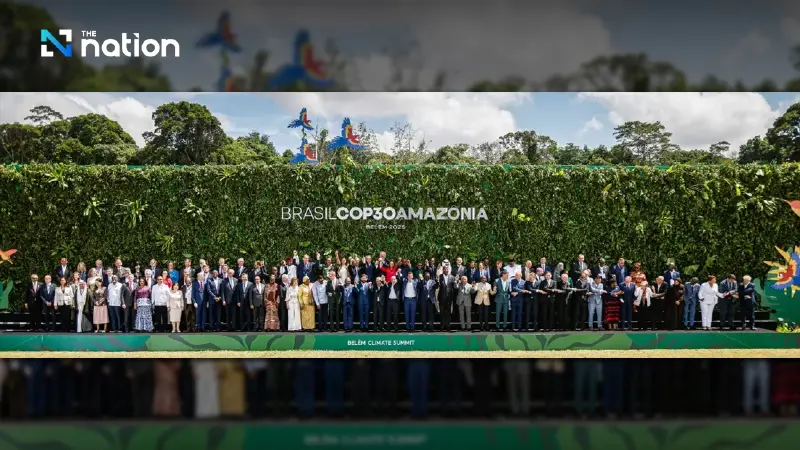


Ahead of COP30 in Brazil, global leaders at the Belém Climate Summit urged immediate action on climate change, with China pledging full commitment under its “Beautiful China” plan.
As the 30th United Nations Climate Change Conference (COP30) in Belém, Brazil, approaches, hundreds of world leaders and international representatives gathered for the Belém Climate Summit to discuss urgent challenges and commitments in tackling climate change. The meeting aimed to lay the groundwork for the official COP30 negotiations.

Leaders from China, Brazil, France, and Prince William, the Prince of Wales, all voiced a united message — the world can no longer wait. They agreed that transitioning to a green energy and sustainable economy is no longer a choice but a necessity for humanity’s survival.
China’s “Beautiful China” vision
Ding Xuexiang, Vice Premier of the People’s Republic of China and special envoy of President Xi Jinping, stated that China had achieved significant milestones toward its 2030 Nationally Determined Contributions (NDCs) and is accelerating its efforts to meet its 2035 goals. This includes expanding wind and solar energy production and increasing forest coverage across the country.

“China is a nation that keeps its promises. We are accelerating the green transition across all sectors of our economy and society, aiming to achieve peak carbon emissions and carbon neutrality. This transition will not only protect the environment but also create new drivers for China’s sustainable economic growth,” Ding said.
He also highlighted that the Fourth Plenary Session of the 20th Communist Party of China Central Committee had approved the next five-year social and economic development plan under the vision of “Beautiful China”, focusing on pollution reduction, sustainable growth, ecological security, and green innovation alongside economic progress.
Ding outlined three key principles to ensure effective global climate governance:
- Stay on the right path – The global transition towards a green, low-carbon economy is the defining trend of our time. Every nation must find a balance between environmental protection, economic growth, and job creation to improve quality of life.
- Turn commitments into action – The core of climate solutions lies in implementation. All countries must uphold the principle of common but differentiated responsibilities, with developed nations leading the way in emission reduction, financial support, and technology transfer to developing countries.
- Promote openness and cooperation – The global green transition requires an open and fair trade and economic environment. Ding called for the removal of trade barriers, enhanced green technology collaboration, and the free movement of high-quality green products to accelerate worldwide sustainability.
Prince William backs Indigenous communities
Prince William, the Prince of Wales, warned that the world is approaching a “critical tipping point” where natural systems vital to human survival could begin to collapse. Communities across the globe are already facing the consequences — rising sea levels, heatwaves, wildfires, floods, and droughts.

“The road ahead will not be easy. We must change how we use energy, produce goods, travel, and care for the land. But this is also an opportunity — to build clean economies, restore nature, and improve the quality of life for people everywhere. Every nation must pursue policies that restore, not destroy,” he said.
The Prince also underscored the crucial role of Indigenous and local communities, who are custodians of more than half of the world’s land. Protecting their land rights, he said, is not only a moral duty but also a practical solution to the climate crisis, as legally recognised Indigenous lands experience less deforestation and store more carbon.
“From the Paris Agreement to the Global Biodiversity Framework, the UK has continued its leadership since hosting COP26. We pushed for the global pledge to end deforestation by 2030. This year, COP30’s establishment of the Tropical Forests Forever Fund marks a visionary step in recognising the true value of nature.”
Accelerating the phase-out of fossil fuels
Brazilian President Luiz Inácio Lula da Silva stressed the urgency of protecting forests and accelerating the energy transition, noting that humanity has been aware of climate impacts for over three decades — since the first IPCC report, more than 35 years ago.
“It was only at COP28 in Dubai that the world officially recognised the need to reduce fossil fuel use and halt deforestation,” he said.

He added that it took another year — until the Baku conference — for countries to agree to increase climate finance to US$1.3 trillion. Lula emphasised that accelerating the shift to clean energy and preserving nature remain the most effective ways to slow global warming, despite the challenges and political tensions.
The Amazon rainforest, he said, is the cradle of thousands of rivers and streams, forming one of the world’s largest watersheds and home to countless species of plants and animals. Yet this natural treasure is now under severe threat from climate change, with 2024 marking the first year that global average temperatures exceeded pre-industrial levels — a trend scientists warn will continue for years, if not decades.
“We must not abandon the Paris Agreement’s goal of limiting global temperature rise to 1.5°C,” Lula urged.
He concluded that solving the climate crisis requires bridging the gap between technical language and people’s daily lives:
“Most people don’t understand emissions data or carbon metrics, but they feel pollution. They may not know about carbon sinks or climate regulation, but they understand the value of forests and oceans.”
France proposes four-point global climate action plan
French President Emmanuel Macron stated that the Paris Agreement and global cooperation over the past decade have helped lower projections for global temperature rise by the end of this century — from 4-5°C to 2.8°C. However, this remains insufficient, as the goal is to limit the increase to no more than 1.5°C. Macron emphasised that climate investment represents an opportunity, not a burden, as low-carbon energy is becoming more efficient and secure.

For COP30, France outlined four key principles:
- Accelerate the phase-out of fossil fuels – All nations should develop plans and strategies for a gradual coal exit. France will shut down its last coal-fired power plant by 2027 and strengthen efforts to cut methane emissions in the energy sector.
- Protect and restore nature – including oceans and forests, while supporting small island nations most affected by climate change. France has allocated €3 billion in 2024 for adaptation measures.
- Expand climate finance – by bringing more countries into the financing framework and mobilising private capital through new initiatives such as the “Partnership for People and Planet” (4P).
- Defend science against misinformation – and ensure all decisions are based on verified data. France continues to support the work of the Intergovernmental Panel on Climate Change (IPCC).
Nigeria introduces national carbon market framework
Kashim Shettima, Vice President of Nigeria, announced that the government has approved the establishment of a National Carbon Market Framework and a Climate Change Fund — key pillars of Nigeria’s climate finance system. These mechanisms will enable a transparent, credible carbon market aligned with Article 6 of the Paris Agreement, allowing Nigeria to generate, trade, and retire carbon credits fairly while mobilising millions of dollars for adaptation, restoration, and green industrial development. Revenue from these efforts will go to support climate-affected communities.

Nigeria has launched a five-year carbon market plan that includes emission rating systems, carbon taxes, and incentives for clean innovation. Its Nationally Determined Contribution (NDC), submitted in September 2025, aims to cut greenhouse gas emissions by 32% by 2035 and achieve long-term carbon neutrality across the energy, agriculture, transport, waste, and industrial sectors.
The country’s “Decade of Gas” strategy uses natural gas to stabilise energy supplies and drive industry, while expanding solar power and rural electrification solutions to support small businesses and convert agricultural waste into new economic opportunities.
Given Nigeria’s diverse ecosystems — from the Sahara Desert to mangrove forests — the country is investing in climate-smart agriculture, livestock reform, and sustainable land use to improve food security and reduce resource conflicts.
However, Shettima stressed that good intentions alone are not enough — climate finance remains the key to success. Nigeria called for a credible and equitable financial system that reflects the realities of developing countries and urged support for the Loss and Damage Fund, ensuring that vulnerable nations have real access to it.
Representing Africa, Nigeria aspires to lead in carbon sequestration, forest conservation, renewable energy expansion, digital emission tracking, and regional cooperation — transforming ambition into genuine prosperity for the continent.
