
Carbon Capture and Storage: Thailand's Bold Step Towards Net Zero Emissions
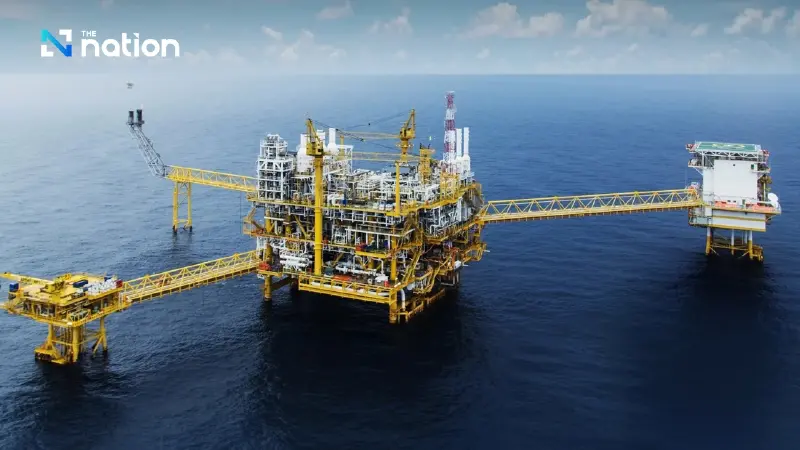


PTT Group Spearheads Eastern Thailand CCS Hub Project as Technology Emerges as Critical Tool in Global Climate Fight
- PTT Group is leading Thailand's Carbon Capture and Storage (CCS) initiative through the Eastern Thailand CCS Hub project in Rayong and Chonburi.
- The project is a key part of Thailand's national strategy to reduce greenhouse gas emissions by 40 million tonnes annually by 2050, with the hub aiming to contribute up to 10 million tonnes.
- Thailand's adoption of CCS is expected to yield significant economic benefits, including higher GDP, reduced impact from carbon border taxes, and the creation of over 10,000 jobs.
- By developing this technology, Thailand aims to establish itself as a regional CCS leader and provide a foundation for low-carbon industries like blue hydrogen and sustainable aviation fuel.
Carbon Capture and Storage (CCS) technology is rapidly gaining recognition as one of the most crucial solutions for achieving net zero emissions globally, with Thailand positioning itself as an active participant in this revolutionary approach to combating climate change.
The technology, which captures carbon dioxide from industrial sources before it enters the atmosphere, represents a three-stage process: capture, transport, and storage.
This innovative approach is particularly vital for hard-to-abate industries such as steel production, cement manufacturing, and petrochemicals, where traditional emission reduction methods alone are insufficient.
Understanding the Technology
CCS operates through three distinct capture methods. Pre-combustion capture extracts CO₂ before the burning process, typically achieving concentrations of 15-60% by volume. Post-combustion capture, which removes CO₂ after burning with concentrations of 3-20% by volume, is expected to account for over 50% of future projects as industries seek to retrofit existing facilities.
The third method, oxy-fuel combustion, burns fuel with pure oxygen rather than air, creating exhaust gases with high CO₂ concentrations that are easier to capture, though the process requires significant energy for oxygen production.
Direct Air Capture (DAC) represents another frontier, extracting CO₂ directly from the atmosphere at concentrations below 0.04% by volume.
Startups such as Heirloom, Climeworks, and Carbon Engineering are pioneering this technology, attracting investment from major corporations including JP Morgan and Stripe through negative emission carbon credits.

Storage Solutions and Safety
The captured CO₂ is stored in three primary geological formations. Deep saline aquifers, located 800-3,000 metres underground, offer the greatest storage potential at over 1,000 million tonnes of CO₂ per site, though exploration costs remain high.
Depleted oil and gas reservoirs provide smaller capacity but benefit from existing infrastructure, reducing capital expenditure. Enhanced Oil Recovery (EOR) projects inject CO₂ into low-production oil fields, simultaneously increasing oil output whilst storing carbon.
Safety measures are paramount in offshore CCS operations. Storage formations are located at least 800 metres underground, typically 1,000-3,000 metres deep, sealed by impermeable rock layers similar to those that have contained oil and gas for millions of years.
Over hundreds of years, the stored CO₂ reacts with minerals in the rock to form stable, solid carbonate minerals.
Comprehensive Monitoring, Measurement and Verification (MMV) programmes track potential leakage across three levels: underground storage sites, near-surface layers, and the atmosphere. This includes measuring CO₂ properties before injection, designing injection and monitoring wells, and assessing environmental impacts.
Global Recognition and Implementation
The United Nations' Intergovernmental Panel on Climate Change (IPCC) has emphasised CCS's critical role in limiting global temperature increases to 1.5-2°C.
The International Energy Agency (IEA) similarly highlights the technology's importance, particularly for electricity generation, natural gas separation, and the production of cement, steel, and chemicals.
By 2050, global demand for CCS technology is projected to exceed 4,000 million tonnes of CO₂ annually.
Current worldwide CCS projects can accommodate approximately 400 million tonnes annually, indicating substantial expansion requirements.

International Case Studies
Norway's Northern Lights (Longship) Project exemplifies successful large-scale CCS implementation.
This cross-border project, the first of its kind in the European Union, operates on an open-access model with government support exceeding 60% for selected industrial facilities.
The €2.3 billion investment, backed by 80% government funding, began storing CO₂ in geological formations in 2025.
Japan's Tomakomai CCS Demonstration Project successfully stored approximately 300,000 tonnes of CO₂ between 2016-2019, with ongoing monitoring confirming safety and environmental compliance. The project now explores maritime CO₂ transport options for expanded operations.
Thailand's CCS Initiative
PTT Group is leading Thailand's CCS development through the Eastern Thailand CCS Hub project, covering operations in Rayong and Chonburi provinces.
This comprehensive study examines cost structures, economic viability, and competitive positioning whilst developing a CCS hub model to support emission reductions across PTT Group's business operations.
With the country’s CCS target of 40 million tonnes of greenhouse gas reduction annually by 2050, increasing to 60 million tonnes by 2065, the Eastern Thailand CCS Hub could reduce CO₂ emissions by up to 10 million tonnes annually.
The initiative involves capturing CO₂ directly from industrial sources and factories. The captured CO₂ is then gathered at a collecting terminal before being transported for storage. Finally, the CO₂ is permanently stored in underground rock formations located 100-200 kilometres offshore.

Economic and Social Benefits
Thailand's CCS development promises significant economic advantages, including higher GDP compared to carbon tax-only approaches, reduced Carbon Border Adjustment Mechanism (CBAM) impact exceeding 600 million baht annually for European Union exports, and enhanced low-carbon investment foundations supporting blue hydrogen and sustainable aviation fuel production.
The project is expected to create over 10,000 employment opportunities across development and operational phases, establishing Thailand as a regional CCS leader whilst supporting the nation's net zero emissions commitment.
PTT Group's initiative is more than a technological advancement; it’s a testament to Thailand's commitment to energy security and sustainable development on an international scale.
As global recognition of CCS's necessity grows, Thailand's proactive approach positions the nation advantageously in the transition to a low-carbon economy.
The success of Thailand's CCS program could serve as a blueprint for other developing nations seeking to balance industrial growth with environmental responsibility, demonstrating that emerging economies can lead in climate technology adoption whilst maintaining economic competitiveness.
