
Young leaders propose five innovations for ageing society, economy and labour
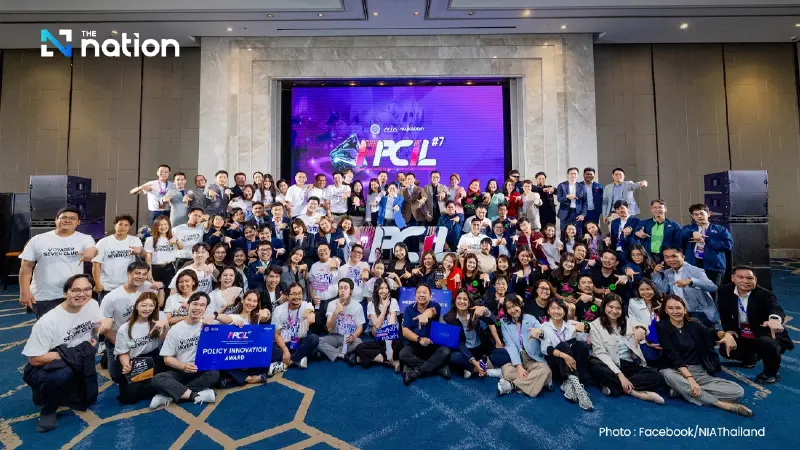


Emerging leaders from the Public and Private Chief Innovation Leadership (PPCIL) programme have proposed five policy innovations to transform Thailand’s ageing society, workforce development, local economy, healthcare system and new economy.
The National Innovation Agency (NIA), under the Ministry of Higher Education, Science, Research and Innovation, has provided a policy-testing platform for more than 80 emerging leaders from government, business, and media at the closing session of the seventh PPCIL programme.
Krithpaka Boonfueng, NIA Executive Director, said rapid global change means traditional methods are no longer sufficient. “Policy innovation” has therefore become a crucial tool for both the public and private sectors to adapt, move towards sustainability, and create new systems that generate economic and social value.
The PPCIL programme, now in its seventh year, aims to develop “change makers” from across government, business, politics, security and the media, equipping them with both strategic and practical innovation know-how.

This year’s programme was held under the theme “Future of Thailand’s Competitiveness: Shaping a Sustainable Tomorrow.”
The key proposals developed during the course included:
- Ready–Hire–Create model – designed to maximise the potential of older adults by reintegrating them into the economy through flexible employment, reskilling, and leveraging life experience as social capital. With Thailand set to become a fully aged society (with over 20% of the population aged 60 and above), the model aims to transform seniors from being viewed as a “burden” into valuable human capital.
- Ready: Preparing those aged 35 and over for healthy, financially secure ageing with readiness centres, a “Ready Point” system, and a centralised monitoring platform.
- Hire: Promoting flexible jobs for all ages via a job-matching platform, supported by government tax incentives and the creation of part-time, remote and public-sector employment.
- Create: Supporting elderly entrepreneurship through seed funding, low-interest loans, investor–startup partnerships, training in business and technology, and access to new domestic and international markets.

- Thai Skill Plus – Skill Log – reforming Thailand’s labour certification system with a modern, centralised database to support skills recognition and future labour mobility.
- “Retirement builds the nation” – creating a silver economy by encouraging seniors to take active economic roles as entrepreneurs, investors and value creators.
- Urban Me project – revitalising local communities and attracting young people back to their hometowns by boosting economic opportunities and quality of life. This includes support for MSMEs to compete locally and regionally, diversify products, and increase local value added, thereby ensuring sustainable community income.
- NCD Innovation Sandbox – establishing testbeds for innovations to manage non-communicable diseases (NCDs), aiming to reduce public health burdens while restoring workforce productivity.

Krithpaka said all proposals would be taken forward in collaboration with relevant agencies, including the ministry, local authorities and Bangkok Metropolitan Administration, as well as being presented at national policy forums.
Senators, MPs and experts from various sectors will provide input, with selected proposals to be piloted in real-world “sandbox” areas.
“The real success of this programme lies not only in the policy proposals themselves, but also in the people and networks created—leaders who will continue driving policy innovation,” she said.
“The outcomes of PPCIL Batch 7 mark not an end, but the beginning of a new chapter in policy reform, combining vision with feasibility to guide Thailand towards a truly sustainable innovation-driven society,” Krithpaka concluded.
