
Thailand's Ancient Wisdom Meets Modern Sustainability: The Expo Redefining Global Climate Action
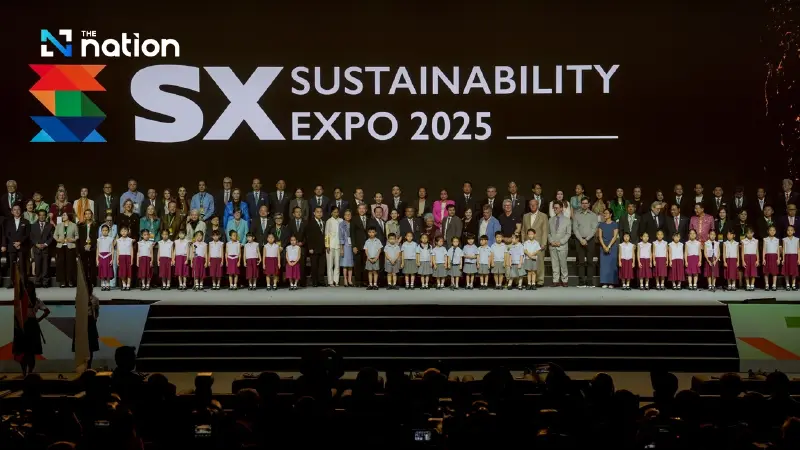


ASEAN's largest expo showcases how King Bhumibol's 50-year-old philosophy could solve modern environmental challenges
- The Sustainability Expo 2025 in Bangkok is showcasing Thailand's 50-year-old "Sufficiency Economy Philosophy" (SEP) as a practical solution for modern sustainability challenges.
- This philosophy is presented as the missing "how-to" framework for achieving global climate goals, focusing on principles of moderation, reasonableness, and resilience.
- Unlike some climate models, SEP offers a path to sustainable growth by emphasizing the reduction of waste rather than simply curtailing economic activity.
- The expo is part of a deliberate Thai campaign to internationalize the Sufficiency Economy Philosophy as a universal complement to existing global climate action frameworks.
As world leaders continue to struggle with translating climate commitments into meaningful action, Thailand is positioning a half-century-old royal philosophy as the missing piece of the global sustainability puzzle.
The Sustainability Expo 2025 [SX Expo 2025], which opened Friday at Bangkok's Queen Sirikit National Convention Centre, has evolved far beyond a regional trade show into what organisers describe as a living laboratory for testing whether the late King Bhumibol Adulyadej's Sufficiency Economy Philosophy can provide the practical "how" that international frameworks have long lacked.

From Philosophy to Practice
"One of the long-standing critiques of the Sustainable Development Goals is that it never says how," explained George Tsiatis, president and CEO of Enactus World, during the opening panel discussion. "If there's a message for the world to take from this conversation, it's that SEP provides a framework for how to approach the goals and how to achieve them."
The philosophy, conceived by Thailand's late King Bhumibol 50 years ago, centres on three core principles: moderation, reasonableness, and self-immunity—the ability to build resilience against constant change.
What makes it particularly relevant today, according to international business leaders present at the expo, is its practical approach to sustainable growth without sacrificing prosperity.

Speaking during the opening address, Thapana Sirivadhanabhakdi, CEO and president of ThaiBev and the event's main organiser, emphasized the expo's inclusive mission.
The event aims to engage people of all ages and backgrounds in learning sustainable approaches.
While last year attracted over 770,000 participants, this year introduces new sustainability activities, including hosting the ENACTUS competition that blends youthful creativity with innovative progress.
Throughout it all, the expo maintains its focus on the Sufficiency Economy Philosophy as a guiding framework.

A Practical Path Forward
Dr Hans-Paul Burkner, chairman of the Boston Consulting Group, argued that the philosophy's emphasis on reducing waste rather than curtailing growth offers a more palatable path forward for businesses.
"There is so much waste, so much leakage," he observed. "From the fields to the fridges, 20-30%, sometimes 50% of food is lost. If we can really cut down on waste and leakage, we can make so much progress."
This year's exposition, themed "Sufficiency for Sustainability," expects to attract over 900,000 visitors across 10 days—a significant increase from last year's attendance.
The scale reflects growing international recognition of Thailand as a sustainability hub, with the country simultaneously hosting the Enactus World Cup for the first time, bringing together young social entrepreneurs from 32 countries.
Timing and Global Ambition
The timing is deliberate. The next two years mark the 100th anniversary of His Majesty King Bhumibol of King Rama IX's birth, and Thailand is mounting an ambitious campaign to internationalise his economic philosophy as a practical complement to existing global frameworks.
"We really want to talk to the world about sufficiency economy philosophy," said Tongjai Thanachanan, director of the expo's organising committee. "We've been holding this expo for the last six years and it has grown to become more international. Yet we still face challenges in communicating this philosophy to the world."
The challenge lies in translating concepts rooted in Buddhist thought and Thai culture into universal principles. The philosophy's central question—"what is enough?"—runs counter to conventional growth models, yet supporters argue it offers a more sustainable foundation for long-term prosperity.

Real-World Applications
The exposition demonstrates this philosophy through practical applications across multiple sectors.
The Better Living zone showcases climate adaptation strategies developed by Thai government and private sector partners, while the SEP Inspiration zone presents case studies of organisations that have successfully implemented sufficiency principles in their operations.
Perhaps most significantly, the expo serves as a testing ground for collaborative approaches to global challenges.
Over 750 international and local experts are sharing insights alongside representatives from 270 companies and organisations, creating what organisers describe as a real-time laboratory for sustainable innovation.
Beyond Incremental Change
The international business community's growing interest in Thai approaches to sustainability reflects broader frustration with incremental progress on climate goals.
As Tsiatis noted, corporations and countries have adopted sustainability standards, but "they're all left at the end saying, 'Well, we can make incremental progress on this tiny piece here.' But where is the fundamental shift?"
Thailand's answer lies in its unique interpretation of sufficiency—not as deprivation, but as optimisation.

As M.L. Jirapan Davivongs, Deputy Secretary-General of the Chaipattana Foundation, explained, the philosophy teaches people to "accept change and adapt while developing themselves to keep pace with the world's transformation."
A Vision for the Future
The expo's expansion into a 10-day programme spanning multiple floors of Bangkok's largest convention centre signals Thailand's ambition to establish itself as the regional capital for sustainability innovation.
With themed zones covering everything from personalised medicine to urban farming, and from disaster resilience to conscious consumption, the exposition presents a comprehensive vision of what sustainable development might look like in practice.
As climate impacts accelerate and traditional approaches prove insufficient, Thailand's ancient wisdom is finding new relevance on the global stage.
The question now is whether the rest of the world is ready to embrace a philosophy that prioritises balance over endless growth—and whether sufficiency can indeed unlock the sustainability solutions the planet desperately needs.
The Sustainability Expo 2025 continues until October 5, with free admission for all visitors interested in exploring how ancient wisdom might hold the key to modern sustainability challenges.
