
Nong Khaem Model: Transforms Bangkok through separation of waste
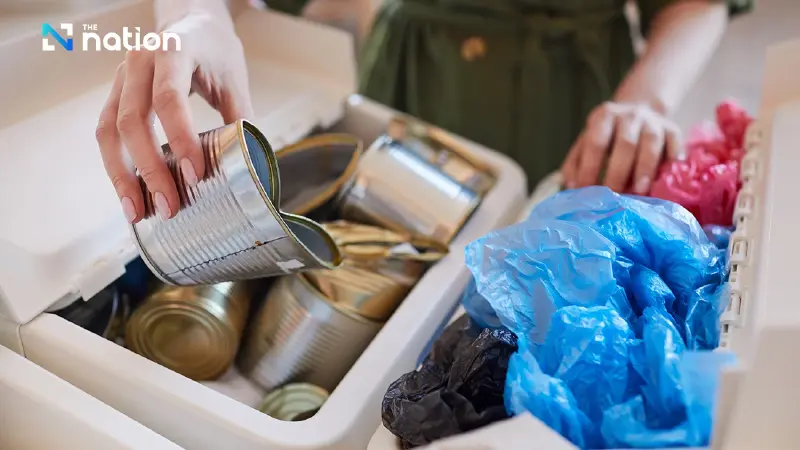


Nong Khaem Model transforms waste through community and private sector teamwork. Separating trash creates jobs and converts "worthless" plastic into fashion, goods, and fuel.
- The Nong Khaem Model is a waste separation initiative in Bangkok that uses 50 "Magic Hands" collection points to gather all types of household plastic, including previously uncollected "orphan waste" with no market value.
- At a community-run sorting center, the collected plastic is transformed into new value through three streams: upcycling into new products, traditional recycling, and conversion into refuse-derived fuel (RDF).
- The successful model provides employment to former waste pickers and is now being scaled up to create Bangkok's first large-scale Integrated Circular Economy Innovation Centre to handle over 40 tons of waste daily.
Dow Thailand Group, a private sector leader committed to promoting the circular economy and a member of the Public-Private-People Partnership for Sustainable Plastic and Waste Management (PPP Plastics), has partnered with Bangkok and a network to support the “Bangkok Magic Hands project.”
This project established 50 plastic collection points across Bangkok's districts to gather household-separated waste. It accepts all types of clean, dry plastic, and crucially, added “Orphan Waste Cages” to collect plastic that has no market value.
Getthip Hannarong, Founder and CEO of Zero Waste Yolo Co., Ltd. (YOLO), a social enterprise focused on waste management, stated, “Foreign countries have mandatory waste separation laws, but Thailand does not yet. Anyone who wants to act can start on their own: separate, clean, and send it to the district office. Someone will manage it from there.”


Three Categories of Plastic: Separate Right to Create New Value
- High-Value Plastic: Such as clear PET bottles, which are regularly collected and already in the recycling system.
- Valuable but Overlooked Plastic: Such as stretchable films, bottle wrappers, bread bags, and rice bags. These do have recyclers, but the public often fails to separate them. They can be sent to the Magic Hands and Won (Thai initiative that promotes the circular economy by collecting and recycling soft, stretchable plastic waste, like shopping bags and film wraps, into new plastic pellets for production) collection points.
- Orphan Plastic: Such as multi-colored plastic food boxes, plastic cutlery, bottle caps, printed coffee cups, yoghurt containers, milk cartons, and shiny snack bags. No one buys these. The "Orphan Plastic Cages" were added specifically to collect this Category 3 waste.
Plastic from the Magic Hands points is sent to the “Nong Khaem Community Waste Sorting Centre,” a community-based centre run in partnership with YOLO. The team consists of seven members, mostly homemakers and elderly residents who previously worked as waste pickers.
Ubon Phothikran, 57, shared, “Before, I had to rummage through garbage day and night just to earn 500 baht. As I got older, my health declined, and I couldn't do it anymore. Working here now is not as exhausting, and I'm proud to be able to support myself.”
The Nong Khaem Community Waste Sorting Centre currently processes an average of 3–3.5 tons of plastic waste per month. This waste comes not only from the Magic Hands but also from the Won and the "Bowon (Ban. Wat. School) network model partners.


The separated plastic is then directed to three value-creation streams:
- Upcycle: Orphan plastic is transformed into everyday products at YOLO's production base in Nonthaburi, including coasters, pens, keychains, eyewear, furniture, and even awards/trophies for private organisations.
- Recycle: Recyclable plastics, like stretch film, are repurposed into new garbage bags.
- Refuse-Derived Fuel (RDF): Non-recyclable plastics (like certain non-stretch films) are sent to waste-to-energy plants for use as fuel.
Notably, the centre partnered with fashion brand Pipatchara (from 2019-2024) to create outfits from bottle caps and yoghurt drink bottles, one of which was worn by Lisa from BLACKPINK.
Getthip recounted a key moment: "When we showed the picture of Lisa to the aunties and uncles in the community, their faces filled with pride knowing that the waste they carefully sorted became an outfit for a world-class artist."
In the past two years, the Nong Khaem Community Waste Sorting Centre has been receiving more waste than its capacity, signalling that “the public is ready, but the infrastructure hasn't caught up.”
In response, Dow Thailand Group, the Magic Hands Foundation, and their partners are pushing the "Nong Khaem Model" to support the establishment of Bangkok's first Integrated Circular Economy Innovation Centre for Material Recovery Facility (MRF). This future facility will be able to handle over 40 tons of clean waste per day.
The answer from Nong Khaem today proves that "don't mix it" is the starting point for changing the city's future. By simply starting at home, once worthless waste can truly create new value.

