
Hydrogen’s role in decarbonising hard-to-abate industries
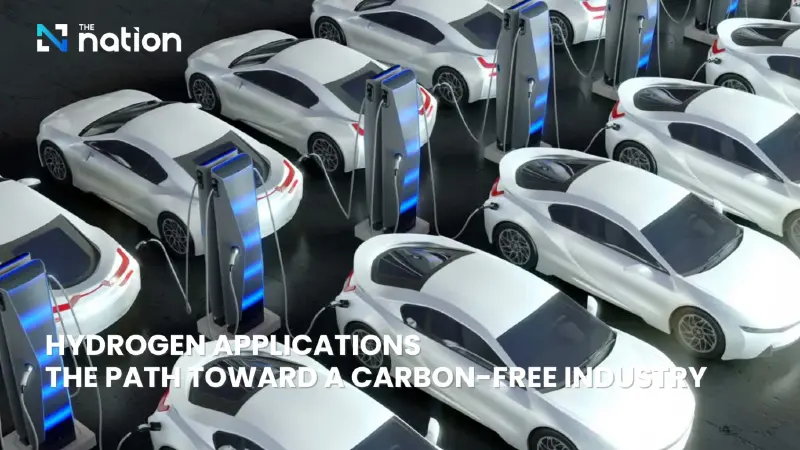


High costs limit hydrogen adoption, but it offers the best solution for hard-to-abate sectors that rely on high-temperature heat or emit CO₂ as part of production.
One of hydrogen’s key challenges today is its higher cost compared to fossil fuels. Therefore, early adoption should focus on industries that require hydrogen in production processes or where there are no viable alternatives—commonly referred to as "hard-to-abate sectors."
What Are Hard-to-Abate Sectors?
These are industries that find it is difficult to reduce carbon dioxide (CO₂) emissions due to factors such as:
- The need for high-temperature heat in production
- CO₂ emissions that are an inherent part of the industrial process, where electricity can't efficiently replace fossil fuels.
These sectors are the primary targets for low-carbon hydrogen deployment.
Hydrogen in the Transportation Sector
The global automotive industry is shifting from fossil fuels to clean energy. Electric vehicles (EVs) are a major solution to reduce emissions and are generally classified into two types:
- Fuel Cell Electric Vehicles (FCEVs) – powered by hydrogen, which is converted into electricity via a fuel cell
- Battery Electric Vehicles (BEVs) – powered by electricity stored in batteries
Each technology has its own strengths and limitations depending on the use case.
Limitations of BEVs for Long-Distance Transport:
- Limited driving range per charge
- Long battery charging times
- Heavy and bulky batteries, reducing cargo space and payload capacity
FCEVs Address These Challenges:
- Longer driving range per refill
- Faster refueling times than battery charging
- Use of hydrogen tanks instead of large batteries, resulting in lighter weight and increased cargo capacity
The farther the distance and the heavier the load, the more FCEVs outperform BEVs, making them ideal for long-haul, zero-emission freight transport.
The Future of FCEV Transportation
It is expected that FCEVs will become more cost-effective than BEVs in the future. Hydrogen will play a key role in enabling more environmentally friendly transportation. Advances in fuel cell technology and hydrogen refueling infrastructure will be crucial to shaping a sustainable electric vehicle industry.
Hydrogen as an Energy Storage System
Energy Storage Systems (ESS) store energy from various sources, especially renewables like solar, wind, and hydropower, to be used when supply doesn’t meet demand.
ESS enhances energy stability by storing excess energy produced during low-demand periods. Stored energy can be in various forms—chemical, electrical, or mechanical—depending on the technology. When energy is needed, the stored energy is converted back into electricity for distribution and use.
Battery Energy Storage Systems (BESS) are suitable for:
- Short- to medium-term storage (from a few hours to several hours)
- Residential solar systems or short-term backup power
Hydrogen Energy Storage Systems (HESS) are suitable for:
- Long-term or seasonal storage (weeks to months) with no energy loss during storage
- Backup systems requiring extended reliability, such as:
- Data centers
- Hospitals
- Remote or off-grid locations using seasonal renewable
Hydrogen Safety
Hydrogen (H₂) is a lightweight gas—eight times lighter than natural gas. It is colorless, odorless, and although it is flammable, it is safer than many assume. In case of leaks, hydrogen disperses quickly upward and does not accumulate in low-lying areas, reducing explosion risks in confined spaces.
Thanks to these safe and eco-friendly properties, hydrogen is widely used as a clean energy carrier in:
- Industry
- Automotive
- Power generation
Hydrogen fuel cell vehicles are especially designed with safety standards comparable to:
- Natural Gas Vehicles (NGV)
- Liquefied Petroleum Gas (LPG) systems
This includes standards for storage, transportation, and leak prevention.
