
Thailand pushes ahead: First Climate Change Act proposed to Cabinet
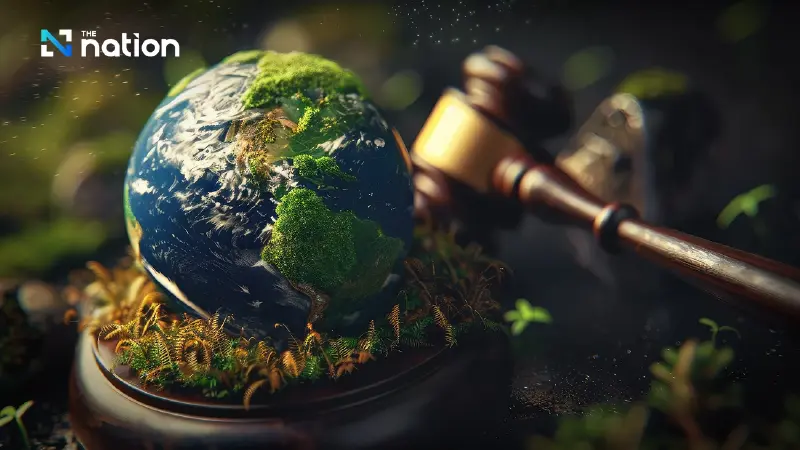


Thailand's first Climate Change Act is set for Cabinet approval on November 25. The 205 section law establishes the national framework for carbon regulation and climate protection.
- Thailand's Department of Climate Change and Environment is scheduled to propose the nation's first-ever Draft Climate Change Act to the Cabinet on November 25.
- The comprehensive draft law contains 205 sections establishing a system for a carbon market, disaster adaptation, climate finance, and Measurement-Reporting-Verification (MRV).
- The act's primary goal is to create a policy framework to guide Thailand toward Net Zero emissions, enhance economic competitiveness, and build social resilience against climate risks.
- Cabinet approval is only the initial step in a lengthy legislative process that will require public hearings and parliamentary review before the act can become law.
Thailand is approaching a significant milestone in tackling the global climate crisis.
The Department of Climate Change and Environment (DCCE), under the Ministry of Natural Resources and Environment (MNRE), is set to propose the Draft Climate Change Act to the Cabinet on Tuesday (November 25).
This legislation marks Thailand's first-ever climate law and is being closely watched by the business sector, legal experts, and the public.
The First Climate Law: 205 Sections Covering Enforcement and Support
The draft bill is comprehensive, spanning 205 sections across 14 chapters.
It establishes a complete system, covering regulatory mechanisms, Measurement-Reporting-Verification (MRV), the carbon market, disaster adaptation measures, protection for vulnerable groups, and climate finance management.
Phirun Saiyasitpanich, Director-General of the DCCE, stated that the law was not drafted using a "copy-paste approach from foreign laws."
Instead, it is based on in-depth analysis to suit the Thai context, aiming to strike a balance between the "obligations" that businesses must adhere to and "support systems," such as funding, technology, and community adaptation.
The core objective is to maintain the nation’s competitiveness while simultaneously building social resilience against the increasing risks and severe disasters stemming from climate change.
Reflecting the Challenges of New Legislation
Phirun frankly admitted that pushing environmental legislation in Thailand is challenging. Clear examples include:
The Enhancement and Conservation of National Environmental Quality Act 1992 has been undergoing amendment attempts for over five years, but has yet to be fully passed by Parliament, meaning the original version is still primarily in use.
The Draft Clean Air Act, currently in the Senate, is facing criticism for being overly detailed, which could make the law rigid and difficult to implement in practice.
These facts reflect that the current move to advance the Climate Change Act requires consensus, participation, and careful policy management to prevent the law from becoming stalled in the legislative process, as has happened in the past.
Thailand's Hope for a Low-Carbon Economy
The Draft Climate Change Act is anticipated to become the "policy infrastructure" that will drive Thailand toward Net Zero, a robust carbon market system, protection for those affected by global warming, and climate risk management at all levels, from local to national.
Many private sector entities are focused on how the new Act will define obligations concerning MRV, Scope 1–3 (An organisation's greenhouse gas emissions are categorised into three international standards to measure and manage environmental impacts.), and market mechanisms.
The public is primarily interested in measures for disaster prevention, early warning systems, and the protection of vulnerable groups.
November 25: A Step Toward Thailand's First Climate Law
If the Cabinet approves the draft, it will only mark the beginning of the legislative process.
It must then undergo public hearings, Parliament review, and multiple voting stages before it can be officially promulgated.
This entire process is a crucial pathway toward the formal implementation of "Thailand's first climate law" in the future.
Given that Thailand faces multiple challenges, including smog, extreme weather disasters, economic risks from the Carbon Border Adjustment Mechanism (CBAM), and global green regulations, this Act is more than just a piece of legislation.
It is the start of establishing a "new framework for stability," enabling the country to adapt and compete sustainably in a post-global warming world.
