
Five floods in 2025 show extreme rains are now the new normal



Heavy, prolonged rainfall, once seen as unusual, is now becoming normal, as the 2025 floods show the growing vulnerability and rising economic losses worldwide.
- Five major floods in 2025 across Indonesia, South Korea, Bolivia, the Himalayas, and global coastal cities caused hundreds of deaths and over THB 900 billion in economic damage.
- These events were consistently driven by prolonged, intense, and stationary rainfall, often compounded by factors like cyclones, glacial melt, and rising sea levels.
- Experts argue these severe rainfall events are no longer rare anomalies but represent a "new normal" caused by a warming planet holding more atmospheric moisture.
- Climate models (IPCC) project that heavy rainfall events will increase by 7% for every 1°C of global warming, signaling a long-term shift toward more frequent and severe flooding.
Year after year, floods and water-related disasters continue to cause enormous damage worldwide.
According to the United Nations Office for Disaster Risk Reduction (UNDRR), floods and water-related hazards account for 35–40% of all climate-related disasters globally.
The economic burden is staggering. Direct and indirect losses from flooding, spanning infrastructure, property, health, housing, education, livelihoods and social systems, amount to THB13.97 trillion annually.
Over the past decade, economic losses from natural disasters have steadily increased.
- Between 1970 and 2000, the average annual cost of disasters stood at US$70–80 billion.
- Between 2001 and 2020, this rose to US$180–200 billion, more than double.

Experts warn that both the severity and frequency of flooding are rising, particularly in regions with dense populations and fragile infrastructure such as Southeast Asia, South Asia and Africa.
The key driver is a warming planet. The UN’s Intergovernmental Panel on Climate Change (IPCC) reports that a 1–1.5°C rise in global temperature enables the atmosphere to hold significantly more moisture, increasing rainfall intensity.
Heavy rainfall events are projected to increase by 7% for every 1°C of global warming.
This means short, intense downpours are becoming more common, raising the risk of flash floods.
At the same time, the global sea level is rising by an average of 4.62 mm per year, worsening coastal flooding and slowing drainage to the sea.
These trends are no longer anomalies — they are rapidly becoming the world’s new normal.
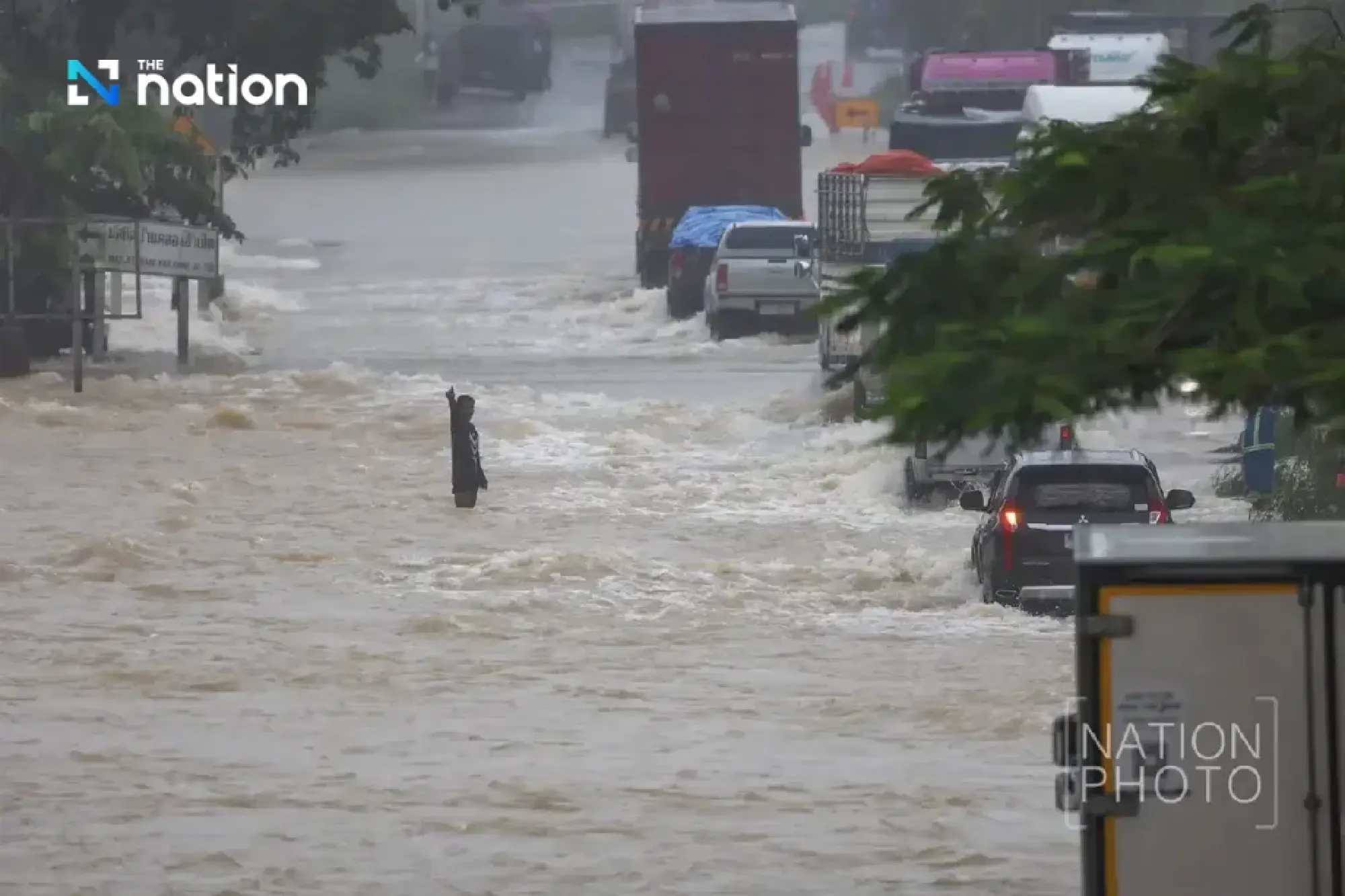
A clear example is the recent Hat Yai floods, driven by several consecutive days of “stationary rainfall” combined with high sea levels, resulting in severe and widespread damage.

Five major flood events of 2025 that caused massive economic losses
1. Sumatra, Indonesia (October–November 2025)
A cyclone brought several days of intense, unrelenting rainfall, triggering flash floods and widespread landslides across northern Sumatra.
Relief teams were only able to begin restoring access in the fifth week after water levels finally receded.

As of November 29, 2025, at least 303 people had died, with hundreds still missing and tens of thousands displaced.
Preliminary economic losses are estimated at THB360 billion, the most serious flood-related damage in Southeast Asia in 2025, largely due to flash floods and landslides striking densely populated communities.
2. South Korea (July–August 2025)
Continuous heavy rainfall during the monsoon season caused several rivers to overflow, leading to flash floods and landslides, especially in mountainous and peri-urban areas.

At least 23 people died, and tens of thousands were affected, with extensive agricultural lands submerged.
Initial damage assessments place economic losses at THB280 billion, the highest flood-related loss recorded in South Korea in 2025.
3. Bolivia (January–March 2025)
Weeks of prolonged heavy rainfall during an extended wet season inundated communities across several regions.

Around 55 people died, and the floods affected half a million households, prompting large-scale evacuations.
The estimated economic toll stands at around THB140 billion.
4. Himalayan region (June–September 2025)
Flooding was triggered when glacial lakes, formed from rapidly melting ice, overflowed.
Sediment dams collapsed suddenly after multiple melt-ponds merged into larger lakes, releasing massive torrents of water compounded by heavy rainfall.

The steep terrain made rescue and recovery extremely difficult. Economic losses are estimated at THB72 billion.
Although casualties were relatively low due to sparse populations, the event is a stark indicator of accelerating climate-induced changes in the world’s high-mountain regions.
5. Coastal cities across Africa, Latin America and Asia (throughout 2025)
While reported separately by each country, coastal flooding across multiple continents collectively represents a severe global pattern. Persistent rainfall, high tides and climate-driven sea-level rise caused repeated flash floods in low-lying coastal and riverine cities.

Tens of thousands of people were affected, and economic losses are estimated at THB54 billion, with some areas experiencing recurrent flooding.
A warning the world can no longer ignore
These cases show a consistent pattern: most severe floods in 2025 were driven by prolonged, intense rainfall, and the worst damage occurred in densely populated or economically significant urban areas.
Phrases such as “unusual rainfall” or “one-in-300-year storms” may unintentionally mislead the public and decision-makers into treating these events as rare anomalies. In reality, rainfall of this magnitude may soon be normal.
With the planet continuing to warm, and expected to warm further, these extreme events will increasingly shape people’s daily lives.
Preparedness at every level, national, provincial, community and household, is now more critical than ever. Those who continue to believe such disasters are “not normal” risk being caught off guard.
IPCC findings reinforce this: intense rainfall events are projected to increase across many regions worldwide, signalling a long-term shift in the global climate system.
What once seemed unimaginable is becoming a normal part of life.
