
PCD names Thailand’s top 10 cleanest coasts and rivers for 2025
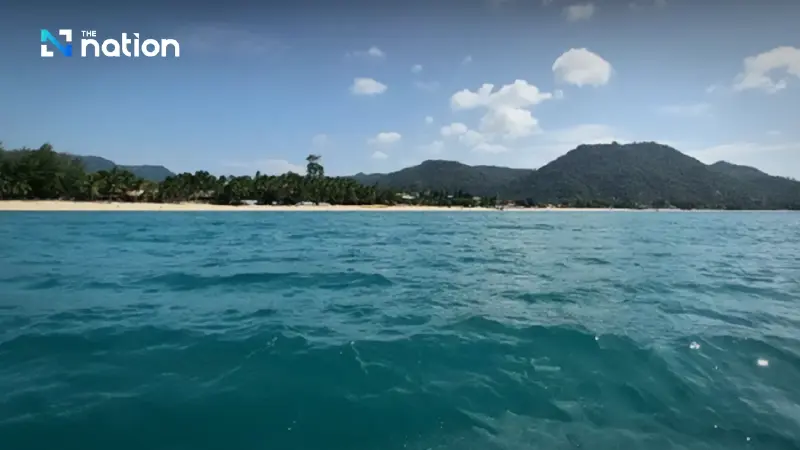


Thailand’s 2025 water-quality monitoring shows 31% of coastal seawater rated “good”, led by Ao Saphli in Chumphon. Surface-water quality was “good” at 40%, with the upper Phetchaburi River ranked best.
The Pollution Control Department (PCD) has reported that coastal seawater quality nationwide in 2025 was rated “good” at 31%, “fair” at 60%, “degraded” at 6%, and “severely degraded” at 3%, based on monitoring at 210 sampling points.
PCD Director-General Surin Worakijthamrong said the monitoring covered six categories of coastal water use under national seawater-quality standards. The assessment used the Marine Water Quality Index (MWQI).
Top 10 coastal seawater sites (best quality)
- Ao Saphli, Chumphon
- Ao Bo Muang, Krabi
- Klong Dao Beach, Krabi
- Thung Wua Laen Beach, Chumphon
- Ban Klong Nin, Ko Lanta, Krabi
- Rin Beach, Ko Pha-ngan, Surat Thani
- Thai Mueang Beach, Phang Nga
- Lamai Beach, Ko Samui, Surat Thani
- Ko Kai, Krabi
- Ao Bang Son, Chumphon
Five most severely degraded coastal sites
- Chao Phraya River mouth, Samut Prakan
- Klong 12 Thanwa mouth, Samut Prakan
- Dyeing factory area (Km 35), Samut Prakan
- Bang Khun Thian, Bangkok
- Tha Chin River mouth, Samut Sakhon

PCD said the 10-year trend for coastal seawater quality (2016–2025) has been broadly stable, with the Andaman coast continuing to record the best overall quality. Key recurring issues include elevated nutrients and bacteria, with higher nutrient loads potentially increasing the frequency of sea discolouration events.
For surface-water monitoring, PCD assessed 363 stations covering 59 main watercourses and six still-water bodies. The 2025 results were based on three rounds of sampling conducted from January to September.
Using the Water Quality Index (WQI), PCD reported surface-water quality as “good” at 40%, “fair” at 46%, and “degraded” at 14%. No sites were classified as “severely degraded”.
Top 10 surface-water sources (best quality)
- Upper Phetchaburi River
- Upper Tapi River
- Un River
- Nong Han Lake
- Phum Duang River
- Songkhram River
- Khwae Noi River
- Upper Lang Suan River
- Loei River
- Phong River

PCD said long-term monitoring over the past decade (2016–2025) shows a slight overall improvement in surface-water quality, with most water bodies ranging from “fair” to “good” and none falling into the “severely degraded” category—reflecting progress in surveillance, restoration and management efforts.
Surin said the department would continue regular monitoring to support planning, measures and water-quality management at both local and national levels, alongside public and private-sector cooperation on protecting public waterways, improving wastewater management and using water resources responsibly.
PCD also urged all stakeholders to be mindful of environmental impacts from activities that could affect both surface water and seawater over the long term, to help maintain water quality for sustainable use.
