
Climate disasters in 2025: from heatwaves to catastrophic floods
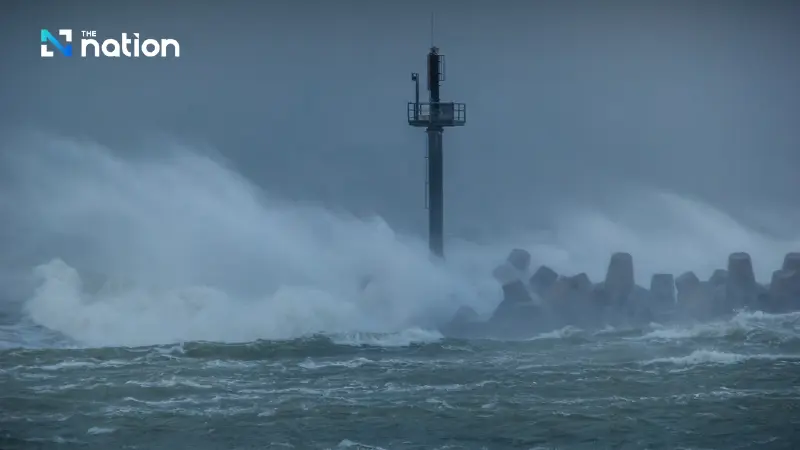


2025 is on course to be joint-second warmest on record, fuelling extreme heat, wildfires and devastating floods as key global deals stall.
In 2025, the world was forced to confront the reality of the climate crisis not only through record-breaking temperatures, but also through the politics, policies and legal battles that exposed both progress and paralysis in global environmental governance.
As the planet edged towards one of the hottest years ever recorded, major international negotiations struggled to tackle the root causes of warming. Fossil fuels remained contentious, efforts to secure a landmark global plastics treaty fell short again, and some national energy moves ran counter to emissions-cutting goals.
Looking back over 2025 is therefore about more than recapping environmental events. It is a snapshot of a world at a crossroads—caught between slow decision-making and what many scientists describe as a narrowing window to change course before extreme climate impacts become the new permanent normal.
2025 set to be joint-second warmest on record
Copernicus Climate Change Service (C3S), part of the EU’s Copernicus programme, has said 2025 is on course to finish as the joint-second warmest year on record—or possibly third—based on observations since the mid-19th century.
In its latest update, C3S reported that the global average temperature for January to November 2025 was 0.60°C above the 1991–2020 average, equivalent to 1.48°C above the 1850–1900 pre-industrial reference—a level comparable to the full-year figure recorded in 2023.
Scientists have repeatedly linked the rising frequency and intensity of heat extremes to the accumulation of greenhouse gases that trap heat in the atmosphere. Copernicus has also confirmed that 2024 was the warmest year on record and the first calendar year in which the global average temperature exceeded 1.5°C above pre-industrial levels.
Across Europe and North America, prolonged heatwaves drove temperatures to dangerous levels, prompting public health warnings and emergency measures in some areas as heat-related illness rose.
Wildfires also intensified across the United States, Canada and parts of the Mediterranean, scorching forests and surrounding communities and forcing hundreds of thousands of people to evacuate.

COP30 criticised for sidestepping fossil fuels in the negotiated text
COP30 in Belém, Brazil, drew scrutiny after the final negotiated outcome did not include explicit language committing parties to end fossil fuel use, despite pressure from a broad coalition of countries pushing for stronger wording.
Amid pressure from major oil and gas producers, COP30 president André Corrêa do Lago opted for a compromise approach, backing a voluntary roadmap to reduce reliance on fossil fuels.
The initiative would run outside the UN’s formal negotiating process and link up with a coalition of countries willing to push the issue forward, led by Colombia. At the same time, Colombia announced plans to host what it described as the world’s first international conference on a “just transition away from fossil fuels” in April.
COP30 was also among the largest UN climate conferences on record, with more than 56,000 participants registered, while separate analyses said fossil fuel-linked attendees numbered over 1,600, highlighting the political weight of industry interests at the summit.
Global plastics treaty talks collapse again
Negotiations aimed at delivering a legally binding global treaty to curb plastic pollution ended without agreement after talks in Geneva, Switzerland.
Delegates from 184 countries attended the meeting, seeking to settle major sticking points ranging from caps on plastic production and controls on products and hazardous chemicals to financial mechanisms to help developing nations comply with any eventual deal.
The Geneva session had been billed as the final stage of the fifth Intergovernmental Negotiating Committee (INC), after talks in Busan, South Korea, the previous year also failed to produce a treaty.
The INC process was launched under a UN Environment Assembly mandate in March 2022, with the aim of delivering a legally binding plastics treaty by 2024 covering the full lifecycle of plastics, combining both mandatory and voluntary measures.
However, after two successive failures, the direction and timeline of future negotiations remain unclear—underscoring the political tensions and competing interests that continue to hinder a global response to the plastics crisis.
Monsoon rains and storms trigger devastating floods in Asia
New attribution research has pointed to climate change as a key factor intensifying heavy rainfall and extreme flooding linked to late-November storms affecting South and Southeast Asia.
Two cyclonic systems—Ditwah and Senyar—struck around the same time, battering Indonesia’s Sumatra island and Malaysia’s peninsula. The storms brought torrential rain, flash floods and landslides, killing more than 1,800 people and leaving about 1.2 million stranded, unable to access timely assistance.
Academics warned the disaster underscored the vulnerability of a region considered among the world’s most exposed to climate impacts. While communities there are accustomed to intense monsoon rains, the research found that global warming is making extreme weather events more frequent and more severe.
They said that without faster emissions cuts and stronger adaptation, losses from disasters of this kind could become increasingly routine.
Trump moves to revive coal industry
US President Donald Trump signed four executive orders in April aimed at reviving the coal industry—widely viewed as the most polluting fossil fuel—and rolling back or reversing earlier climate laws and policies designed to curb greenhouse-gas emissions at both state and federal levels.
The White House said the measures were intended to spur investment and jobs in the coal sector while strengthening the country’s energy security. Speaking to a group of coal miners at the White House, Trump said his administration would fast-track leases for coal mining on federal land and streamline permitting processes.
The executive orders portrayed coal in positive terms as an energy source that is “beautiful, clean, abundant and cost-effective”, and argued it could help meet rising US electricity demand.
They also instructed federal agencies to review and scrap policies seen as obstacles to investment in coal mines and coal-fired power plants.
Environmental experts, however, said the orders glossed over a key reality: coal is the largest source of carbon emissions among fossil fuels, accounting for a substantial share of global emissions and contributing significantly to rising global temperatures since the industrial era.
They noted that many countries have been moving to scale back or phase out coal, with dozens pausing or cancelling plans for new coal-fired power plants since the 2015 Paris Agreement, while countries including Germany, South Korea and the United Kingdom have ended coal use entirely.

Wildfires intensify worldwide
2025 was remembered as another year in which wildfires escalated sharply under the influence of global warming. Persistently higher temperatures, prolonged heatwaves and severe drought left many regions as “tinderboxes”.
Scientists say the build-up of greenhouse gases is lengthening fire seasons, drying forests more quickly and strengthening winds—allowing fires to spread faster and making them harder to control than in the past.
One stark example in 2025 was a major wildfire outbreak in California, particularly around Los Angeles early in the year, which became one of the costliest wildfire disasters on record. Tens of thousands of homes were destroyed, large-scale evacuations followed, and air quality remained at hazardous levels for weeks.
Elsewhere, fires in Canada, southern Europe and Australia also sent smoke and toxic haze across borders, affecting public health in neighbouring countries.
The impact of wildfires in 2025 went far beyond property losses. They damaged ecosystems, disrupted economies and worsened the global climate outlook. Forests that once absorbed carbon were destroyed and, in turn, became sources of greenhouse-gas emissions that further fuel warming.
Experts warned that without faster emissions cuts and stronger adaptation to extreme conditions, wildfires may no longer be occasional disasters but an increasingly routine “new normal” in a warming world.
ICJ sets out legal responsibility for climate harm
In July, the International Court of Justice (ICJ)—the United Nations’ highest court—issued a landmark advisory opinion on states’ obligations in relation to climate change.
The court said that government action that drives global warming can amount to an internationally wrongful act, and that states have duties under international law to reduce greenhouse-gas emissions and prevent further harm.
Where damage has been caused, the opinion said states may be required to provide reparation to affected countries and communities.
Delivering the statement at the Peace Palace in The Hague, the Netherlands, ICJ President Yuji Iwasawa said the scientific evidence shows—beyond dispute—that greenhouse-gas emissions are caused by human activity and are producing severe, far-reaching impacts on ecosystems and people worldwide.
The court described the climate crisis as an existential, planetary-scale threat, and stressed that both acts and omissions by states can be assessed when considering responsibility.
Environmental law experts said the opinion could become a turning point for climate litigation globally, strengthening legal arguments for vulnerable states and affected communities to pursue accountability from governments—and, increasingly, major polluters—amid rising pressure on countries to adopt more concrete and effective climate action.
