
FOCUS ON ULTRABOOK, CLOUD COMPUTING


Play
Asia will remain hot destination for IT firms
The year 2012 is expected to be an exciting and a major one for the IT industry. Thailand’s IT market is expected to return to normal growth after dropping this year due to the floods in the last quarter. Ultrabook and cloud computing are expected to be the highlights in 2012 and in terms of markets, Asia is expected to remain the hottest destination for IT firms.
Ultrabook device the next big thing
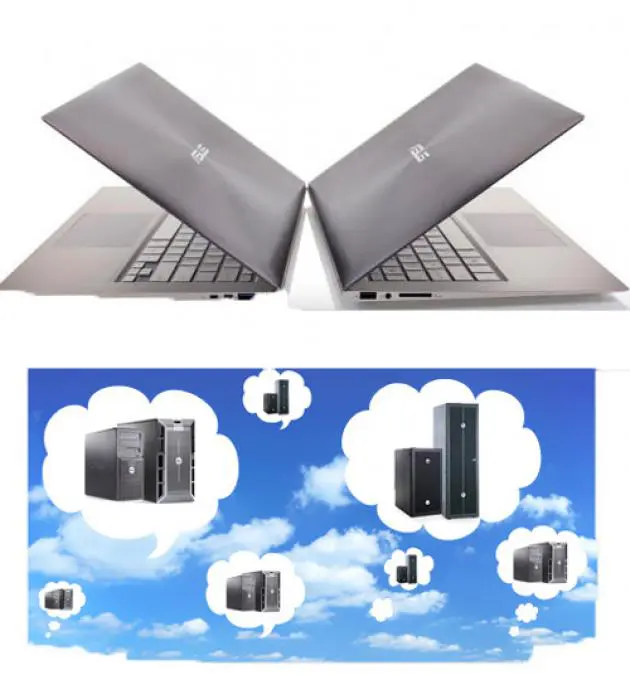
Intel Microelectronics (Thailand) country manager Accharas Ouysinprasert said that Thailand’s PC market next year is expected to ship 5 million units. About 65 to 70 per cent will be notebook computers, while the rest will be desktop computers. Of the notebook shipments, about 40 per cent are expected to be ultrabook devices, a new segment in mobile computing, powered by the giant microprocessor-maker Intel Microelectronics.
Intel expects the ultrabook device to be as transformational to mobile computing as the Intel Centrino mobile technology was when it helped popularise WiFi-enabled laptops.
He added that the Ultrabook device will be launched in the world and Thai markets in three phases over the next three years. The first phase of the ultrabook device will be launched next year with Ultrabook systems that are ultra-responsive, ultra-sleek, offer excellent battery life and enhanced security-enabled features, and are available at a variety of prices, many under US$1,000 (Bt31,000).
“Currently, four companies – Acer Computer, Asustek, Lenovo, and Toshiba Corp – have already announced and some are already shipping Ultrabook products that are available now, with more expected in 2012 from other manufacturers. By 2013, ultrabook devices will have more than 10 days of standby battery life,” said Accharas.
According to International Data Corporation (IDC) by 2015 there will be 95 million units of ultrabook devices be shifted to the market worldwide.
HP Thailand yesterday launched its first ultrabook computer, HP Folio, in the Thai market to serve commercial segments.
HP Thailand’s Monty Wong, general manager of HP Thailand’s Personal Systems Group (PSG), said that the ultrabook devices will be the next big thing in 2012. HP Thailand, next year, will focus on the “thin and light” product category, and ultrabook is the new product in this category.
“Ultrabook is the next big market and HP will capture this market. We will invest a lot in research and development as well as marketing this kind of products to make sure we offer customers both experience and performance,” said Wong.
Cloud computing on a high
Cloud computing will continue to play an important role in the IT market. It is the next big thing for all industries. The rapid increase in the use of connected devices, especially smart phones and media tablets, as well as content creation and user-generated content over the Internet are key factors to drive the growth of cloud computing next year.
Intel’s Accharas said that data-centre demand spiked. It is expected that by next year, more users, more devices, and more data traffic will be over the Internet. By the year 2015, about 1 billion people and around 15 billion devices will be connected to the Internet, leading to more than 1,000 exabytes of data flowing over the Internet.
More users, more devices, and more data over the Internet will directly drive the growth of the cloud-computing environment as they will need more and more storage to handle the huge volume of connection and content. It is forecast that the growth in storage will be 670 per cent from this year to the 2015.
“Next year, we will see the massive data centre build-up in Asia. The cloud ecosystem will evolve. And Asia’s small and medium business will look for vendors to supply cloud-based solutions. Meanwhile, security is set to continue strong growth along with the growth of cloud computing,” said Accharas.
The research firm, Frost & Sullivan, also confirmed that cloud computing would be a major growth area for the ICT industry in 2012. Next year, cloud computing is set to become mainstream in the Asia-Pacific. About 30 per cent of APAC organisations will have adopted some form of cloud computing by 2012. Asian organisations do recognise the benefits of cloud computing, which are manifold. These benefits include the ability to offer greater business agility, cost reduction and a switch in IT spending from capital investment to operational expenditure. Basically, cloud computing is becoming critical as a means of gaining a competitive advantage for today’s organisations. It is now a strategic issue.
Frost & Sullivan Asia-Pacific vice president for ICT practice, Andrew Milroy, said that the market for public cloud computing is set to reach US$5.8 billion by 2015, growing at a compounded annual growth rate of 39 per cent between 2010 and 2015. The IT industry is being transformed by cloud computing as consumers and businesses depend, to a greater extent, on smart phones and tablets.
Asia a key market
Asia will be a key emerging market for IT firms where they have will have to invest a lot and be firmly focused on.
Accharas said that Asia is growing in technology spending power. Technology companies must be creative and explore the Asian psyche. The huge phenomenon across Asia is the trend of mass urbanisation, which presents a challenge to governments to support the country with technologies. Since urbanisation brings a skills mismatch between rural and urban, education and technology can bridge this gap. But the government must play an important role to help increase the skills.
Asia is the cornerstone of Intel’s global design and manufacturing operations. Intel’s integrated design and manufacturing operations in Asia, with a workforce exceeding 18,000, played a significant role in bringing innovative technologies to high-volume manufacturing and also contributed to a 40-per-cent reduction in the cycle time of Intel’s global supply chain from 2009 to 2010. Key areas of improvement included reduced time for construction (15 per cent), reduced fabrication tool installation time (31 per cent) and reduced assembly/test tool installation time (27 per cent). Intel’s integrated design and manufacturing model also enables a robust growth strategy.
Not only for the computer market, Asia is also a major destination for smart phones. Martyn Mallick, vice president of global alliance and business development at Research In Motion (RIM), said the growth in demand for smart phones in the region is fantastic and offers a great opportunity. Asia is the big focus for RIM, and BlackBerry is the market leader in many countries in Asia, including Thailand and Indonesia. Meanwhile, the regional managing director of RIM East Asia, Gregory Wade, said that Asia is the hotbed of application development and the company sees a lot of opportunities throughout this region.
Lenovo is focusing on the Asean computer market next year. Lenovo Asean’s general manager and executive director, Kho Kong Meng, said that Asean and Thailand are important markets for Lenovo, as they are growing faster than the global market – 20 per cent versus 10 per cent.
