
Grey market faces stiff test


Play
New measures by Customs Department expected to put pressure on prices
Grey market auto importers are facing the moment of truth as the Customs Department has launched new control measures in an effort to curb loss of tax revenue.
This follows a complaint to the department by car importers that some in their industry provide false information about imported cars or auto parts to pay low import duties.
The move by the Customs Department is expected to drive up retail prices of luxury vehicles in Thailand. However, it is well known that those behind grey market importers usually have strong ties with politicians and Army generals.
So, it is not surprising that Somchai Poolsavasdi, director-general of the Customs Department, came out to say that the department is giving grey importers a grace period to adapt to the new regulation and price averages.
He said the new regulation would be implemented right away without having to inform grey importers as the announcement had already been made.
According to Somchai, certain grey importers use loopholes such as quoting unusually low prices.
“After following up on the imported items [35 out of 50 companies], we found a couple cases of unrealistic price declaration. They will be required to pay the remaining import duty as well as a fine two times that of the import duty. They can bring the case to court, but if found guilty they will be fined four times. Right now, we have found two cases where unrealistically low prices have been declared resulting in the country losing Bt5 million to Bt6 million in taxes. Even if the vehicle has gone through formalities and sold, we can still trace them as the import papers are still here. We can inspect the price to see whether it is too low or whether the licence is correct,” he said.
In the past, brands popular with grey models usually suffer lost opportunities, especially in the last 3-4 years when the luxury car market was recovering.
Mercedes-Benz is the most popular luxury brand in Thailand and its popularity also covers the grey market segment.
Official distributor Mercedes-Benz (Thailand) Ltd recently announced that it would cease accepting vehicles for maintenance and repair if they come from grey market importers. Company president and CEO Alexander Paufler also came out to urge the government to create a level playing field for all.
Other brands, such as Toyota, Lexus, BMW, Porsche and some others are also affected by the growth of grey importers during the last several years. Grey importers are able to sell as much, or even more units of niche models, when compared to the official distributor.
Apart from being able to capitalise on loopholes in the import process, grey importers are capable of providing vehicles with lower prices, higher options level and quicker delivery period than the distributor.
The official distributors operate on a larger scale and need time to drive the company with business plans, management, marketing, brand-building and parts inventory throughout the lifecycle of the vehicle.
Support for new rule
Suparat Sirisuwannangkura, chairman of the Federation of Thai Industries’ Automotive Industry Club, told The Nation, “This is a good policy from the Customs Department to create fairness in the automobile industry. It will set clear standards and systematically categorise imported vehicles.
He said if the government was not clear or did not make a move, damage would be done to the auto industry.
“The country will lose more than Bt10 billion in revenue per year and the Excise Department will not be collecting the taxes that it should. Next, although the consumers may benefit from the tax evasion of grey importers, which could be brought in by means of false registration or pricing, the vehicle could suffer from quality problems. And if there is a recall by the manufacturer, the importer would not be able to search for the customer database because the documents and evidence have not been filed properly and transparently,” Suparat said.
“Lastly, and most importantly, if the government does not have any measures to deal with grey importers, it would destroy the automobile industry in Thailand. This is because companies like Mercedes-Benz [or other company that assembles luxury cars in Thailand], are losing market share to grey importers. If the grey market keeps on growing, parent companies may decided to cease production of models that are unable to compete with the grey imports. This scenario has taken place in New Zealand before, and that spelled the end of the automobile industry in that country,” he added.
According to Suparat, the announcement of the average price will not affect automobile companies that quoted genuine overseas prices and ex-factory prices.
These prices can be easily crossed-checked, he said.
“For example, although Lexus is adjusting retail prices by 15 per cent, every detail can be checked, starting from cost to profit. Auto companies must carry out a transparent business that can be checked. In the past, if the prices were not too different, there wouldn’t have been any conflict between the auto distributors and grey importers, and the Customs Department would not have needed to introduce the new regulation,” he said.
Strong enough to survive
According to a well-known grey importer who requested anonymity, his company has gone through inspections and faced no problems with low price quotations.
“We don’t want any problems but we admit that this new regulation will affect the whole grey-market business. Sales could drop by 60-70 per cent during the next three months, and that amounts to more than Bt1 billion in revenue,” he said.
“It is expected that the Customs Department will adjust price four times – this is just the first. This means that in the future, the prices between grey importers and distributors will be much closer,” he said.
Grey importers are retaliating by offering new models with a wide range of options for customers to choose from, while maintaining a reasonable profit margin.
“In the past, we had already been doing this, so we are not so much affected by the new measures from the government,” he added.
Without the new measure, the grey market could have prospered to 20,000 units in 2012, with as much as Bt30 billion to Bt50 billion being circulated in the system.
“But in this scenario, as much as half of that would be gone, as the grey market has both good companies and the bad ones, including those that engage in money-laundering, which is as much as 20 per cent. About 30 per cent are made up of small importers, some without showrooms, that open and close all the time. Then there are also importers who present low-price invoices or claim that the vehicles are used and pre-owned by overseas students. More than 100 units have been brought in this way and that’s too much, and this is why the problem has blown up and exploded. The market is booming – there is a huge number of new models in 2011 and 2012 and everyone wants to sell them,” he said.
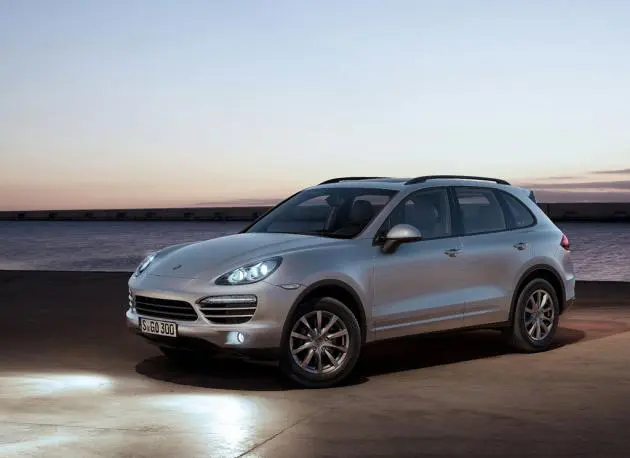
The source said the new government measures will force many luxury brands to raise their retail prices immediately, as importers must pay higher duty due to the higher price quotes. For example, certain Mercedes-Benz models will see the price increase by as much as Bt1 million. Meanwhile, the price hike would be as high as Bt2 million for the Porsche Cayenne, one of the most popular import luxury cars in the country, and Bt3 million for the Porsche Carrera.
.
