
Technology drives Ford into a safer future


Radar-based systems, camera-based tech will come to the aid of drivers soon
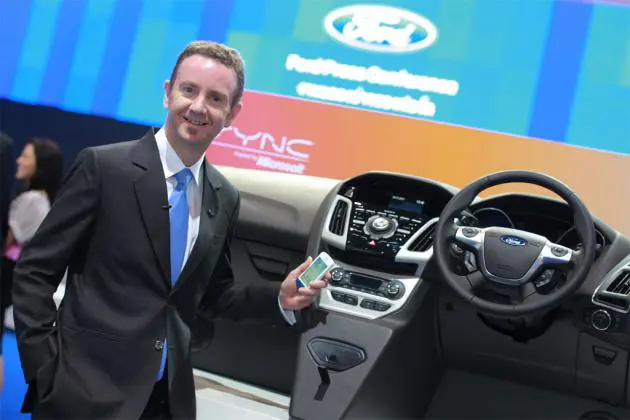
Automotive and technology companies are looking to the future by collaborating on the development of intelligent vehicles to make life on the road easier and safer. To explain what the future of automotive technology will look like, Rodney Phillips, SYNC engineering manager for Ford Asia Pacific, gave an exclusive interview to The Nation.
What does the future of automotive technology look like?
Ford is a leader in envisioning the future of automotive technology. Our chairman, Bill Ford, has spoken about autonomous cars for many years, and we view automated driving in the broader context of active-safety-technology development.
In the next five years, you will see the migration of driver-assistance technologies across our global product line-up and increasing automated driving capability. These technologies include radar-based systems such as adaptive cruise control, blind-spot monitoring, active park assist, active city stop, as well as camera-based technology like lane-keeping assist and traffic-sign recognition.
We are also researching automated assist features including perpendicular parking, a further improvement of our now-available Active Park Assist (auto-parallel-parking assist function), as well as what we call Traffic Jam Assist.
Traffic Jam Assist allows for a first step towards more autonomous driving. The car will accelerate, steer and brake autonomously, but all this in very defined and controlled conditions during a congestion or stop-and-go situation.
In the mid-term 2017-2025 time frame, we will be enhancing the driver-assistance technologies to more semi-autonomous capabilities, providing drivers the ability to let the car take the lead in situations such as when changing lanes, in traffic jams, or on freeway trips.
In the long term, after 2025, you will begin to see radically different transportation systems. Cars will be connected to each other, as well as the infrastructure around them, having a significant amount of information allowing them to have autonomous capability, such as parking themselves or driving in groups on the freeway. There will also be seamless connections between different modes of transportation, from your personal car to public transit systems to the parking facilities at businesses.
How do people benefit from the advanced technologies embedded
in vehicles?
Ford believes that advanced technologies and future automation act as an assistance feature supporting the creation of better drivers, providing increasingly more capable cars that make driving safer, and enhance convenience for customers. Consumers expect cars that keep them safely connected while on the road, while also minimising the stress of driving – Ford’s smart technologies deliver on this need.
What’s the mission of Ford as an
automotive firm to enhance the
innovative vehicle with technologies?
Our core mission is to drive consumer-focused innovation in automotive technology through greater app integration, stronger partnerships and improved in-car connectivity.
Ford’s “Blueprint for Mobility” outlines our vision for the future of transportation and the resulting impact to our business model. It guides Ford’s role and the necessary development of future sustainable, smart transportation systems. A key component will be automated driving in addition to networking infrastructure and technology allowing cars to talk to each other as well as their surroundings.
We have also set up a new Ford Silicon Valley lab in Palo Alto [Californiaa] to support our vision to create uncompromised personal mobility experiences for people around the world. The lab serves as a hub for Ford to develop a wide spectrum of partnerships with established and start-up tech firms, as well as with universities in the area, such as Stanford.
What are the key automotive
technologies in Ford’s Focus?
The all-new Ford Focus, launched in Thailand last year, offers class-leading technologies unmatched by any other vehicle in the segment or price range. These include:
Ford SYNC. An award-winning hands-free technology that allows customers to control their mobile phone and digital media player via voice commands so that they can make calls or play their favourite music while keeping their hands on the wheel and eyes on the road.
Active Park Assist. Parallel parking in the all-new Ford Focus is virtually stress-free, with the system detecting an available parking space and automatically steering the vehicle into the space, with the press of a button. Drivers control only the accelerator and brake pedals.
Blind Spot Information System (BLIS). This sensor-based system displays an alert in the side mirror when a vehicle is detected entering a blind spot.
Active City Stop. Using an optical radar system, this feature reduces the risk of low-speed collisions by monitoring the road in front for stationary traffic, then braking automatically if the system detects a stationary vehicle in its path and a collision is imminent.
What exactly is Ford’s SYNC technology, and what is its beauty?
Ford SYNC powered by Microsoft is hands-free technology that allows Ford customers to connect almost any mobile phone or digital media player to their Focus via Bluetooth or USB connection respectively. Drivers can use either steering-wheel-mounted controls or voice commands to manage SYNC’s features.
Ford and Microsoft have truly set the benchmark for in-car connectivity systems with SYNC – now in more than 5 million vehicles with the forecast to reach an additional 9 million new customers around the world by 2015.
Ford’s open-platform approach to mobile-device connectivity has helped SYNC stand out in the industry for its ease of use, allowing for continuous improvement of the user experience. Unlike embedded connectivity systems, SYNC does not allow access to the user’s stored contact information unless his or her phone is connected, hence ensuring a high level of privacy.
SYNC turns Ford vehicles into more than a car and allows drivers to safely and conveniently make phone calls or play their favourite music using voice commands. In fact, SYNC owner satisfaction continues to improve each year, with 74 per cent of users saying they would recommend the technology.
Additionally, SYNC will continue to evolve in the future with AppLink, which offers industry-exclusive voice control over smart-phone apps, providing drivers with a safer way to access the content and information they want while on the go.
How about the plan to implement Ford’s automotive technologies in the Thai market?
Many of Ford’s leading automotive technologies are already available in Thailand, particularly in the all-new Ford Focus. This includes SYNC, Active Park Assist, Active City Stop, BLIS and more. Ford will continue to expand the range of vehicles in Thailand that offer smart technologies with the launch of upcoming global vehicles, such as the new Fiesta and all-new EcoSport.
Is Ford open for third-party technology developers to join its automotive technology development? If so, how?
Yes, Ford has launched its Developer Programme to make it easy for software developers to create personalised, voice-activated mobile apps helping drivers keep their eyes on the road and hands on the wheel.
The Ford Developer Programme provides more customer-driven innovation than ever before by engaging anyone interested in creating voice-activated mobile-app experiences for Ford vehicles. They simply need to visit http://developer.ford.com for the tools and information to learn about the AppLink application-programming interface and how they can integrate their smart-phone app, allowing it to communicate with the SYNC interface. This includes voice recognition and steering-wheel and radio buttons.
These mobile-app innovations help products remain relevant and up-to-date with latest consumer trends and add value and new capabilities throughout the vehicle-ownership period.
