
Thai developers make a mark in Silicon Valley


Play
The ability to work at pace, voice opinions and be team player all crucial in demanding environment
California’s Silicon Valley, which remains the premier destination for talented software developers and engineers from around the globe, nowadays has a lot more Thai developers living and working there – and contributing to the well-known products and services offered by some of the world’s technology giants.
We examine the experiences of three Thais working at Google, Facebook and Twitter, and hear what advice they have for others wishing to follow a similar career path.
The Google search-infrastructure engineer
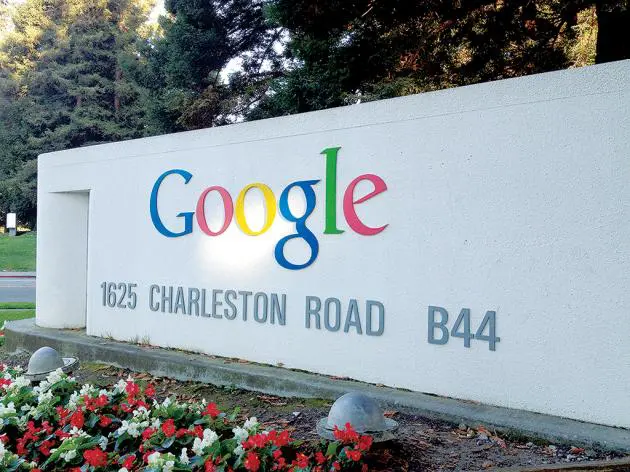
Thadpong “Team” Pongtha-wornkamol, 31, has worked as a software engineer at Google headquarters for two years. He is responsible for search infrastructure and the development of a crawling system to fetch Web pages around the world that are to be kept in Google’s archive. The company’s indexing team will use this information for developing the index data base for Internet users.
Thadpong met Google’s recruiting team at a campus visit when studying for his PhD at the University of Illinois. As a result, he became an intern at Google for three months and, prior to finishing his PhD, he worked as a software engineer at Bloomberg before moving to work at Google’s Mountain View establishment.
Thadpong, who graduated in computer engineering from Kasetsart University, received a Fulbright scholarship to study for a master’s degree in the same field at the University of Illinois.
He said that to be studying in the United States is an important initial step for Thai software developers who want to get a job in Silicon Valley.
“Developers or computer engineers, as well as computer-science students, should keep their eyes open for opportunities, in terms of both competitions and scholarships. They should have good scores in their education record, even in the subjects that are not their favourites,” he added.
He feels good about working at Google, as what he does benefits billions of people around the world. His job is meaningful to many people and that keeps him motivated, he said.
“There are still a lot of things that I’d love to learn from working here at Google. The company takes good care of its employees. People working here are very skilful, and that encourages me to keep learning all the time, and I love to learn from my skilful colleagues,” he said.
Thadpong, who is one of many Asian people working at Google’s Mountain View HQ, added that initially, he had to adapt his nature somewhat, since he was normally a relatively quiet person. This had to change, as the company’s environment and ethos demand that employees express their thoughts and opinions.
“English and expression are things in which we need to be skilful. Here, they don’t mind which nationality you are, but they care a lot about your skill and your knowledge.
“They need you to have your own ideas and to share and discuss them with others, even though those people may be your boss or your seniors.
“If you have a good idea, you don’t keep it to yourself, but must express it and let others know. You can convince senior people, or even your boss, to follow through with your idea if it is good enough,” said Thadpong.
He also said developers should work hard and for long hours even if in a small company, as skill is a crucial resource that requires time.
“Communication skill is another important requirement for developers, both in the interview process and after they get a job. In many cases, answering is not as important as the way we think. Be clear about what you do think, and explain it well,” he said.
Software engineering for Facebook’s ads team
Kosin “Tom” Sutthimala, 31, has worked as a software engineer in Facebook’s ads team at the company’s Menlo Park headquarters for three months.
A computer-engineering student at Chulalongkorn University before graduating in software engineering from Carnegie Mellon University in the US, Kosin first worked as a software engineer at Siam Commercial Bank – a job that lasted four years.
Then, after finishing his master’s, he worked as a software engineer at Oracle’s headquarters in Redwood Shores, California, for more than a year.
“I then got an offer from Facebook’s recruiting team. They got my profile from LinkedIn. I had two interviews, then I got a job with them,” said Kosin.
He is delighted to find the work very challenging at his new employer. He said that at Facebook, people work so quickly that he is always active and gets each task completed as quickly as he can. He is happy to be working like this, and to be making decisions on his own.
“I have to work quickly here, but I also have the chance to make decisions based on my own reasoning. I have not had to adjust, as there are people from so many nations working here, including a lot of Asians. I enjoy working here, and working with talented people,” he said.
Kosin said developers should learn about the culture and style of the company they would like to work for. At Facebook, the style is energetic – and people working at the company need to be active all the time, and to work extremely quickly.
“Some people might think it is too much of a pressure situation, but I love it. Working here keeps me alert and excited every day. Our passion is to get the job done!” he added.
There are currently eight Thais working at Facebook headquarters, six of whom are not American-born.
From Microsoft to Twitter’s ads team
Sratha “Joke” Saengsuwarn, 28, is a Thai software engineer working for Twitter’s ads team.
A computer-science graduate from Princeton University, he has been with the social-media company for a month.
Before joining Twitter, Sratha was a software engineer at Microsoft for five years, working at Microsoft Canada and the group’s headquarters in Redmond, Washington.
During his time at the software giant, he was involved in many Internet products and services, from Windows Live Hotmail and SkyDrive to Live Mesh and the Windows Phone App Store.
“My experience during five years at Microsoft was invaluable to me. At that time, there were not that many places where a fresh college grad could be working on products with such a large-scale impact on millions of customers right away.
“Microsoft is also full of resources and experienced engineers who are willing to help ramp you up. I definitely learned a lot of things during my time there, plus I am very proud as it was my first job out of college. Moving to Twitter, there are many new technologies I have to pick up, as I have moved from the Microsoft framework to the open-source world.
“However, the software-engineering fundamentals and the experience of working with large-scale services I’d attained during my time at Microsoft really help ease the transition,” said Sratha.
He said that while there were always exciting problems to solve at Microsoft, he had decided it was time to try something different. Microsoft is a big company with many different businesses and products, while Twitter is still relatively small and focuses mainly on Internet service, he added.
“Process is more established at Microsoft, while at Twitter it’s more flexible and we ship things a bit faster here. Twitter is very engineer [developer] driven, as well,” he said, adding that in the end, both places are full of great engineers to work with, which is the best part of his experience.
Besides having strong technical skills, he suggested that Thai developers who would like to work at the big companies in Silicon Valley needed to have strong communication skills and be good team players.
With a big, complex project, being technical alone is not enough, as you need to know how to drive the project and work well with the other people in multiple teams, as well, he stressed.
“There are two paths for Thai software developers wishing to work in Silicon Valley. The first way is to study in the US first, before applying for a job. Taking the other route, you could apply directly from Thailand, or [at least] from outside the US.
“The latter path seems to have become more viable nowadays, as no matter where the skilful developers are, there are a lot of venues to allow them to show the world their performance and skill – wherever they are physically,” said Sratha.
He also emphasised that landing your first job in the US is the most important of all in a budding software career, regardless of the size of the company, since it is likely to get you onto the stage and open up many new opportunities to move to other firms in the future, even in Silicon Valley.
“Having a network here is another key factor for getting a job. Getting a friend’s referral is also important, as that can give you a better chance to land a specific job. I was referred to Twitter by a friend with whom I used to work,” he said.
Sratha enjoys working at the fast-growing firm, but he also has a dream: to have his own start-up one day.
