
IT retailers turn focus on smart devices


Play
Players switch strategy as sales of desktop PCs and notebooks slow, threatening survival
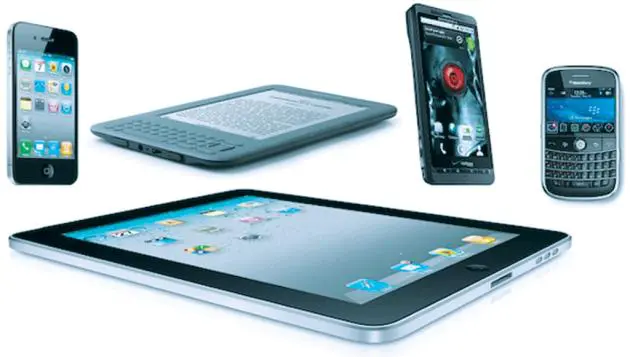
Information-technology retailers are adjusting to a major transition in the market, turning their attention increasingly to the sale of smart phones and tablets to support the new demand trend and ensure their business survival amid slower PC and notebook sales.
While the overall market for IT products is stable, the market for smart devices in the provinces in particular offers high growth potential, according to leading players.
Ekachai Sirijirapatana, president of retail chain IT City, said the IT market, including desktop computers and notebooks, in the second quarter was stable, as customers had changed their behaviour and were now increasingly purchasing smart phones and tablets as their new IT devices.
Retailers must, therefore, adapt their business position to focus on and drive sales of smart phones and tablets to serve the current market trend, he said.
IT City now allocates around 30 per cent of the area in each of its stores for smart-phone and tablet counters, so that it provides an experience zone to support the new demand and lifestyle of customers, he added.
The company is also setting up a Mini IT City chain in the provinces, with each store having a floor space of about 100 square metres.
It expects to have some 10 Mini IT City outlets by year-end, as well as 50 IT City branches nationwide.
“We now have IT City and Mini IT City, which are our retail businesses for selling both [traditional] IT products and smart phones and tablet devices to customers around the country.
“Mini IT City is a new type of retail shop, which will open in small areas to cover the demand, and especially upcountry, where there is high potential growth and room in the market,” said the IT City chief.
The company this year expects to generate revenue of about Bt5.5 billion, with smart phones and tablet devices accounting for around 15 per cent. Smart-phone and tablet sales only accounted for 7 per cent of IT City’s revenue of Bt5.9 billion last year.
“I think that the decline in our revenue largely results from reduced demand in the PC and notebook market, as customers switch to purchasing a tablet or smart phone as a device to support their personal and mobility needs,” said Ekachai.
Pornthep Watchara-amnouy, executive vice president of Advice Holding Group, a major IT wholesaler, said the overall IT market was continuing to grow, thanks to people’s new lifestyle trend and their need for smart mobile devices driving the market.
The company distributes IT products and services via four channels. Its 358 branches are made up of 182 AsOne outlets, 130 Advice Distribution stores, 34 Advice shops and 12 Advice Mini stores, all of which are focused on the upcountry market.
It expects to have 360 branches in total by the end of this year.
Room to grow
He said the provincial market offered high growth potential since it was essentially a “start-up market”, in which there is more room to expand the company’s business base, especially in the high-demand segment of smart phones and tablet devices – its current major focus.
Advice Holding Group expects to generate revenue of around Bt12.8 billion this year, with about 80 per cent coming from the upcountry market and 20 per cent from metropolitan sales. Last year’s revenue came in at Bt11 billion, he said.
“We are now providing an IT product mix and services to support both existing and new customers. We also have a goal to be a total digital solution business to support our customers’ demand and the transition in the IT market,” said Pornthep.
Meanwhile, International Data Corp (IDC) reported that the Thai PC market had begun 2013 on a negative note, as sluggish demand in the consumer market brought about a 20-per-cent decline year over year in the first quarter, with shipments reaching only 800,000 units.
Consumer demand for PCs weakened as the quarter progressed, which resulted in a struggle for channel partners to overcome cash-flow issues.
“Channel partners reacted quickly to the slowdown by reducing PC buy-in to make room for faster-moving devices like tablets,” said Jarit Sidhu, market analyst for Client Devices Research at IDC Thailand.
Overall, IDC remains conservative on its forecast for 2013 for the Thai PC market. The market experienced a decline for the first time last year, and IDC predicts that the weak momentum will persist throughout this year.
