
Huawei banking on ‘Leica’ effect of new P9 smartphone


Chinese electronics giant expects partnership with German lens-maker to make dents in dominance of iPhone and Galaxy
Huawei, the leading Chinese mobile-phone maker, is aiming to wrestle more global market share from the leaders Apple – with its iPhone range – and Samsung, which makes the Galaxy, with the launch of its new flagship model, the P9.
By partnering with the world’s iconic camera lens-maker, Leica, Huawei Business Group seems to be gambling on its new Android smart phone’s dual camera.
The P9 has two Summarit lenses – one for colour and the other for monochrome – made by Leica Camera, a top German maker with a history of over a century in the business.
Moreover, Huawei says it is the first smart phone to be co-engineered with Leica.
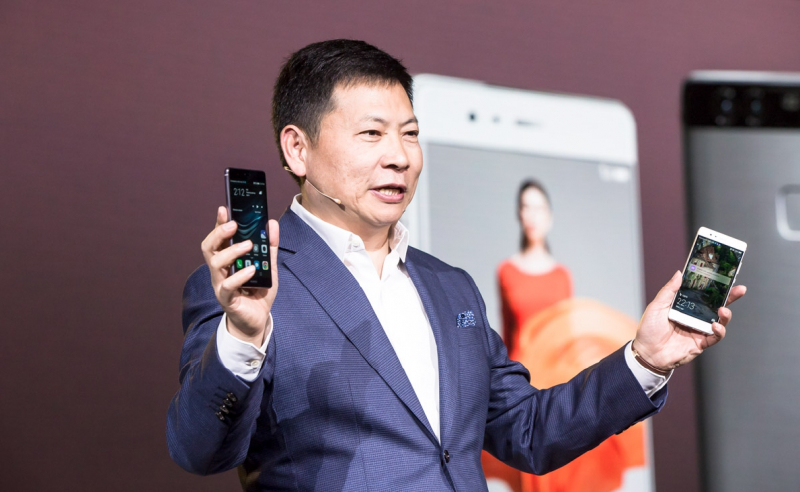
Huawei chief executive officer Richard Yu presided over the global launch of the P9, under the theme “Change the way you see the world”, at the packed Battersea Evolution hall in London last Wednesday.
The event was attended by more than 1,000 people, including media representatives and Huawei business partners from all over the world.
He spent much of his presentation speaking about the new smart phone’s dual-lens camera and its capabilities.
Describing the P9’s lens technology as “a game-changer for smart-phone photography”, Yu promised users “the best smart-phone photography experience”.
“Consumers around the world use their smart phones to take billions of pictures each year, making photography critical to user experience. P9 users can now capture images with unmatched clarity, richness and authenticity, with a masterfully designed and powerful smart phone that looks and feels incredible,” he said.
The Huawei CEO compared the P9, which also has a larger-screen version called the P9 Plus, with the market-leading iPhone from Apple and Samsung’s Galaxy.
And his verdict was that the new smart phone’s camera is better than the iPhone 6S and Galaxy S7 in some ways, such as better colour saturation, with more light, and enabling clearer backlit portrait photography.
The P9 supports camera focusing based on three methods – laser, depth calculation and contrast – and automatically selects the one that yields the best result in any given environment, Yu said, adding that the device made it easy to adjust the camera aperture to create bokeh (out-of-focus effect) and other depth-of-field effects, while keeping the main object in sharp focus.
He said the P9 would give users the “Leica experience” with fully manual control of the camera and the same user interface, font and shutter sound as in a Leica camera.
Leica Camera CEO Oliver Kaltner joined Yu onstage to praise the historic partnership between the two companies.
“Leica and Huawei share an uncompromising commitment to imaging excellence, and our partnership will put outstanding photography into the hands of more consumers around the world. We are deepening our collaboration to give users a more optimal smart-phone photography experience,” he said.
In addition to its camera, the Huawei P9 also has other strengths, according to its chief executive.
These include a virtual triple antenna to help to ease the problem of a phone signal being blocked by the holder’s hand; a new system for file optimisation to help with the problem of slowdown due to too many apps in the phone; and rapid charging, with five-hour talk time for only 10 minutes of charging.
Huawei is the world’s third-largest mobile-phone maker in terms of unit shipments, after Apple and Samsung, respectively.
However, in Thailand the company is striving to become No 3 in the market, said Polapat Saibourtong, product marketing manager of Huawei Technologies (Thailand).
He declined to make it clear which position Huawei currently holds, saying only that further data was required to determine that.
Polasit said Huawei had been in the Thai market for more than three years.
Initially, the company focused on selling quality products at inexpensive prices, but more recently – with a new strategy from the Huawei HQ – the Thai unit has been concentrating on building up the brand by portraying it as selling premium products.
“You can’t just rely on selling cheaply forever. You won’t survive in the long run,” he told a Thai media group joining the P9 launch in London.
Selecting London as the launch city seems to be part of Huawei’s strategy to improve its image, as Chinese brands may not be so attractive for most consumers around the world.
Huawei had launched its P6 smart phone in 2013, the P7 in 2014 and the P8 last year – all in the British capital.
Phone facts
- Android 6.0
- 5.2-inch 1080P display
- Kirin 955 2.5GHz 64-bit ARM-based processor
- 3,000 mAh high-density battery
- 3GB RAM + 32GB ROM / 4GB RAM + 64GB ROM
