
Governor Chadchart launches ‘Bangkok Solar City’ to drive the capital toward clean energy
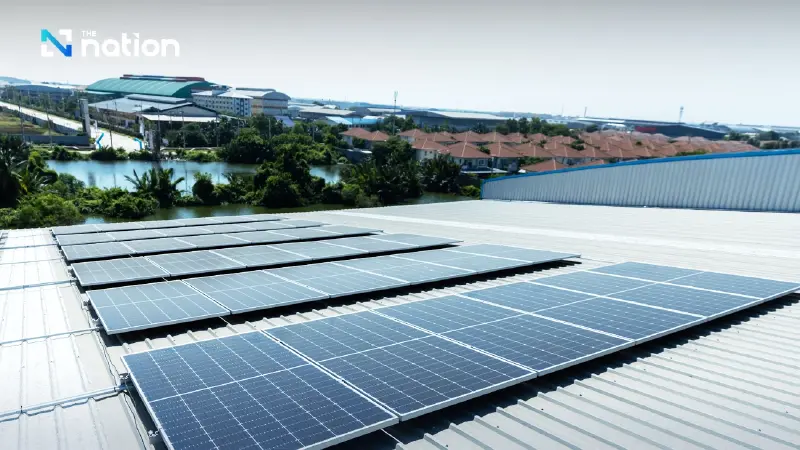


Bangkok Governor Chadchart Sittipunt launches the “Bangkok Solar City” initiative to promote solar energy adoption and move the city toward a low-carbon future.
Bangkok Governor Chadchart Sittipunt officially launched the “Bangkok Solar City” initiative on Saturday, November 8, 2025, marking a major step toward transforming the capital into a low-carbon city powered by clean and sustainable energy.

Chadchart highlighted Bangkok’s natural advantage — sunlight — as an abundant, free, and renewable source of energy that can help reduce greenhouse gas emissions. As a major urban and economic hub for transport, commerce, communications, and tourism, Bangkok faces mounting challenges from rising energy consumption and carbon emissions, which contribute to the ongoing climate crisis, he said.
The Bangkok Solar City initiative encourages the installation of solar rooftops to generate renewable energy and reduce dependence on fossil fuels. The project aligns with the city’s BMA Net Zero policy and the Bangkok Master Plan 2021-2030, which aim to achieve carbon neutrality and sustainable energy use.

To support public participation, the Bangkok Metropolitan Administration (BMA) has produced a comprehensive guidebook and website to simplify solar energy adoption. “Installing solar panels may seem complicated at first, but this guide will be an essential starting point,” said Chadchart. The guide aims to assist both the public and district officers in providing a one-stop service for solar rooftop installation and consultation.

International collaboration driving clean energy transition
The initiative is part of a wider Thai-German collaboration under the Thailand-Germany Cooperation on Energy, Mobility, and Climate (TGC-EMC) project, led by Deutsche Gesellschaft für Internationale Zusammenarbeit (GIZ). The goal is to help Bangkok achieve its greenhouse gas reduction targets outlined in the city’s 2021-2030 master plan.
The TGC-EMC project focuses on applying “Sector Coupling” — integrating innovations across energy, transport, industry, and agriculture — to promote an efficient and sustainable energy transition. As these sectors are increasingly interconnected through power grids, renewable energy sources such as solar power are set to play a vital role in building a cleaner and more resilient energy system for Bangkok’s future.
