
Bangkok Revitalises Arterial Canals to Create Seamless ‘Smart City’ Transport Links
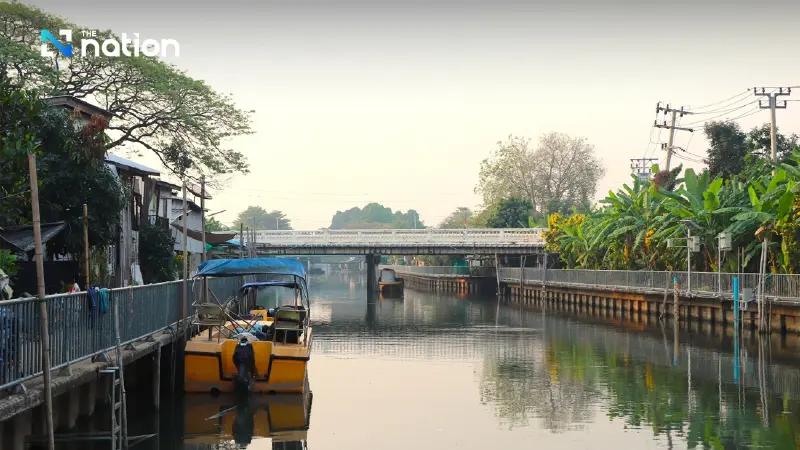


The BMA is set to transform Khlong Prem Prachakorn and Khlong Saen Saeb into modern transport hubs and green lungs by the 2027 deadline
- Bangkok is transforming two key canals, Khlong Prem Prachakorn and Khlong Saen Saeb, into integrated transport corridors and recreational spaces with a 2027 completion target.
- The project focuses on creating seamless "frictionless" travel by developing smart interchanges that directly connect commuter boat piers with public parks and pedestrian walkways.
- As part of its "Smart City" vision, the revitalization includes building reinforced embankments and rehousing canal-side communities to improve infrastructure and navigation.
- By reclaiming waterfronts, the city aims to create new "green lungs," improve mobility for residents, and boost sustainable urban tourism.
The BMA is set to transform Khlong Prem Prachakorn and Khlong Saen Saeb into modern transport hubs and green lungs by the 2027 deadline.
City Hall has accelerated an ambitious urban regeneration project to transform two of the capital’s primary waterways—Khlong Prem Prachakorn and Khlong Saen Saeb—into integrated transport corridors and recreational spaces.
The Bangkok Metropolitan Administration (BMA) aims to move beyond simple flood drainage, reimagining the city’s historic canals as "Smart City" infrastructure.
The plan prioritises seamless mobility, allowing residents to transition directly from commuter boats into the city’s expanding network of public parks.

Housing Stability and Infrastructure
Development at Khlong Prem Prachakorn is currently focused on a 12-kilometre reinforced concrete embankment.
Now 59% complete, the project is being delivered alongside the "Baan Mankong" (Secure Housing) initiative.
In a joint effort with the Treasury Department, the BMA is rehousing canal-side communities into formalised, orderly residences.
Officials expect the project to be fully operational by 2027, paving the way for a surge in water-based tourism and improved local navigation.

Frictionless Commuting at Saen Saeb
At Khlong Saen Saeb, the focus has shifted to "frictionless" travel. A key milestone includes the renovation of the embankment at Pathum Wanurak Park, which now serves as a smart interchange.
Passengers arriving at the busy Pratunam Pier can now walk directly into the park, a move designed to blend green spaces with the daily commute.
To facilitate this, the BMA is currently in negotiations to clear illegal encroachments along the banks, making room for safe, well-lit pedestrian promenades.


A Vision for Sustainable Tourism
"The heart of a Smart City is the efficient management of existing resources to improve life for its citizens," a BMA spokesperson said.
By reclaiming dilapidated waterfronts, the city is effectively creating new "green lungs" for the capital. These improvements are expected to boost sustainable urban tourism, offering international visitors and locals alike a modernised glimpse into Bangkok's traditional canal-side heritage.
The BMA’s leadership reaffirmed that these "living canals" are central to their vision of a more "walkable" and well-connected Bangkok.
